How OpenAI Became an AI Empire Built on Extraction
TL;DR
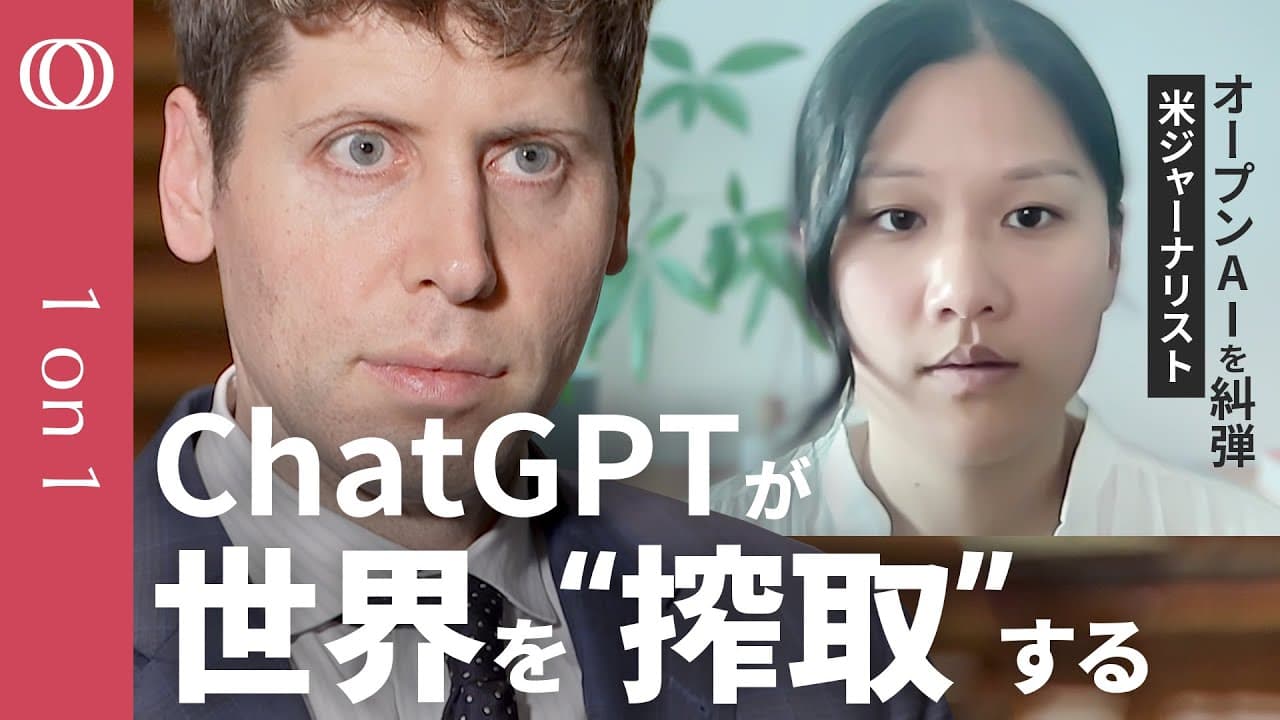
OpenAI evolved from a nonprofit research lab promising transparency into a highly secretive organization increasingly shaped by fundraising, commercialization, and profit. Karen Hao argues that powerful AI companies resemble empires because their models depend on concentrated power, intensive resource use, and exploited labor, leaving countries such as Japan vulnerable to both resource and labor extraction.
Transcript
Alman is a once- in a generation storytelling talent. People who work with him either say that he is the greatest tech leader or they say that he's a liar, manipulator, abuser. They were highly secretive as an organization riddled with clashes between egos and ideologies. Japan is very vulnerable to both the resource exploitation and the the labor ... Read More
Key Insights
- OpenAI originally presented itself as a fundamental research laboratory that would develop artificial intelligence without conventional for-profit constraints, release its research openly, communicate its work to the public, and pursue technology intended to benefit society.
- OpenAI's decision to withhold GPT-2 in early 2019 was an early sign that its transparency commitments were weakening. The public justification did not satisfy parts of the scientific community, and the resulting backlash eventually led the organization to release the model.
- OpenAI's internal culture was highly secretive despite its public promise to communicate its research and bring society along on the journey of AI development. People interviewed by Hao described it as one of the most secretive organizations where they had worked.
- Karen Hao's 2019 profile focused on the gap between OpenAI's public narrative and its conduct behind closed doors. OpenAI disliked that framing and responded by denying her continued access while shifting its attention to journalists more willing to adopt its company narrative.
- Sam Altman's defining strength is his ability to tell persuasive stories about the future. Hao says this talent helps him convince investors to provide capital and persuade skilled people to commit themselves to building the future he describes.
- Sam Altman is a highly polarizing leader whose reputation depends partly on whether an observer shares his vision. Supporters consider him an exceptional technology leader, while critics interviewed by Hao characterize him as dishonest, manipulative, or abusive.
- AI empires exploit both labor and physical resources in the production of their technology. The interview identifies low-paid work, rapidly increasing data-center electricity consumption, and resource extraction as hidden costs behind the development of large AI models.
- Japan is vulnerable to labor and resource exploitation associated with the AI industry, according to Hao. Her warning places Japan within a broader pattern also examined through reporting in Kenya and Chile, rather than treating extraction as an issue limited to emerging economies.
Install to Summarize YouTube Videos and Get Transcripts
Explore YouTube Video Summarizer or Get YouTube Transcript Extractor
Questions & Answers
Q: How did OpenAI change from its original nonprofit mission?
OpenAI initially positioned itself as a nonprofit fundamental research laboratory that would develop artificial intelligence without for-profit constraints and in the public interest. Hao observed that it later created a for-profit entity within the nonprofit, appointed Sam Altman as chief executive, reduced its commitment to openly releasing research, became highly secretive, and increasingly resembled an ordinary Silicon Valley company driven by commercialization and fundraising.
Q: Why was OpenAI's handling of GPT-2 controversial?
OpenAI initially withheld GPT-2, which was two generations before ChatGPT, despite its earlier commitment to open-source all of its research. Hao says the organization's public explanations for withholding the model did not fully add up, prompting substantial criticism from the scientific community. OpenAI ultimately reversed the decision and released GPT-2, but the episode signaled a retreat from its original promise of transparency.
Q: Why did OpenAI stop giving Karen Hao access?
OpenAI was unhappy because Hao's 2019 profile emphasized the disconnect between its public claims and its internal behavior. The company had expected access to produce reporting that more closely reflected its preferred narrative. After the article questioned whether OpenAI's conduct could affect how artificial intelligence entered society, the organization barred Hao from further access and worked with other journalists instead for three years.
Q: How does Karen Hao describe Sam Altman's leadership?
Hao describes Sam Altman as a rare and highly persuasive storyteller who can present compelling visions of the future. That ability makes him especially effective at raising money and recruiting talented people. She also portrays him as deeply polarizing: people aligned with his vision may see an exceptional technology leader, while opponents may view his influence and methods as a serious threat.
Q: Why do opinions about Sam Altman differ so sharply?
Opinions differ because people's assessments are closely connected to their own values and preferred visions of the future. Those who support Altman's direction value his ability to attract capital and talent toward their shared goals. Those who want a different future can see the same persuasive power as dangerous because it draws resources and skilled people away from competing approaches.
Q: What does the term AI empire mean in Karen Hao's argument?
Hao uses the idea of an AI empire to describe companies such as OpenAI as concentrated centers of technological power whose expansion depends on resources and labor. The concept connects the internal history of OpenAI with the less visible costs of producing large AI models, including low-paid work, resource extraction, increasing electricity use by data centers, and the vulnerability of affected communities and countries.
Q: What hidden costs are associated with large AI models?
The interview identifies labor exploitation and resource exploitation as central hidden costs of producing large AI models. Its examples include low-paid workers, extraction witnessed through reporting in Kenya and Chile, and rising electricity consumption from data centers. Hao's argument is that these costs must be considered alongside the visible capabilities of AI systems when judging how the industry affects society.
Q: Why is Japan vulnerable to exploitation by AI companies?
Hao says Japan is vulnerable to both resource exploitation and labor exploitation connected to the AI industry. The warning reflects her broader argument that AI production relies on physical infrastructure, electricity, resources, and human work rather than existing only as software. Japan therefore cannot treat the extraction observed in places such as Kenya and Chile as an issue that affects only distant emerging economies.
Summary & Key Takeaways
-
Karen Hao entered technology journalism after concluding that Silicon Valley's profit-driven innovation model did not reliably serve the public interest. Her reporting on fundamental AI research led her to OpenAI, which initially presented itself as a nonprofit laboratory committed to developing artificial intelligence transparently and for public benefit.
-
Her 2019 reporting found a substantial gap between OpenAI's public commitments and its internal behavior. The organization had begun withholding research, operated with unusual secrecy, and expected favorable coverage in exchange for access. After Hao highlighted these contradictions, OpenAI stopped speaking with her for three years.
-
Hao describes AI companies as new forms of empire because their technologies concentrate power while imposing hidden labor and resource costs. She argues that Kenya, Chile, Japan, and other places can be exposed to extraction connected to model production, data centers, energy demand, low-paid work, and aggressive investment.
Read in Other Languages (beta)
Share This Summary 📚
Summarize YouTube Videos and Get Video Transcripts with 1-Click
Try YouTube Summary with ChatGPT & Claude or YouTube Transcript Generator
Explore More Summaries from TBS CROSS DIG with Bloomberg 📚

Summarize YouTube Videos and Get Video Transcripts with 1-Click
Try YouTube Summary with ChatGPT & Claude or YouTube Transcript Generator