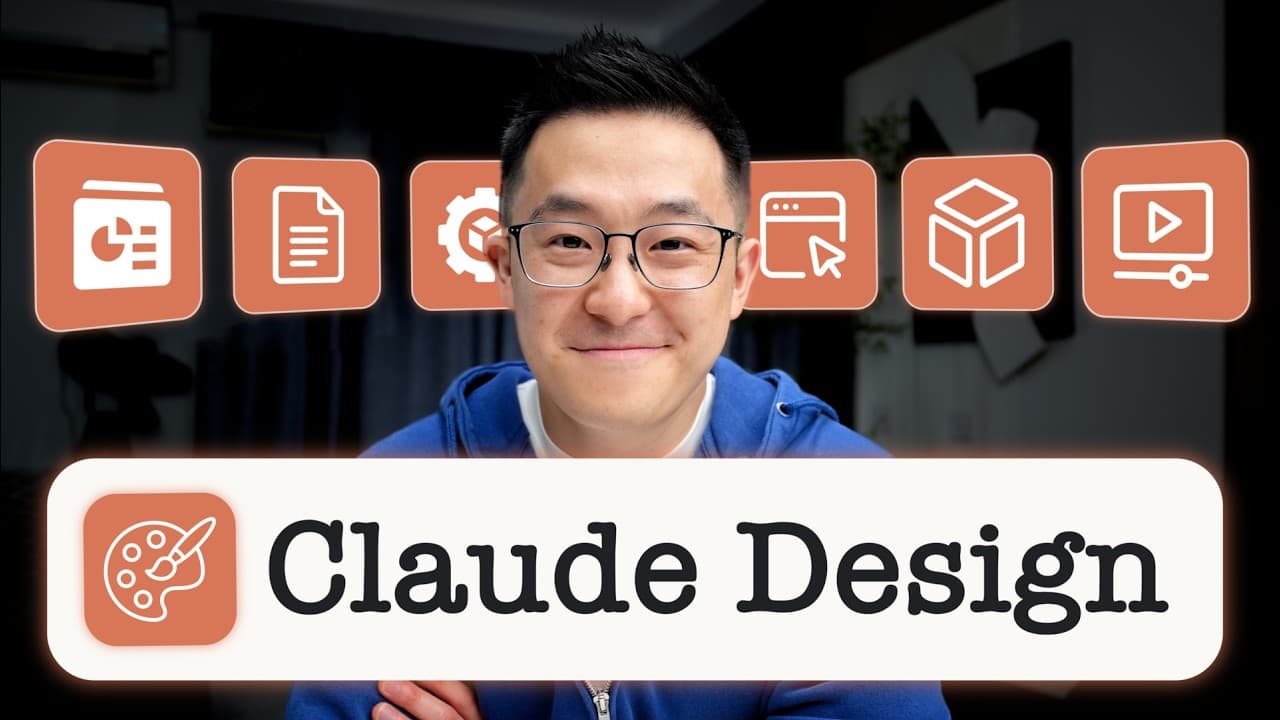
How to Build Reusable Designs in Claude Design
TL;DR
Prepare a DESIGN.md file, convert it into a Claude Design system, and use that system to create a reusable presentation template before generating slides. This preparation preserves colors, fonts, logos, layouts, and standing instructions across future projects, while plain-English feedback lets you improve either the current deck or every design created later.
Transcript
Most cloud design tutorials tell you to jump right in. Pick a template, give it a name, and just start prompting, which is not how cloud design is designed to work, pun intended, because you end up with something incredibly generic and you waste even more time in tokens trying to save those unusable slides. So, in this video, I'll show you how prep... Read More
Key Insights
- A DESIGN.md file is a text-based rulebook that specifies a design's colors, fonts, spacing, buttons, cards, and overall visual character. Preparing this file before prompting gives Claude Design detailed guidance and reduces the likelihood of producing generic slides that require extensive repair.
- A public DESIGN.md file can provide a detailed starting point without requiring users to write visual rules from scratch. The demonstrated workflow downloads Stripe's file from a public GitHub repository, then asks an AI chatbot to remove proprietary content while preserving the remaining structure.
- A Claude Design system is a tool-specific version of the raw DESIGN.md rulebook. Claude Design extracts visual rules, creates sample slides and components, and presents mockups for review, allowing users to see the style in practice before applying it to presentation content.
- Plain-English feedback can revise a design system without manually editing every visual rule. The example replaces a dark color with a preferred brand hex code, while optional uploads add voice principles, a business logo, and reusable icons to future designs.
- A presentation template controls structure rather than brand styling. It supplies prebuilt slide types such as title slides, section dividers, and two-column layouts, while the design system separately governs colors, fonts, logos, and the broader look and feel.
- Template feedback has long-term importance because every future presentation can reference the revised template. The demonstrated revisions add gradient meshes to white slides, remove orange backgrounds, enlarge text to use empty space, and place the business logo in the bottom-left footer.
- Careful answers to Claude Design's planning questions improve the first generated deck. After users attach markdown talking points and request a workshop deck, Claude Design pauses for clarification, and uncertain users can select the option that lets the tool decide for them.
- A CLAUDE.md file stores standing project instructions that Claude Design reads before creating future designs. Feedback such as making eyebrow labels more prominent and giving icons transparent backgrounds can therefore affect the current deck and subsequent decks in the same project.
Install to Summarize YouTube Videos and Get Transcripts
Explore YouTube Video Summarizer or Get YouTube Transcript Extractor
Questions & Answers
Q: How do you create reusable slides in Claude Design?
Start by preparing a detailed DESIGN.md file that defines colors, fonts, spacing, and component styles. Upload it when creating a Claude Design system, review the generated mockups, and revise them with plain-English feedback. Then ask Claude Design to build a reusable slide template containing common layouts. Select both the design system and template when generating a new deck from your markdown talking points.
Q: What is a DESIGN.md file used for?
A DESIGN.md file is a text-based rulebook describing how designs should look and feel. It can specify exact colors, fonts, spacing, buttons, cards, and related style decisions. Claude Design can transform this raw file into a native design system, giving future slides, social carousels, newsletter visuals, and one-off graphics a consistent visual foundation without repeated explanations.
Q: How can you make a DESIGN.md file without starting from scratch?
Download an existing DESIGN.md file from the public GitHub repository mentioned in the walkthrough, then upload it to ChatGPT or another AI chatbot. Ask the chatbot to remove proprietary content, replace that material using its judgment, preserve everything else, and rename the result. The cleaned markdown file can then serve as the detailed input for a new Claude Design system.
Q: Why should proprietary brand content be removed from a design file?
The workflow removes proprietary material because Claude Design will not directly copy a real brand's guidelines. Cleaning the downloaded file preserves a detailed structure while replacing restricted brand-specific content. The resulting file remains useful as a visual rulebook and can be renamed as a new design system, such as the subtle gradient system demonstrated in the walkthrough.
Q: What is the difference between a design system and a presentation template?
A design system controls how materials look, including their colors, fonts, logos, spacing, and component styling. A presentation template controls how a deck is structured, including its title slide, section dividers, two-column layouts, and arrangement of slide types. Using them together gives each new deck both a consistent brand appearance and a prepared structural starting point.
Q: How do you customize a Claude Design system?
Review the mockups that Claude Design generates from the uploaded DESIGN.md file, then use the feedback control to request changes in plain English. You can replace a color with a specific brand hex code and optionally upload voice principles, a business logo, or frequently used icons. These additions become part of the system and can be reused without uploading them again.
Q: How do you generate a workshop deck from talking points?
Select the design system and its corresponding slide template on the Claude Design homepage, then attach the workshop talking points in simple markdown format. Ask Claude Design to turn those points into a workshop deck and request any needed clarification before building. Answer the planning questions carefully, or choose the option that lets Claude Design decide when you are genuinely unsure.
Q: How can feedback carry over to future Claude Design projects?
Ask Claude Design to apply the requested edits and create a CLAUDE.md file containing the standing instructions it should read for future slide decks. In the example, those instructions make eyebrow labels more prominent and require transparent icon backgrounds. Because the file is consulted before later designs, the same preferences can influence the current deck and subsequent decks in that project.
Summary & Key Takeaways
-
A DESIGN.md file acts as a detailed visual rulebook covering colors, fonts, spacing, buttons, cards, and related style choices. Instead of writing one from scratch, the workflow starts with a publicly available brand example, removes proprietary content through an AI chatbot, and renames the cleaned file for safe reuse.
-
Claude Design converts the cleaned DESIGN.md file into a native design system containing reusable style rules, components, and mockups. The generated samples can be reviewed and revised with plain-English feedback. Voice principles, a business logo, and frequently used icons can also be added for consistent future designs and copy.
-
A reusable presentation template defines the slide types and layouts that future decks use, while the design system controls their visual appearance. After attaching workshop talking points, users should answer Claude Design's planning questions carefully, review the generated deck, and store recurring project feedback in a CLAUDE.md file.
Read in Other Languages (beta)
Share This Summary 📚
Summarize YouTube Videos and Get Video Transcripts with 1-Click
Try YouTube Summary with ChatGPT & Claude or YouTube Transcript Generator
Explore More Summaries from Jeff Su 📚





Summarize YouTube Videos and Get Video Transcripts with 1-Click
Try YouTube Summary with ChatGPT & Claude or YouTube Transcript Generator