How to Build a Repeatable Content Growth System
TL;DR
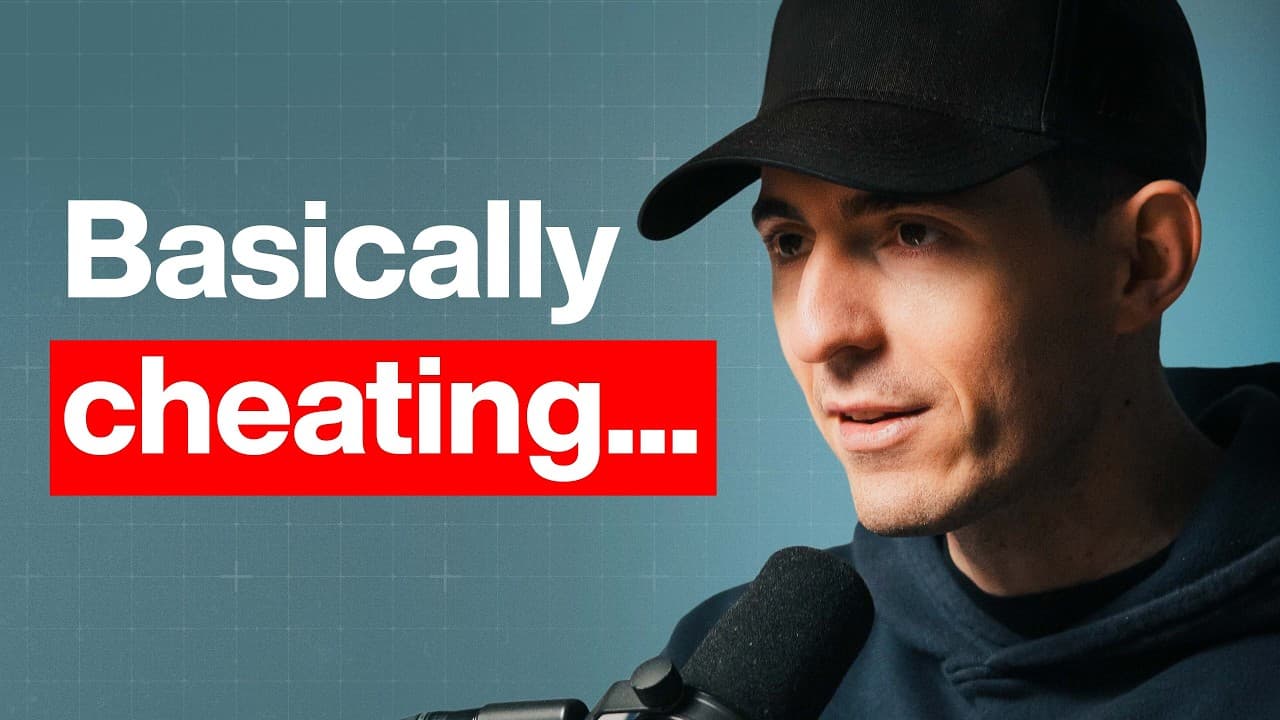
Build a scalable content system by publishing at high volume, comparing each attempt with proven winners, and applying specific improvements to the next attempt. Strong short-form hooks combine a distinctive visual, immediate context, and contrast, while keeping the visual, on-screen text, and spoken message aligned so viewers understand the premise instead of leaving in confusion.
Transcript
The reality of being able to wake up and go like this and then a million people seeing that for free is [ __ ] insane. Callaway is a ruthless systemdriven content machine. An entrepreneur who reverse engineers attention, scales distribution with precision, and turns creativity into a repeatable business weapon. There are seven Lego brick categories... Read More
Key Insights
- Publishing volume is a way to reduce dependence on luck because every completed piece creates another opportunity to practice and improve. Strategy becomes less decisive once it is understood, while the ability to produce repeatedly and increase the quality of each iteration remains difficult and valuable.
- Deliberate iteration is the process of examining a finished piece, locating the components that fell short of excellence, and correcting them in the next attempt. The distance between successive improvements matters more than simply understanding a content strategy or recognizing that another creator's work looks good.
- The Lego Brick Framework is a method for reverse-engineering successful content into seven component categories. Creators identify winning videos, separate them into those pieces, retain the strongest elements, improve what appears weaker, and rearrange the components into a new piece suited to their own publishing operation.
- A short-form hook consists of three aligned elements: the visual shown on screen, the text displayed on screen, and the words being spoken. When these elements communicate different ideas, the viewer must resolve the mismatch, which creates confusion and increases the likelihood of leaving.
- The visual hook is responsible for stopping the scroll before the audience fully processes words or speech. A distinctive set, unusual image, or other form of visual contrast can act like a stun gun, briefly interrupting habitual scrolling and creating time for the message to register.
- Immediate context tells viewers what a piece of content is about before details, examples, or lessons are introduced. The brain processes information from broad context toward specific explanation, so beginning in the middle of an idea forces viewers to answer missing questions and may cause them to leave.
- Speed to value is the amount of time required to deliver or credibly tease something useful. A compressed opening can establish the topic through spoken words, title text, and supporting visuals at once, helping the viewer understand the premise quickly without unnecessary explanation or conflicting information.
- Contrast creates curiosity by separating what viewers expect from what the content reveals. Direct contrast explicitly states the common belief before presenting an opposing claim, while implied contrast uses a question or surprising statement and requires the viewer to infer the expected belief independently.
Install to Summarize YouTube Videos and Get Transcripts
Explore YouTube Video Summarizer or Get YouTube Transcript Extractor
Questions & Answers
Q: How do you build a repeatable content growth system?
Build the system around repeated production and deliberate comparison. Find videos and creators that are already winning in your category, separate their work into the seven Lego Brick categories, and assess which components demonstrate excellence. Preserve strong components, improve weaker ones, recombine them into your own formation, publish it, and use the completed result to guide the next iteration.
Q: Why does publishing volume matter for content creators?
Publishing volume matters because it reduces reliance on luck and creates enough repetitions for meaningful improvement. Knowing a strategy does not automatically produce excellent work. A creator must make many pieces, evaluate each one, and increase the quality of subsequent attempts. The difficult advantage is not merely producing often, but learning faster from every completed repetition.
Q: What is the seven Lego Brick Framework for content?
The seven Lego Brick Framework treats each successful piece of content as a combination of seven component categories. A creator studies the strongest videos and creators in a chosen category, breaks their work into those components, keeps as many world-class elements constant as appropriate, improves the weaker components, and restacks the pieces into a new formation before publishing.
Q: What are the three parts of a strong short-form hook?
A strong short-form hook combines a visual hook, a text hook, and a spoken hook. The visual is what appears on screen, the text may include captions or larger title text, and the spoken hook is what the audience hears. These elements should communicate the same premise because conflicting signals cause confusion, and confusion encourages viewers to leave.
Q: How can visuals stop viewers from scrolling?
Visuals can stop scrolling by appearing meaningfully different from the material viewers normally encounter. Before someone fully reads text or processes speech, a distinctive set, image, or composition can create visual contrast and briefly freeze attention. This interruption functions as a thumb stopper, giving the contextual and spoken parts of the hook time to communicate the video's subject.
Q: Why must a content hook establish context immediately?
A hook must establish context because viewers need to understand the broad subject before they can follow explanations, examples, or conclusions. Starting in the middle of an idea leaves basic questions unanswered and forces the audience to reconstruct the premise. Clear context can be delivered through aligned visuals, spoken language, and on-screen text, reducing confusion and improving comprehension.
Q: How does contrast create curiosity in a content hook?
Contrast creates curiosity by revealing a difference between what the audience expects and what the creator presents. A direct version states a familiar belief and then challenges it, often with a contrasting word such as “but.” This positions the audience clearly before the reveal. The unexpected alternative then creates an open question about why the original belief may be wrong.
Q: What is the difference between direct and implied contrast?
Direct contrast explicitly presents the common belief before introducing an opposing claim, such as saying that most people believe one thing but the evidence suggests another. Implied contrast begins with a surprising statement or question and leaves viewers to infer the normal expectation. Direct contrast can create a stronger separation because it establishes both sides instead of requiring mental completion.
Summary & Key Takeaways
-
Content success depends less on discovering a secret strategy and more on producing many repetitions with increasingly effective iteration. Creators should break each finished piece into components, compare their execution with excellent examples in the same category, identify specific weaknesses, and deliberately apply those findings to the next piece they publish.
-
The Lego Brick Framework treats successful content as a combination of seven categories. A creator can find winning videos and creators in a relevant category, separate their strongest work into those components, preserve the elements that appear world class, improve weaker elements, and recombine everything into an original formation for publication.
-
An effective short-form hook first stops the scroll with distinctive visuals, then establishes the subject immediately, and finally creates curiosity through contrast. Its visual, textual, and spoken elements should reinforce the same idea. Clear alignment improves comprehension, while missing context or conflicting signals create confusion that causes viewers to leave.
Read in Other Languages (beta)
Share This Summary 📚
Summarize YouTube Videos and Get Video Transcripts with 1-Click
Try YouTube Summary with ChatGPT & Claude or YouTube Transcript Generator
Explore More Summaries from Open Residency 📚




Summarize YouTube Videos and Get Video Transcripts with 1-Click
Try YouTube Summary with ChatGPT & Claude or YouTube Transcript Generator