How Should Parents Balance Rules and Autonomy?
TL;DR
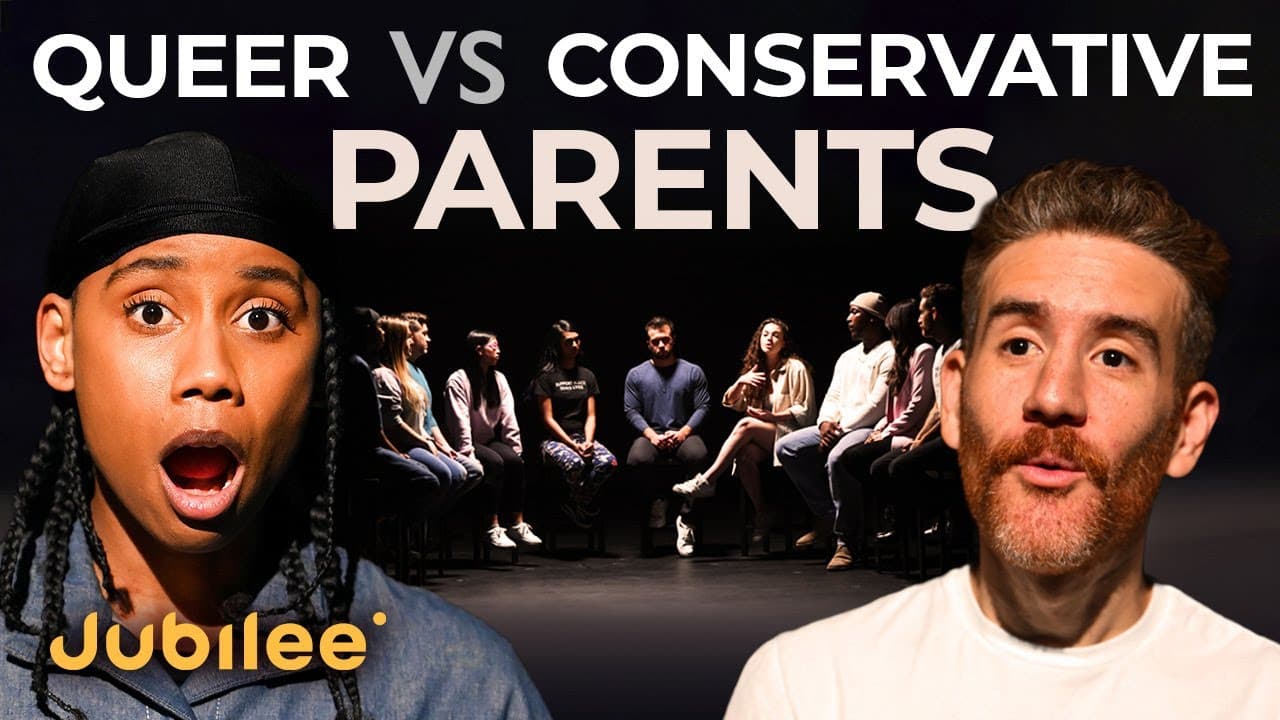
Parents can honor a child’s emotions, bodily autonomy, and individuality while still setting rules needed for safety and order. The discussion favors communication over either unrestricted freedom or unquestioning control, although participants disagree about how readily parents should accept a child’s self-expression and how much authority children can responsibly exercise.
Transcript
- Welcome to the Creator Launchpad. (upbeat music) We wanna see your idea for a new original show concept, so get together with your friends and shoot an episode. We'll watch your video, and if we love it, we'll hire you to join our team and direct more episodes. Click on the link in the description below for more information. - I don't even know w... Read More
Key Insights
- Children’s boundaries are presented as compatible with parental authority. Several participants argue that respecting emotions, personal space, and individuality does not require parents to tolerate insults, abandon household expectations, or allow children to make every decision without guidance.
- Parental boundaries are described as safeguards created by adults who possess information children may lack. Participants recall wanting things during childhood that their parents prohibited, then later appreciating that those restrictions were intended to protect their safety and interests.
- Bodily autonomy is treated as a clear area for respecting a child’s refusal. When the host gives the example of a child who does not want to hug a relative, participants reject the idea that family status should override the child’s discomfort.
- Healthy parenting is described as combining leadership with conversation. A parent can establish household rules and provide structure while also teaching a child that they are an individual, not merely an extension of the adults raising them.
- Children’s needs are described as different even within the same family. One participant notes that boundaries suitable for one sibling may not work for another, suggesting that parents should adapt their approach rather than impose an identical system on every child.
- Clothing preferences are presented as a form of self-expression that does not automatically determine sexual orientation. A parent of twin girls describes allowing one daughter to stop wearing dresses at two and a half because comfort mattered more than enforcing femininity.
- Acceptance and exploration are treated as distinct parenting responses. Some participants advocate giving children room to discover preferences without fixing them into permanent identities, while others view open-ended exploration as reckless and believe parents should first investigate what motivates the child’s statements.
- Family love is portrayed as possible despite serious differences in belief. An adopted participant says their Christian parents do not approve of their lifestyle, yet the family continues to love one another by recognizing that people are larger than their individual thoughts and convictions.
Install to Summarize YouTube Videos and Get Transcripts
Explore YouTube Video Summarizer or Get YouTube Transcript Extractor
Questions & Answers
Q: How should parents balance children’s boundaries with household rules?
Parents can respect a child’s emotions, personal space, and individuality while continuing to establish rules for conduct and safety. Participants stress that honoring boundaries does not mean allowing a child to insult a parent or ignore every expectation. Their preferred balance involves clear adult leadership, mutual respect, ongoing communication, and explanations that help the child trust the parent’s intentions.
Q: Why do some parents believe adults should set children’s boundaries?
Some participants believe parents must set boundaries because children do not always possess the information or emotional capacity needed to evaluate danger. They recall breaking rules or wanting things during childhood that later proved unwise. From this perspective, parental restrictions demonstrate care when they protect safety and serve the child’s interests rather than merely enforcing adult control.
Q: Should children be forced to hug family members?
The participants reject forcing a child to hug a relative when the child feels uncomfortable. The example reframes boundaries as bodily autonomy rather than a challenge to parental authority. Respecting the refusal teaches children that their physical discomfort matters and that being related to someone does not automatically entitle that person to physical affection from them.
Q: What does autonomy mean in the parent-child relationship?
Autonomy means teaching a child that they are an individual rather than simply an extension of a parent. Participants say adults may still take the lead and retain final authority during childhood. The goal is to create conversation, recognize the child’s feelings and preferences, and gradually support independent thinking within a structure established by responsible caregivers.
Q: Should parents let children choose what clothes they wear?
Several participants support allowing children to choose clothing that feels comfortable, even when those choices conflict with conventional expectations about femininity. One parent describes a daughter who stopped wearing dresses at two and a half and still avoided them at five. The discussion also recognizes that preferences may later change, making room for exploration without declaring the choice permanent.
Q: Does a child rejecting gendered clothing reveal their sexual orientation?
The discussion says that rejecting dresses or other gendered clothing does not by itself establish that a child is gay or lesbian. A child may simply dislike a particular style or feel uncomfortable with an imposed form of femininity. Some participants therefore favor letting children explore clothing preferences without attaching a fixed sexual orientation or identity to those choices.
Q: Should parents immediately accept everything a child says about themselves?
Participants disagree about immediate acceptance. Some argue that parents should listen carefully because a child’s preference may arise from an authentic internal feeling rather than media or outside influence. Others say parents should investigate the statement instead of accepting it automatically. A middle position emphasizes allowing exploration while avoiding premature assumptions that every childhood declaration is permanent.
Q: Can parents and children remain close when they disagree about identity?
One participant says closeness can continue even when parents and an adult child hold conflicting beliefs about lifestyle and faith. Their Christian parents do not approve of their lifestyle, but the family still maintains love and respect. The participant’s reasoning is that people are larger than their thoughts, and each person retains the right to their own convictions.
Summary & Key Takeaways
-
Parents from queer and conservative perspectives discuss whether honoring children’s boundaries conflicts with parental authority. Several distinguish respect for emotions and bodily autonomy from allowing unrestricted behavior. They argue that children need rules, but also need confidence that their parents will listen, communicate, and recognize them as individuals.
-
The conversation becomes more concrete when the host raises unwanted physical affection. Participants generally reject forcing a child to hug a relative. They describe autonomy as something parents can cultivate while retaining the final say during childhood, especially when decisions involve safety, limited information, or consequences a child cannot fully assess.
-
Gender expression exposes sharper disagreements. Some parents support letting children choose clothing and explore preferences without assigning a sexual orientation or fixed identity. Others want to investigate where those preferences originate and reject automatic acceptance. One participant describes maintaining a loving relationship with Christian parents who disagree with their lifestyle and beliefs.
Read in Other Languages (beta)
Share This Summary 📚
Summarize YouTube Videos and Get Video Transcripts with 1-Click
Try YouTube Summary with ChatGPT & Claude or YouTube Transcript Generator
Explore More Summaries from Jubilee 📚






Summarize YouTube Videos and Get Video Transcripts with 1-Click
Try YouTube Summary with ChatGPT & Claude or YouTube Transcript Generator