How to Outsmart Anyone Without Saying a Word - Nietzsche
TL;DR
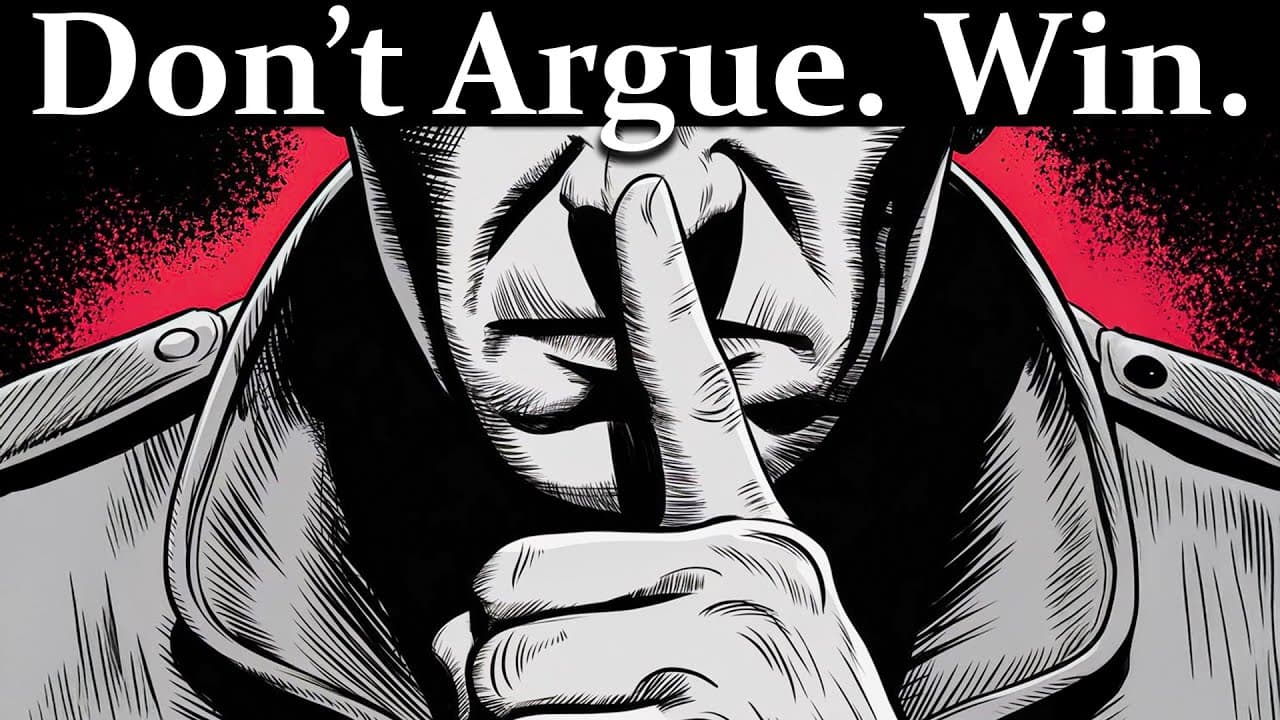
You can outsmart others without speaking by replacing reactive argument with calm, deliberate silence. The video’s interpretation of Nietzsche presents silence as active self-mastery: it denies manipulators the reactions they need, encourages opponents to reveal too much, and reduces dependence on approval. Observation, timing, and carefully choosing when to speak turn silence from submission into authority. Read on to understand how to apply that distinction.
Transcript
have you ever found yourself in a discussion where even after saying everything you needed to you walked away feeling like you lost have you ever felt that knot in your throat as if every word spoken had pushed you further away from your own strength perhaps you're surrounded by people who speak loudly interrupt mock and dominate environments with ... Read More
Key Insights
- Silence can be more powerful than words, disconcerting and destabilizing others while maintaining personal strength and control.
- Nietzsche believed that those who need to convince others are at a disadvantage, as true power lies in not needing validation.
- Silence forces others to confront their own insecurities and arguments, often leading them to reveal weaknesses.
- The concept of the 'Uber Mench' embodies self-control and the ability to shape the world without verbal confrontation.
- Silence is perceived as judgment in confrontational situations, causing anxiety and insecurity in others.
- Silence disrupts manipulators' strategies by breaking the cycle of emotional control and exposing their weaknesses.
- A strategic use of silence involves observation, timing, and unpredictability, creating tension and dominance in interactions.
- True silence is not passive; it is an active form of self-mastery and presence, transcending the need for external validation.
Install to Summarize YouTube Videos and Get Transcripts
Explore YouTube Video Summarizer or Get YouTube Transcript Extractor
Questions & Answers
Q: How can you outsmart someone without saying a word?
Remain calm, observe, and refuse to enter a reactive argument merely to prove yourself. According to the video, deliberate silence deprives others of the response they expect and can lead them to reveal too much, lose balance, or expose weaknesses.
Q: Why does the video describe silence as more powerful than winning an argument?
Winning an argument still requires entering a struggle for validation and control. The video presents greater strength as holding your position through laughter, criticism, rejection, or misunderstanding without needing to convince anyone.
Q: How does Nietzsche’s concept of the Übermensch relate to strategic silence?
The video portrays the Übermensch, or overman, as someone who shapes the world through absolute self-control rather than constant reaction. This figure observes, understands, and carefully chooses both when to speak and when to remain silent.
Q: Why can silence unsettle someone during a confrontation?
Silence leaves the other person without the reaction needed to control the exchange. The video says people may then struggle to guess what the silent person thinks, become desperate, make mistakes, and reveal more than intended.
Q: How does silence disrupt manipulation?
Manipulators depend on emotional reactions to sustain influence and control the interaction. By not reacting, a person breaks that cycle and creates conditions in which the manipulator may lose balance and expose vulnerabilities.
Q: What makes silence strategic rather than passive?
Strategic silence is based on observation, timing, and a conscious decision not to react. It preserves energy and control while allowing the speaker to choose carefully whether a response is necessary.
Q: What is the difference between silence as submission and silence as self-mastery?
Silence becomes submission when it comes from fear, guilt, or an attempt to escape confrontation. It becomes self-mastery when it is a deliberate expression of calm, strength, and freedom from the need for approval.
Q: Why does the urge to justify yourself weaken your position?
The video argues that compulsive justification shows a desire to be accepted, validated, or understood. Once you enter another person’s struggle for control of the narrative, you become reactive instead of maintaining internal mastery.
Summary & Key Takeaways
-
The content explores Nietzsche's philosophy on the power of silence, suggesting that true strength lies in not needing to engage in verbal arguments. Silence can destabilize others and force them to confront their own insecurities.
-
Silence is portrayed as a strategic tool for dominance, allowing one to maintain control and command respect without speaking. The 'Uber Mench' is a figure who embodies this mastery of self-control and presence.
-
The discussion warns against mistaking silence for submission, emphasizing that silence should be a conscious choice of strength and authority, not a result of fear or guilt.
Read in Other Languages (beta)
Share This Summary 📚
Summarize YouTube Videos and Get Video Transcripts with 1-Click
Try YouTube Summary with ChatGPT & Claude or YouTube Transcript Generator
Explore More Summaries from Psyphoria 📚


Summarize YouTube Videos and Get Video Transcripts with 1-Click
Try YouTube Summary with ChatGPT & Claude or YouTube Transcript Generator