How did Li Hongzhi create Falun Gong from nothing
TL;DR
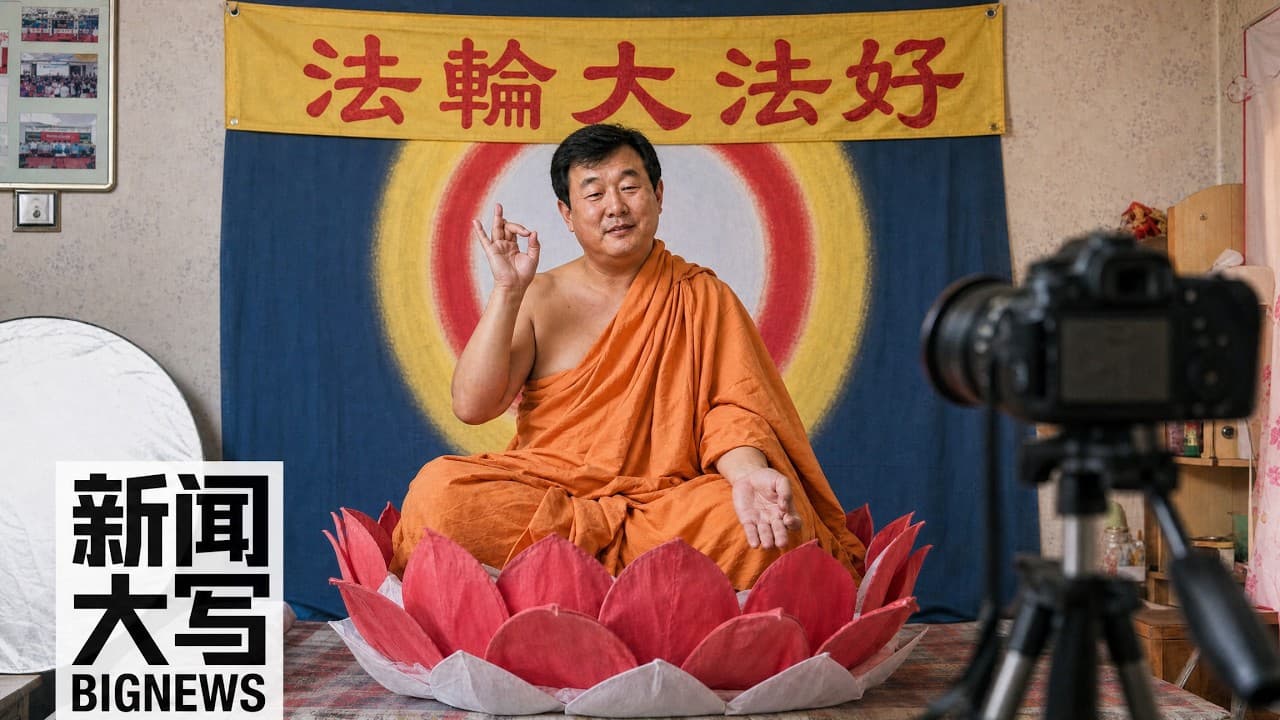
Li Hongzhi mixed existing qigong practices, assembled a core team, and created a sacred portrait to launch Falun Gong. He leveraged employment moves and a publishing effort to scale the operation, then rode public interest in qigong to attract followers, before a crackdown that shifted attention abroad.
Transcript
Hello, everyone I'm Zhang Gousheng Today, we're taking a deep dive into Master Li's real-life story I think you all know our stance on Falun Gong by now Oh, of course you probably also know Falun Gong's stance on us We handle the investigations and they handle the lawsuits So once this episode is released it's hard to say whether the Master's image... Read More
Key Insights
- Li Hongzhi is presented as the central figure who evolves from a trumpet player to a spiritual leader through staged narratives.
- The early Falun Gong material combined elements from Chanmi Gong and Jiugong Bagua Gong with additions, creating a unique system.
- A sacred portrait and painted aura behind Li Hongzhi were created to visually establish sacred authority.
- The founding team revised teaching notes extensively, indicating a modular, evolving curriculum.
- The first classes in Changchun were modest, but there was a clear plan to scale quickly through paid instruction.
- A key turning point was the 1992 launch and the public recruitment of tens to thousands of practitioners.
- The publication of Zhuan Falun and related materials helped systematize the movement and expand its reach.
- The narrative relies on official archives and early collaborator testimonies to construct an origin story
Install to Summarize YouTube Videos and Get Transcripts
Explore YouTube Video Summarizer or Get YouTube Transcript Extractor
Questions & Answers
Q: How did Li Hongzhi transition from worker to founder of Falun Gong
Li Hongzhi started as a worker at a grain and oil supply company and used connections to move into a cadre position while keeping worker status, a transition that allowed higher wages and status without immediate change in duties. In 1984, policies standardized this arrangement and he fully transitioned to a cadre. He later studied qigong in 1988, borrowing popular movements and integrating them into his own practice. This blend formed the core of Falun Gong and enabled rapid expansion from small groups to nationwide classes, aided by strategic use of media and a sacred narrative.
Q: What role did early collaborators play in Falun Gong’s formation
Early collaborators like Li Jingchao, Liu Fengcai, and Song Bingchen were crucial in shaping Falun Gong. Li Jingchao tested movements in the woods to find natural poses, Liu Fengcai revised more than 70 teaching notes, and Song Bingchen produced the sacred portrait and visual branding. Their contributions built a coherent system and a compelling image, which helped the practice gain legitimacy and attract students across China in the early 1990s.
Q: How were the teaching materials and visuals created for Falun Gong
Teaching materials were assembled by combining popular qigong movements learned by Li Hongzhi with adjustments and new gestures. Early collaborators edited and refined the notes, while a handmade sacred portrait was created using stage costumes, lotus petals, and calligraphy to simulate a divine aura. A dramatic backdrop of rays behind Li Hongzhi’s head was painted by hand and then photographed to produce the legend of a supreme teacher, reinforcing the movement’s sacred identity without modern digital tools.
Q: What was the significance of the 1992 Changchun launch
The 1992 Changchun launch marked Falun Gong’s first formal training session with the public, attracting about 180 attendees and generating revenue of 5,400 yuan. This event established a scalable model: low cost local classes, a centralized message, and a growing community that could be expanded through word of mouth and continued exhibitions of the sacred narrative. It demonstrated feasibility and momentum that propelled nationwide expansion during the early 1990s.
Q: How did official recognition and materials contribute to Falun Gong’s growth
Official recognition came through collaboration with state organizations, including the use of a seal from the China Qigong Science Research Association to lend legitimacy. The combination of a government aligned image and accessible classes created a trusted platform for thousands of people to enroll. This bureaucratic bridge enabled rapid scaling and wider acceptance before political pushback occurred later in the decade.
Q: What events led to the 4.25 incident and its consequences
The 4.25 incident refers to a mass gathering that escalated tension and was interpreted by authorities as a political challenge. The video recounts this as a turning point where a peaceful assembly was perceived as a public show of power. The aftermath included increased scrutiny, policy actions, and a shift in how Falun Gong was regulated and perceived both domestically and internationally, ultimately influencing the subsequent crackdown.
Q: How did the 610 Office affect Falun Gong’s trajectory
The 610 Office was established to coordinate suppression efforts, and its involvement marked a transition from civil to systematic crackdown. Rather than ending Falun Gong, the crackdown redirected attention abroad, where Li Hongzhi and followers pursued external support channels. The crackdown also influenced media coverage and public perception, contributing to Falun Gong’s enduring international presence despite domestic restrictions.
Q: What themes connect Li Hongzhi’s early life to Falun Gong’s global narrative
The narrative links Li Hongzhi’s early life in a turbulent era to an arc of discovery, invention, and ascent. Born Li Lai, renamed Li Hongzhi during adolescence, he transitions through work, qigong study, and a crafted sacred biography. The overarching story, including staged portraits and a published scripture, creates a mythic arc designed to explain his leadership, the movement’s appeal, and its sustained appeal outside China.
Summary & Key Takeaways
-
The rise traces from Li Lai to Li Hongzhi through a sequence of name changes and career shifts, culminating in a self crafted spiritual biography and a public ritual image.
-
The core strategy blended borrowed movements, staged visuals, and strategic publishing to build credibility and reach.
-
A crackdown and international exposure followed, transforming Falun Gong into a political and media flashpoint beyond China
Read in Other Languages (beta)
Share This Summary 📚
Summarize YouTube Videos and Get Video Transcripts with 1-Click
Try YouTube Summary with ChatGPT & Claude or YouTube Transcript Generator
Explore More Summaries from 王志安 📚


Summarize YouTube Videos and Get Video Transcripts with 1-Click
Try YouTube Summary with ChatGPT & Claude or YouTube Transcript Generator