Why Are Auto Repair Shop Costs So High Today?
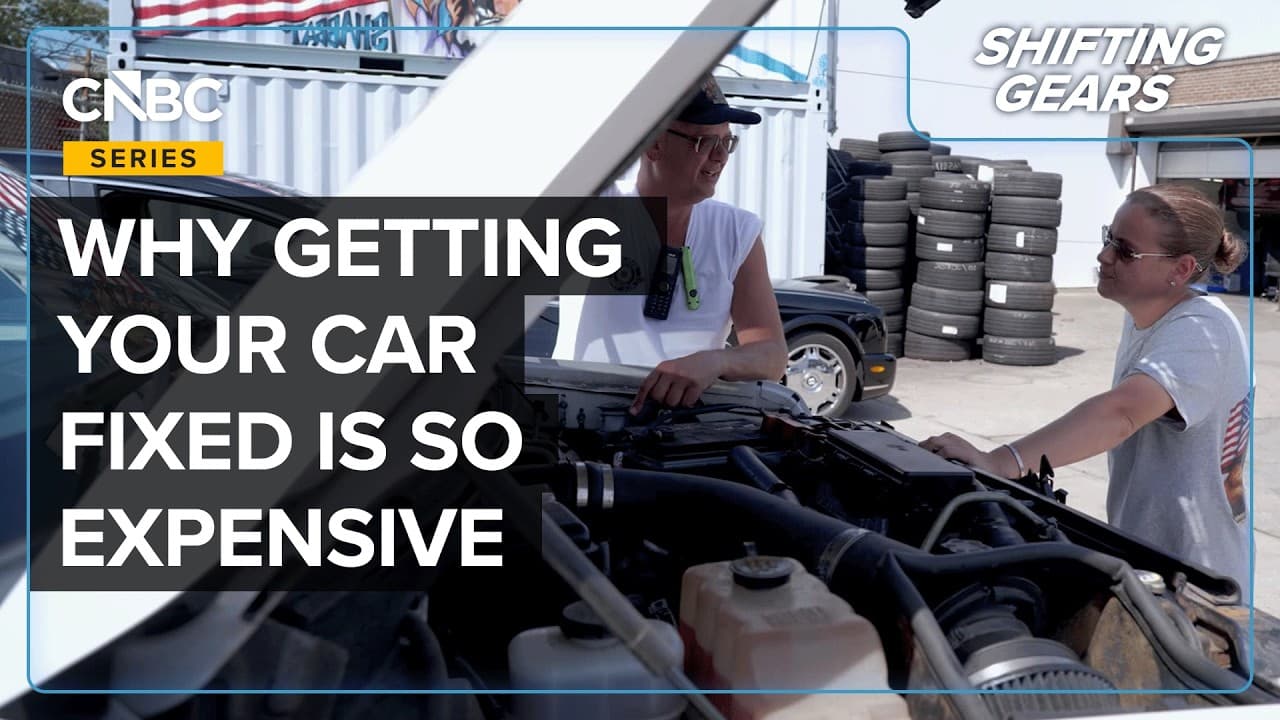
TL;DR
High repair costs stem from expensive diagnostic software, recurring data subscriptions, and specialized calibration equipment. Independent shops must service many brands, pay for data access, and rely on up to date tools, which increases parts and labor costs. This shift changes pricing and availability for customers.
Transcript
This is the target. It'll sit on the vehicle's rim like this with the sensors out. And then I have sensors on the Hawkeye over here. This auto repair shop is full of expensive high tech machines and computers. Some of them make classic repair jobs faster and easier, but without others, a growing number of repairs wouldn't be possible at all. W... Read More
Key Insights
- Costs to operate a repair shop rise due to expensive diagnostic software and frequent subscriptions.
- Shops require access to data from manufacturers, often under paid licenses.
- Multi brand servicing forces independent shops to maintain many different tools and software.
- Calibration of advanced safety systems is a major cost driver in repairs.
- Windshield calibration and camera alignment rely on specialized boards and targets.
- Some parts have become vehicle specific and dramatically more expensive than older parts.
- Market share trends show chains gaining ground while independents face higher barriers to entry.
- Smaller shops may need to specialize or consolidate to afford high tech investments.
Install to Summarize YouTube Videos and Get Transcripts
Explore YouTube Video Summarizer or Get YouTube Transcript Extractor
Questions & Answers
Q: How do diagnostic software subscriptions affect independent auto repair shops
Diagnostic software subscriptions affect independent auto repair shops by creating ongoing costs that must be paid to access the data and tools needed to diagnose and fix modern vehicles. The cost varies by car line and usage, sometimes requiring a yearly subscription and other times short term access. These subscriptions determine whether a shop can service certain brands efficiently or at all, influencing pricing and profitability.
Q: Why is data access a central issue for auto repair businesses
Data access is central because many repairs depend on vehicle data, repair information, and tools controlled by manufacturers or third parties. Without timely access, shops cannot diagnose, calibrate, or repair advanced features. Agreements signed in 2023 aim to give shops fair access on reasonable terms, but practical barriers remain, including cost and bureaucratic hurdles.
Q: What role do calibration tools play in repair costs
Calibration tools play a critical role by enabling proper operation of safety and driver assistance systems after repairs. Boards, targets, and calibration software are required to perform precise adjustments. Some boards can cost up to ten thousand dollars, and comprehensive calibrations can account for significant portions of total repair costs depending on the vehicle.
Q: Why are parts and boards more expensive now
Parts and boards are more expensive because vehicles have shifted to specialized, brand specific components with higher price points. Earlier, a single headlamp could fit multiple models, but now many parts are unique to a vehicle. This specificity raises the base cost of parts and the complexity of finding compatible components.
Q: How do market dynamics affect independent repair shops
Market dynamics show that while the number of shops has risen, independent shops are losing some market share to chains. The need to invest in expensive tooling, software access, and data rights, along with evolving vehicle complexity, pressures independents to either specialize or scale up to stay competitive.
Q: What challenges do independent shops face with multi brand service
Independent shops face the challenge of maintaining tool fleets and licenses for multiple brands, each with different data access requirements and calibration procedures. This fragmentation increases both upfront investment and ongoing costs, making it harder for small shops to keep up with the rapid pace of automotive software changes.
Q: How might shops respond to rising tech costs
Shops may respond by specializing in certain makes or models to reduce the breadth of required tools and data access, or by scaling up operations to justify the investment in high tech equipment. Others may seek financing or partnerships to spread the cost of diagnostics and calibration gear over a larger volume of work.
Q: What is the potential consumer impact of these trends
The trends could lead to higher repair prices or longer wait times as shops navigate data access, software licensing, and calibration requirements. Consumers might face slower service or need to drive longer to find a shop with the appropriate equipment and agreements to service their vehicle efficiently.
Summary & Key Takeaways
-
Independent shops face rising expenses from software subscriptions and data access, which drive costs higher. The need to service multiple brands requires diverse tools and licenses that are not cheap. Calibration of advanced safety features also adds time and parts costs.
-
The market has shifted toward high tech, with repairs increasingly requiring proprietary data access and complex equipment. As vehicles become more software driven, shops must invest more capital and training to stay competitive.
-
Some shops are responding by specializing in specific makes and models or by scaling up operations to justify tool investments, which may pressure smaller shops to adapt or close
Read in Other Languages (beta)
Share This Summary 📚
Summarize YouTube Videos and Get Video Transcripts with 1-Click
Try YouTube Summary with ChatGPT & Claude or YouTube Transcript Generator
Explore More Summaries from CNBC 📚






Summarize YouTube Videos and Get Video Transcripts with 1-Click
Try YouTube Summary with ChatGPT & Claude or YouTube Transcript Generator