Why Charlie Kirk Linked Faith and Free Speech
TL;DR
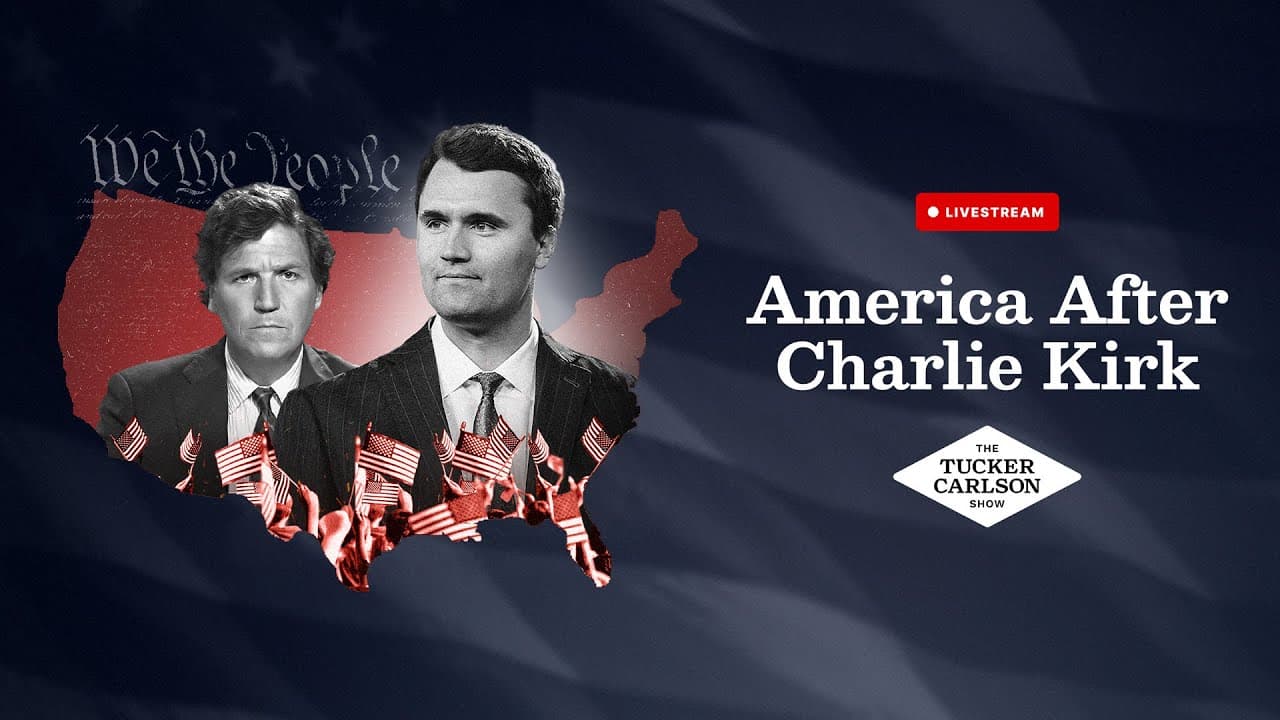
Tucker Carlson argues that Charlie Kirk’s Christian faith was the foundation of his public advocacy, especially his commitment to free speech, persuasion, individual conscience, and the equal worth of every person. He rejects partisan attempts to control Kirk’s legacy and presents Kirk’s campus debates as an expression of a religious duty to change minds voluntarily through words.
Transcript
Hey, I'm Tucker Carlson. Last week, within... just really minutes after Charlie Kirk was shot at that event in Utah, a kind of proxy war broke out over his memory. Who gets to own it, who gets to use it? While the rest of us were still reeling in shock, trying to figure out what happened, a ton of people appeared online, not just in this country, t... Read More
Key Insights
- Charlie Kirk’s Christian faith is presented by Carlson as the organizing principle behind everything Kirk said, believed, and did. Carlson argues that political explanations centered on ideological labels or support for Israel are incomplete because they overlook the religious convictions that shaped Kirk’s public life.
- The struggle over Charlie Kirk’s memory began within minutes of the Utah shooting, according to Carlson. He describes commentators from different political camps assigning immediate meanings to Kirk’s death while grief, anger, and uncertainty were still intense, turning his legacy into a contested political resource.
- Christianity limits political power by teaching that leaders are not God, according to Carlson’s argument. He says rulers and citizens must follow moral rules they did not create, and he connects this principle to natural law, Christian understandings of justice, and the foundations of Western law.
- Every human being has a distinct soul created by God within the Christian framework Carlson describes. He argues that this universal human status prohibits treating people as morally disposable because of ancestry, appearance, language, beliefs, relatives, or membership in a political or social group.
- Freedom of conscience follows from the belief that each person possesses a distinct soul, Carlson contends. People may be told what others believe they should think or say, but they cannot legitimately be forced to adopt a creed because sincere belief requires individual free will.
- Free speech is portrayed as a God-given right rather than merely a constitutional provision. Carlson says Kirk believed the Bill of Rights reflected principles found in the New Testament, so protecting open expression meant respecting the conscience and spiritual agency of every person.
- Persuasion through words was central to Kirk’s campus work, according to Carlson. He interprets Kirk’s repeated travel and engagement with opponents as an evangelical duty to convince people voluntarily, rather than simply a strategy for building a political coalition or helping particular candidates win elections.
- Collective punishment is incompatible with the individual moral responsibility described in Carlson’s account of Christianity. He argues that each person stands alone before God, making it wrong to harm people for the actions or alleged sins of their relatives, communities, or identity groups.
Install to Summarize YouTube Videos and Get Transcripts
Explore YouTube Video Summarizer or Get YouTube Transcript Extractor
Questions & Answers
Q: Why does Tucker Carlson say Christianity defined Charlie Kirk?
Carlson says Kirk’s Christian faith was not a secondary identity or a vague form of spirituality. He presents it as the source of Kirk’s positions on human dignity, abortion, racism, antisemitism, free speech, persuasion, and political authority. In Carlson’s interpretation, Kirk’s public activity flowed from belief in Jesus, the existence of moral limits, and the God-given value of every person.
Q: How does Carlson interpret the conflict over Charlie Kirk’s legacy?
Carlson describes a proxy war over Kirk’s memory that began within minutes of the Utah shooting. He says people on different sides quickly announced what Kirk represented and why he died, despite the shock and uncertainty surrounding the event. Carlson considers those explanations self-serving because they direct grief and anger toward political objectives instead of accurately describing Kirk’s central commitments.
Q: Why does Carlson reject claims that Charlie Kirk died for Israel?
Carlson acknowledges that Kirk defended Israel and opposed antisemitism, but he argues that this position did not define the deepest purpose of Kirk’s life. He also rejects the hostile characterization of Kirk as a Nazi. His central claim is that both political narratives reduce a more comprehensive religious identity, because Kirk’s views and conduct were primarily grounded in Christian faith.
Q: How does Christianity place limits on political leaders?
In Carlson’s account, Christianity teaches that neither citizens nor leaders are God. Everyone is morally accountable, and no person may act without limits simply because they possess authority. Carlson connects this idea to natural law and Western justice, arguing that basic moral rules exist independently of rulers and therefore restrict what elected officials and other powerful people may legitimately do.
Q: How does belief in a soul support freedom of conscience?
Carlson argues that every person has a distinct soul created by God, so each individual possesses a conscience that authorities cannot own. People can use words to recommend beliefs or challenge another person’s views, but they cannot legitimately compel sincere conviction. Because Christian conversion requires free will in his account, coercion contradicts the spiritual independence granted to each human being.
Q: Why does Carlson connect free speech with the New Testament?
Carlson says Kirk viewed free speech as more than a protection written into the Bill of Rights. He believed the constitutional right reflected a deeper Christian respect for the soul, conscience, and free will of each person. On that reasoning, open expression allows individuals to consider arguments and change their minds voluntarily, while forced speech improperly places authorities in control of conscience.
Q: Why did Charlie Kirk debate people on college campuses?
Carlson interprets Kirk’s campus appearances as both political work and a form of evangelical duty. He says Kirk repeatedly boarded planes and spoke with people who disagreed with or hated him because he believed words could persuade minds and souls. The goal, in Carlson’s account, was not limited to electing candidates or assembling a coalition, but included demonstrating voluntary persuasion in practice.
Q: How does Carlson connect Christianity with opposition to tribalism?
Carlson argues that Christianity recognizes every person as created and loved by God, regardless of appearance, language, origin, relatives, or previous beliefs. He uses Paul’s transformation from a persecutor of Christians into a major New Testament author as an example of the possibility of change. From this universal premise, Carlson concludes that racism, genetic bigotry, identity politics, and collective punishment violate Christian principles.
Summary & Key Takeaways
-
Carlson says competing political groups tried to define Charlie Kirk’s death immediately after he was shot, using public grief and anger to advance their own explanations. He rejects portrayals of Kirk as either a Nazi or someone who died for Israel, arguing that both interpretations fail to capture the central motivation of Kirk’s life.
-
The commentary identifies Christianity as the foundation of Kirk’s beliefs and conduct. Carlson argues that Christian teaching denies divine status to political leaders, places moral limits on human power, and recognizes every person as created by God. In his account, these principles underpin natural law, human dignity, equality before God, and Western justice.
-
Carlson connects Kirk’s defense of free speech to Christian beliefs about souls, free will, and individual conscience. He says Kirk traveled repeatedly to college campuses because he felt an evangelical duty to persuade people voluntarily, including hostile opponents. Kirk’s public debates are presented as practical demonstrations of conviction expressed through peaceful conversation rather than coercion.
Read in Other Languages (beta)
Share This Summary 📚
Summarize YouTube Videos and Get Video Transcripts with 1-Click
Try YouTube Summary with ChatGPT & Claude or YouTube Transcript Generator
Explore More Summaries from Tucker Carlson 📚


Summarize YouTube Videos and Get Video Transcripts with 1-Click
Try YouTube Summary with ChatGPT & Claude or YouTube Transcript Generator