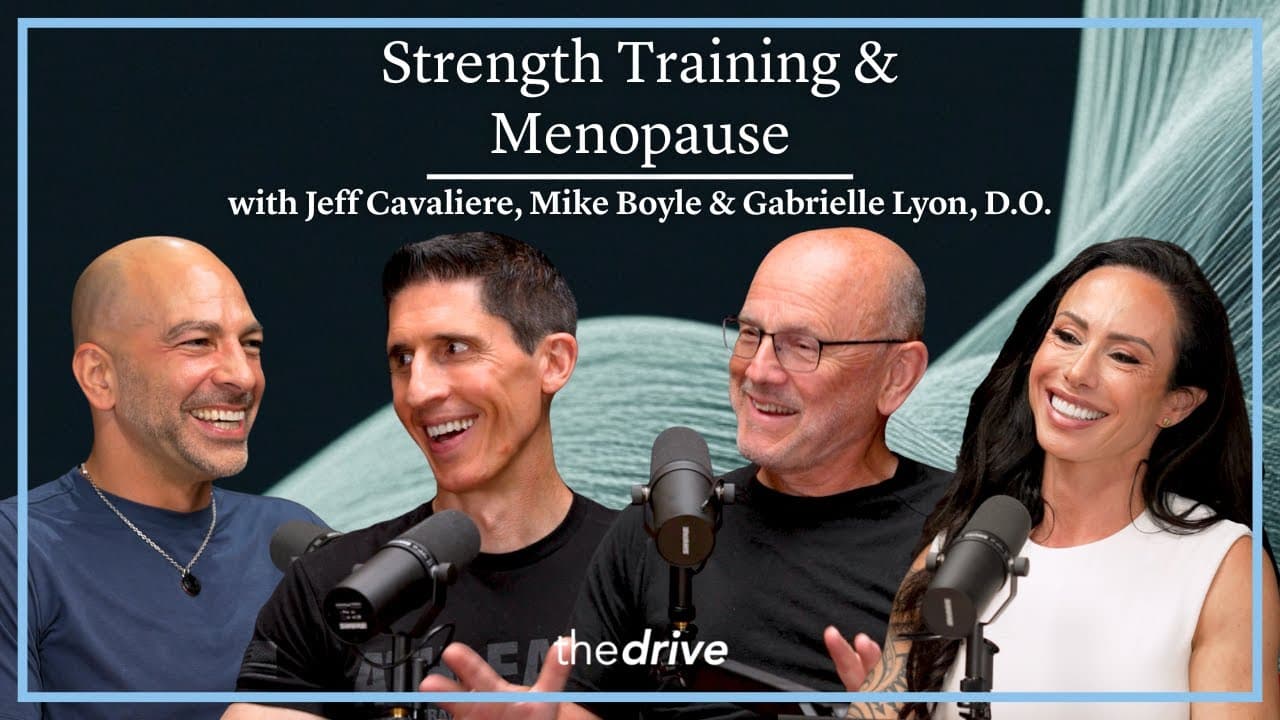
How to Approach Strength Training in Menopause
TL;DR
Enter perimenopause and menopause as fit as possible, then continue using sound strength, hypertrophy, and cardiovascular training principles. Programming does not require a menopause-specific overhaul, but coaches should account for sleep problems, tendon or joint concerns, frozen shoulder, hormonal changes, and knee positioning while encouraging progressive resistance and appropriately challenging conditioning.
Transcript
sort of pivot and talk a little bit about um strength training women across kind of the transition from pmenopause into menopause. Do you have any experience with that? I'm guessing you do. And Mike, you must just by the fact that they're coming in your So start with you Gabriel. What what do you what are you noticing as the most important things a... Read More
Key Insights
- Fitness before menopause is protective: Women who enter perimenopause and menopause fitter appear to experience fewer metabolic problems and fewer limitations in activities of daily life as hormonal changes, sleep disruption, tendon issues, and body-composition concerns begin to emerge.
- Good programming remains good programming during menopause: The discussion identifies no strong reason to replace foundational strength, hypertrophy, and cardiovascular principles solely because a woman enters menopause, provided injury risks, symptoms, joints, and tendons receive appropriate individual attention.
- Progressive stimulus is central to effective training: Women should continue challenging themselves with resistance instead of becoming content with comfortable loads, because the basic objective remains getting stronger and improving conditioning through sensible, progressive work.
- Fear of becoming bulky can limit training effort: The coaches report that women often hold back because they expect resistance training to produce large increases in body size, although their female athletes became stronger and faster without necessarily gaining body weight.
- Challenging intervals can efficiently train cardiovascular capacity: Mike Boyle favors getting the heart rate very high about once each week and uses nonweight-bearing bikes because they can create demanding cardiovascular work with comparatively little orthopedic stress.
- Knee alignment deserves focused coaching: A wider Q angle can contribute to greater knee valgus in women, particularly during jumping and landing, so coaches should teach better positioning and strengthen hip abductors to reduce repeated stress on knee structures.
- Hormonal changes can affect training tolerance indirectly: Poor sleep, tendon stiffness, joint concerns, frozen shoulder, and changing laxity may require education, monitoring, treatment, or coaching adjustments even when the overall exercise selection and programming principles remain unchanged.
- Women can display substantial relative strength: The coaches observe strong pound-for-pound performance, especially in the lower body, while also finding that women often underestimate their upper-body ability, including their potential for weighted chin-ups and other pulling exercises.
Install to Summarize YouTube Videos and Get Transcripts
Explore YouTube Video Summarizer or Get YouTube Transcript Extractor
Questions & Answers
Q: How should women strength train during menopause?
Women should continue following sound foundational principles for strength, hypertrophy, and cardiovascular conditioning. The discussion does not support automatically changing exercises, repetition ranges, periodization, or the balance of cardio and resistance work solely because menopause begins. Training should provide progressive stimulus while coaches monitor sleep, tendons, joints, injury risk, symptoms, and individual recovery needs.
Q: Should menopause change a woman's training program?
Menopause does not inherently require a complete programming overhaul. According to the discussion, good training remains good training, including progressive resistance, hypertrophy work, and cardiovascular activity. Adjustments become appropriate when a woman has tendon or joint concerns, frozen shoulder, poor sleep, changing laxity, or elevated injury risk, but these are individual responses rather than universal menopause-specific rules.
Q: Why should women become fit before perimenopause?
Women who enter perimenopause and menopause already fit appear to handle the transition better metabolically and in activities of daily life. The participants recommend beginning before noticeable body-composition changes occur. Building fitness early creates a stronger starting point when hormonal changes, disrupted sleep, tendon stiffness, joint concerns, or frozen shoulder begin affecting comfort, recovery, and everyday function.
Q: Can strength training make women excessively bulky?
Large gains in lean mass are described as difficult for most women, so fear of becoming bulky should not prevent challenging resistance training. Mike Boyle reports that two elite female lacrosse attackers trained for five years, became stronger and faster, and gained no body weight. Individual responses vary, but unusually strong muscle growth was characterized as rare.
Q: What menopause symptoms can affect strength training?
The discussion identifies poor sleep, tendon and joint concerns, frozen shoulder, and changes in tissue laxity as issues that may affect training. These concerns do not necessarily demand different foundational programming, but they may require education, closer coaching, treatment, or temporary adjustments. Suitable candidates may also discuss hormone replacement or menopause therapy with an appropriate medical professional.
Q: Why is knee positioning important for women who train?
Women may have a Q angle that creates a greater tendency toward knee valgus, particularly when jumping and landing. Repeated valgus positioning can place cumulative stress on knee structures. Coaches can improve awareness and positioning, while drills such as jumping and landing with a band around the knees can teach hip abductor activation and better lower-body mechanics.
Q: What cardiovascular training is recommended alongside strength work?
The discussion supports conditioning that challenges women rather than keeping every session comfortable. Mike Boyle highlights the idea of raising the heart rate very high about once a week and recommends using a heart-rate monitor to guide effort. He favors assault bikes or Airdyne bikes because they provide demanding, nonweight-bearing cardiovascular work with relatively little orthopedic cost.
Q: Are women stronger than they think in the weight room?
The coaches report that women often underestimate their strength, particularly in the upper body. Their female athletes have demonstrated substantial pulling ability, including weighted chin-ups with 45 pounds for multiple repetitions. They also describe women as proportionally strong pound-for-pound, especially through the lower body, suggesting that careful encouragement can help women train closer to their actual capacity.
Summary & Key Takeaways
-
Women who begin perimenopause and menopause with better fitness appear to experience fewer metabolic and daily-life difficulties. Hormonal changes may coincide with poor sleep, tendon or joint concerns, and frozen shoulder. Hormone replacement or menopause therapy may help suitable candidates, while training should continue to follow sound foundational principles.
-
Menopause does not automatically require different exercises, repetition ranges, periodization, or a new balance between resistance and cardiovascular work. Effective programming still combines strength, hypertrophy, and conditioning with progressive stimulus. Coaches should adjust when injury risk, tendon discomfort, joint problems, or individual limitations require closer attention and appropriate treatment.
-
Women may train below their capabilities because they fear becoming overly muscular or lack the competitive ego sometimes seen in male clients. The coaches argue that substantial lean-mass gain is difficult for most women. They recommend encouraging heavier resistance, stronger pulling performance, challenging intervals, and careful coaching of knee alignment during jumping and landing.
Read in Other Languages (beta)
Share This Summary 📚
Summarize YouTube Videos and Get Video Transcripts with 1-Click
Try YouTube Summary with ChatGPT & Claude or YouTube Transcript Generator
Explore More Summaries from Peter Attia MD 📚



Summarize YouTube Videos and Get Video Transcripts with 1-Click
Try YouTube Summary with ChatGPT & Claude or YouTube Transcript Generator