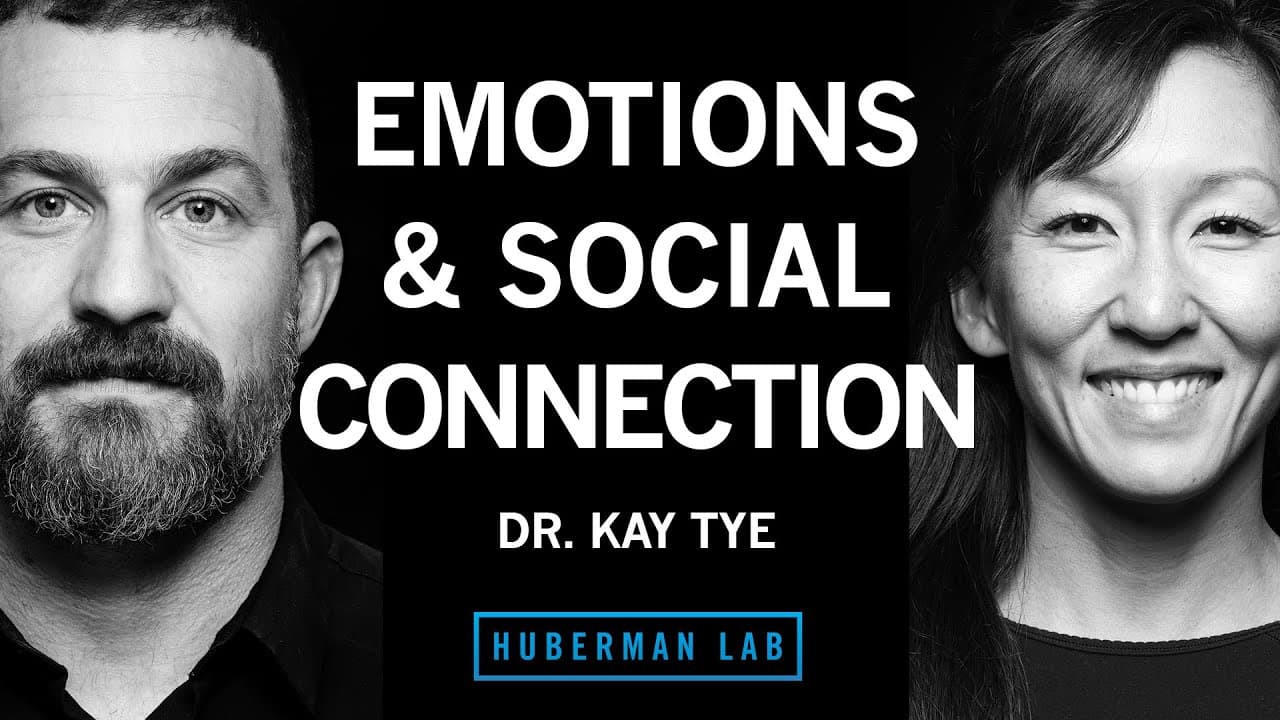
Dr. Kay Tye: The Biology of Social Interactions and Emotions
TL;DR
Discover the role of loneliness neurons in our brains and the significance of social interaction for mental health and overall well-being.
Transcript
welcome to the huberman Lab podcast where we discuss science and science-based tools for everyday life I'm Andrew huberman and I'm a professor of neurobiology and Opthalmology at Stanford School of Medicine my guest today is Dr K Tai Dr K Tai is a professor of neuroscience at the sulk Institute for biological studies she did her training at MIT and... Read More
Key Insights
- 😨 The amygdala, often associated with fear and threat detection, also plays a role in processing positive emotions, reward, and the evaluation of motivational significance.
- 🥺 Social isolation and loneliness have significant negative impacts on physical and mental health, leading to mood disorders and reduced lifespan.
- 🧠 Loneliness neurons in the brain contribute to feelings of loneliness and represent our need for social interaction.
- 🧑 Social media interactions, while they can offer some benefits, do not typically provide the same depth of social connection as in-person interactions.
- 🧑⚕️ Understanding the neural mechanisms underlying social interaction can help us develop strategies to enhance our social connections and promote mental health and well-being.
Install to Summarize YouTube Videos and Get Transcripts
Explore YouTube Video Summarizer or Get YouTube Transcript Extractor
Questions & Answers
Q: What are loneliness neurons, and what purpose do they serve?
Loneliness neurons are brain cells that respond to our need for social contact. They are involved in processing the motivational significance of social interactions, helping us determine whether we feel fulfilled in our social connections.
Q: How does social isolation and loneliness affect our health?
Social isolation and loneliness have been linked to a shorter lifespan, increased risk of mood disorders, and higher morbidity and mortality rates for various diseases. It highlights the importance of social interaction for overall well-being.
Q: Can social media provide meaningful social contact?
While social media can offer some level of interaction, it often falls short in providing the same depth of social connection as in-person interactions. The lack of synchronous, shared experiences limits the effectiveness of social media in combating loneliness.
Q: How can we improve our social connections and prevent loneliness?
Building and maintaining social connections is crucial. It involves actively seeking out meaningful social interactions, nurturing existing relationships, and being aware of the various forms of social support we need. It's also essential to balance alone time with social engagement, as each contributes to our overall well-being.
Summary & Key Takeaways
-
Loneliness neurons are brain cells that represent our need for social interaction and can contribute to feelings of loneliness when not fulfilled.
-
Social interaction plays a crucial role in our well-being, impacting physical and mental health.
-
Chronic social isolation and loneliness have been linked to negative health outcomes, including mood disorders and reduced lifespan.
-
Understanding the neuroscience behind social interaction can help us develop strategies to enhance our social connections and overall happiness.
Read in Other Languages (beta)
Share This Summary 📚
Summarize YouTube Videos and Get Video Transcripts with 1-Click
Try YouTube Summary with ChatGPT & Claude or YouTube Transcript Generator
Explore More Summaries from Andrew Huberman 📚




Summarize YouTube Videos and Get Video Transcripts with 1-Click
Try YouTube Summary with ChatGPT & Claude or YouTube Transcript Generator