How to secure data with governance, discovery and protection

TL;DR
Data security costs are high, with the US breach cost averaging 9.44 million and 83 percent of organizations experiencing more than one breach. Establish governance, discovery, protection, compliance, detection and response to reduce risk. Use policy, classification, DLP and encryption, plus key management and backups for resilience.
Transcript
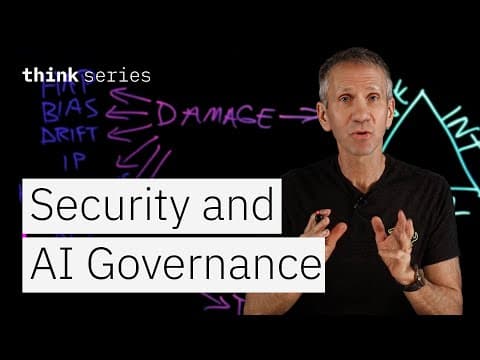
4.35 million. 9.44 million. 83%. What do those numbers have to do with data security? I'll tell you in a minute. Welcome back to the Cyber Security Architecture series, where in the first few videos we talked about principles, fundamentals, about the various domains of cybersecurity. We covered identity and access. We looked at the endpoint, the ne... Read More
Key Insights
- Data security relies on a governance policy that defines sensitive data and protections, plus a data catalog to locate it.
- Discovery must cover both databases and unstructured data to find sensitive content that could leak.
- Encryption protects data at rest and in motion, while key management ensures encryption remains secure across the lifecycle.
- Access control remains critical even with strong encryption to prevent misuse from weak passwords.
- Backups provide resilience against disasters and ransomware by enabling restore without paying attackers.
- Regulatory compliance, including GDPR and HIPAA, requires reporting and data retention aligned with legal obligations.
- Data protection must account for the lifecycle of keys and the transition to quantum-safe cryptography in the future.
- Detection uses monitoring, user behavior analytics and alerts to identify data misuse and trigger response.
Install to Summarize YouTube Videos and Get Transcripts
Explore YouTube Video Summarizer or Get YouTube Transcript Extractor
Questions & Answers
Q: A real search query question about the video (e.g. 'How to...', 'What is...', 'Why does...', 'When should...'). Question 1
What are the core components of a data security program and why do governance and discovery matter? The program starts with a governance policy that outlines what data is sensitive and the protections it requires, followed by a data catalog that locates data across the organization. Discovery then finds sensitive content in databases and unstructured data, enabling real time protection and data loss prevention.
Q: Question 2
How does encryption fit into data security and what are the key management considerations? Encryption protects data at rest and in motion by scrambling it so only authorized parties can read it. Key management is crucial: keys must be generated randomly, stored securely, rotated regularly, and kept up to date with evolving cryptographic standards to prevent data exposure.
Q: Question 3
What role does access control play in securing data beyond encryption? Access control ensures that even with strong encryption, only properly authenticated and authorized users can access data. Weak passwords undermine security, so authentication, authorization, and strong credential management remain essential components of a data security strategy.
Q: Question 4
Why is data backup emphasized in data protection and how does it help in disaster scenarios? Backups provide a resilient defense against disasters and ransomware by enabling data restoration without capitulating to attackers. Maintaining recoverable copies of data reduces downtime and limits breach impact, making it a fundamental part of any security plan.
Q: Question 5
What is the significance of compliance and retained records in data security? Compliance requirements like GDPR and HIPAA drive reporting, audits and data retention policies. Retaining records only as long as necessary reduces liability and costs, while ensuring the ability to demonstrate adherence to legal and regulatory obligations when needed.
Q: Question 6
How does data protection address the concept of data in motion versus data at rest? Data at rest refers to stored information, while data in motion is data actively moving across networks. Both require protection: encryption for data in transit and at rest, plus monitoring to detect unusual movements or exfiltration attempts.
Q: Question 7
What is the function of data loss prevention in governance and discovery? Data loss prevention detects sensitive content as it moves or is copied, enabling real time monitoring and alerts. It helps prevent leakage by identifying risky activity early and guiding incident response through a programmable playbook.
Q: Question 8
How do quantum threats influence future data security planning? Quantum safe crypto awareness is needed to prepare for algorithms that resist quantum attacks. Planning involves tracking advances, updating cryptographic standards and ensuring key management practices can adapt to new, quantum resistant methods to keep data secure long term.
Summary & Key Takeaways
-
A data security ecosystem begins with a governance policy and a data catalog that classifies information by sensitivity and sets protection requirements. This foundation guides where data resides and how it should be protected across rest and motion.
-
Discovery extends to structured databases and unstructured data like files and emails, enabling real time detection of sensitive content and data leakage across networks.
-
Protection combines encryption, access control, key management, backups and regulatory compliance to reduce breach impact and support recovery after incidents.
Read in Other Languages (beta)
Share This Summary 📚
Summarize YouTube Videos and Get Video Transcripts with 1-Click
Try YouTube Summary with ChatGPT & Claude or YouTube Transcript Generator
Explore More Summaries from IBM Technology 📚





Summarize YouTube Videos and Get Video Transcripts with 1-Click
Try YouTube Summary with ChatGPT & Claude or YouTube Transcript Generator