What Legal Questions Can Twitter Users Ask?
TL;DR
Hate speech is largely protected as free speech in the U.S., with specific exceptions. Additionally, grand juries are used to decide on indictments, while regular juries determine guilt, illustrating the complexities of the legal system and differing standards of proof.
Transcript
I'm Devin Stone a practicing lawyer and adjunct law professor and host of the legal eagle law Channel and I'm here to answer your questions from Twitter this is law support from at granule where is the line between hate speech and Free Speech actually there is no line a lot of countries take different philosophies when it comes to hate speech but i... Read More
Key Insights
- 🇺🇸 Hate speech is protected by the First Amendment in the United States, although some exceptions exist.
- 🧑⚖️ Threats made against judges inside a courtroom may be prejudicial, but they do not necessitate the replacement of the judge.
- 😌 The distinction between being found not guilty in criminal court and being held liable in civil court lies in the burden of proof.
- ❓ Grand juries are used to determine whether to indict someone, while regular juries decide guilt or innocence.
- 🤳 Invoking the fifth amendment does not indicate guilt and offers protection against self-incrimination.
- 👮 Changes in gambling laws have made online platforms like DraftKings and FanDuel legal.
- 😄 Guilty and no contest pleas differ in their implications in criminal and civil cases.
- 💼 Frivolous lawsuits may be overestimated in number, as attention is often focused on sensational cases.
- 🤨 AI-generated songs raise legal questions regarding copyright and licensing.
- 🥺 Avoiding service of legal papers does not protect against lawsuits and may lead to default judgment.
- ❤️🩹 Attorney-client privilege ends if a lawyer participates in fraud.
- 👍 Perjury is enforced but can be difficult to prove.
- 👮 Lawyers specialize in specific areas of law and may not be familiar with every law or case.
- ❓ Defense lawyers may represent guilty clients due to various reasons such as disproportional sentences.
- ❓ AI may improve efficiency in legal practice but is unlikely to replace lawyers completely.
- 🧑🏭 The Supreme Court chooses cases based on factors such as conflicts between states, national importance, and interpretation of laws.
- 🌍 Crimes can exist in virtual worlds and may have legal implications.
- 🗯️ Statutes of limitations balance the need for punishment and the rights of defendants.
- 💁 Lawyers understand that jurors cannot entirely forget disregarded information.
Install to Summarize YouTube Videos and Get Transcripts
Explore YouTube Video Summarizer or Get YouTube Transcript Extractor
Questions & Answers
Q: Is hate speech protected as free speech in the United States?
Hate speech is indeed protected as free speech under the First Amendment, with certain exceptions for specific crimes.
Q: If someone threatens a judge in a courtroom, does that judge become prejudiced against them?
While the threat may be prejudicial, it does not necessarily result in undue prejudice. Inside the courtroom, certain actions might be prejudicial but are considered fair game.
Q: Why was O.J. Simpson found not guilty in criminal court but liable in civil court?
The difference lies in the burden of proof. Criminal cases require proof beyond a reasonable doubt, while civil cases rely on a preponderance of evidence.
Q: When is a grand jury used instead of a regular jury?
A grand jury is employed by prosecutors to determine whether to indict someone, whereas a regular jury decides the guilt or innocence of the accused.
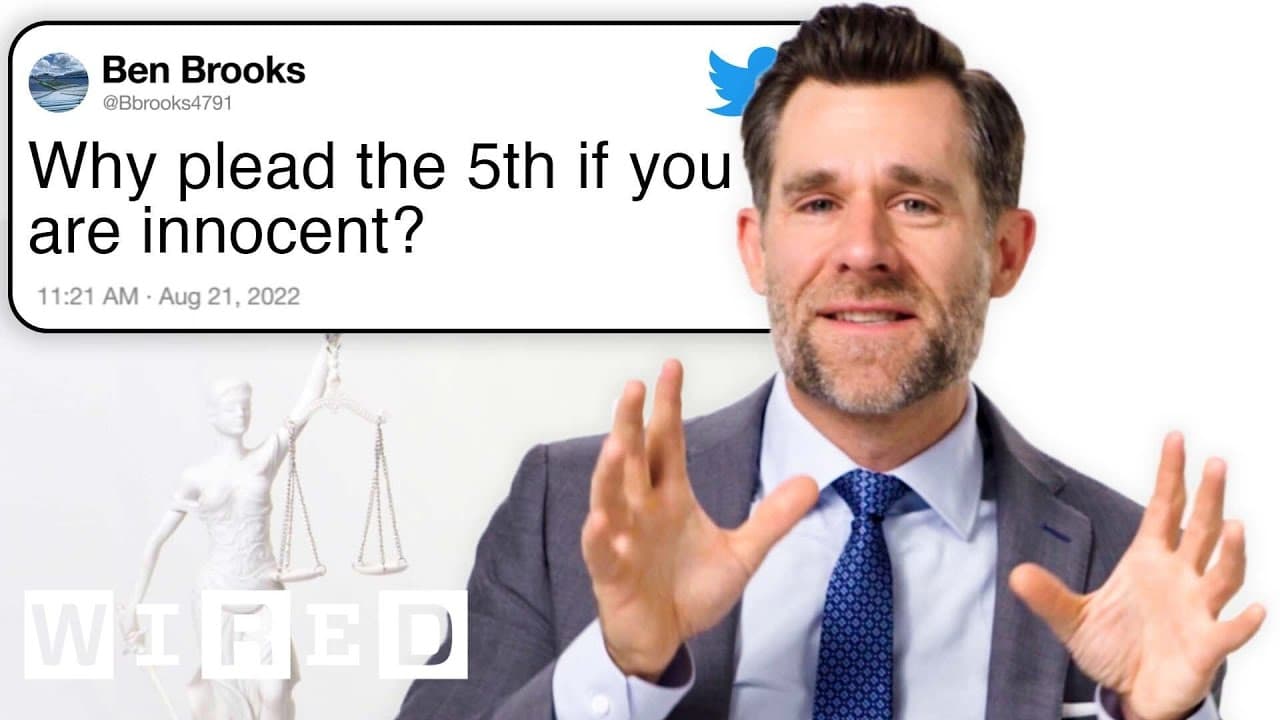
Q: Why do people plead the fifth if they are innocent?
Invoking the fifth amendment protection against self-incrimination does not imply guilt. It allows individuals to avoid testifying in a way that might open them up to unrelated crimes or make them appear unfavorable in court.
Q: How do DraftKings and FanDuel bypass anti-gambling laws?
Previously, these platforms were considered illegal across the U.S. However, changes in gambling laws now permit online betting, leading to the legality of platforms like DraftKings and FanDuel.
Q: How does a guilty plea differ from a no contest plea?
A guilty plea directly admits guilt, whereas a no contest plea treats the defendant as guilty in criminal cases but requires the plaintiff to prove liability in civil cases.
Q: Why are there many frivolous lawsuits in America?
The perception of numerous frivolous lawsuits arises from selection bias, as attention is generally given to the most outrageous cases. Many valid cases that involve contract disputes or minor issues do not make headlines.
Key Insights:
- Hate speech is protected by the First Amendment in the United States, although some exceptions exist.
- Threats made against judges inside a courtroom may be prejudicial, but they do not necessitate the replacement of the judge.
- The distinction between being found not guilty in criminal court and being held liable in civil court lies in the burden of proof.
- Grand juries are used to determine whether to indict someone, while regular juries decide guilt or innocence.
- Invoking the fifth amendment does not indicate guilt and offers protection against self-incrimination.
- Changes in gambling laws have made online platforms like DraftKings and FanDuel legal.
- Guilty and no contest pleas differ in their implications in criminal and civil cases.
- Frivolous lawsuits may be overestimated in number, as attention is often focused on sensational cases.
- AI-generated songs raise legal questions regarding copyright and licensing.
- Avoiding service of legal papers does not protect against lawsuits and may lead to default judgment.
- Attorney-client privilege ends if a lawyer participates in fraud.
- Perjury is enforced but can be difficult to prove.
- Lawyers specialize in specific areas of law and may not be familiar with every law or case.
- Defense lawyers may represent guilty clients due to various reasons such as disproportional sentences.
- AI may improve efficiency in legal practice but is unlikely to replace lawyers completely.
- The Supreme Court chooses cases based on factors such as conflicts between states, national importance, and interpretation of laws.
- Crimes can exist in virtual worlds and may have legal implications.
- Statutes of limitations balance the need for punishment and the rights of defendants.
- Lawyers understand that jurors cannot entirely forget disregarded information.
- Generally, there is only one opportunity for appeal, except for certain higher courts that may take on further appeals.
Summary & Key Takeaways
-
Hate speech is protected as free speech in the United States, with limited exceptions for certain crimes.
-
Threatening a judge with death inside a courtroom may be prejudicial but not considered undue prejudice.
-
O.J. Simpson was found not guilty in criminal court but held liable in civil court for damages caused.
-
Grand juries are used by prosecutors to decide whether to indict someone, while regular juries determine guilt or innocence.
-
Pleading the fifth amendment does not indicate guilt, but rather protects against self-incrimination.
Read in Other Languages (beta)
Share This Summary 📚
Summarize YouTube Videos and Get Video Transcripts with 1-Click
Try YouTube Summary with ChatGPT & Claude or YouTube Transcript Generator
Explore More Summaries from WIRED 📚




Summarize YouTube Videos and Get Video Transcripts with 1-Click
Try YouTube Summary with ChatGPT & Claude or YouTube Transcript Generator