How to become a top fintech product manager
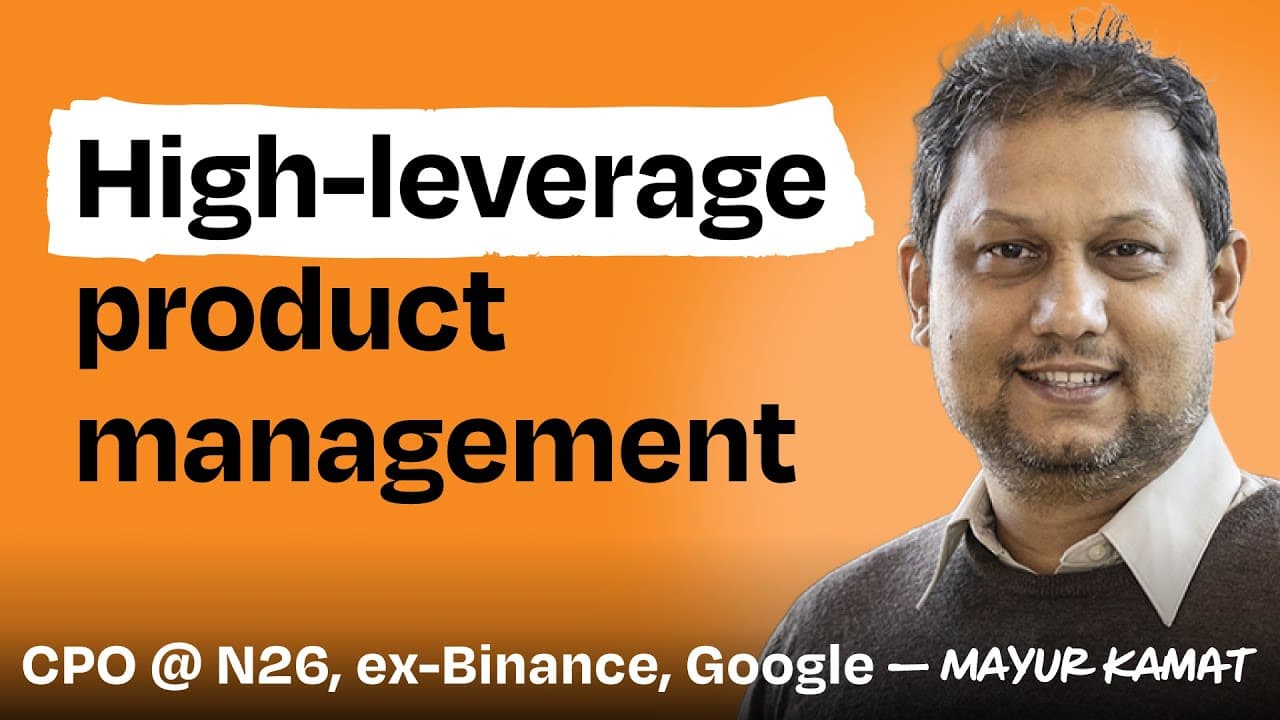
TL;DR
High leverage problems and fast experimentation define success in fintech PM roles. Focus on turning hypotheses into data quickly, own urgent initiatives end to end, and cultivate an ownership mindset that accelerates execution while balancing scale and governance. Real progress comes from disciplined experimentation and fast decision making.
Transcript
My, probably, most spectacular failure was, I was the first PM on Hangouts. We had thousands of people working for me. We had entire power of Google. We had Larry literally sitting with us saying we can do anything we want Chrome to do and we still didn't manage to build a great messaging product. The main learnings from that is, don't take on ... Read More
Key Insights
- A high leverage problem is the starting point for impactful product work.
- The key to product discipline is turning hypotheses into testable data quickly.
- Strategy is overrated for most PMs; velocity of learning matters more.
- Ownership culture enables rapid, end-to-end problem solving.
- Scaling fintech requires balancing speed with regulatory and governance constraints.
- Daily leadership rituals can speed up decision making and execution.
- Fast wins accumulate into significant competitive advantage over time.
- Choosing where to work can shape the PM learning curve and career trajectory.
Install to Summarize YouTube Videos and Get Transcripts
Explore YouTube Video Summarizer or Get YouTube Transcript Extractor
Questions & Answers
Q: What defines a high leverage problem for a fintech product manager?
A high leverage problem is one whose resolution can unlock a large portion of value or remove a significant bottleneck for users and the business. For fintech PMs, this might involve regulatory licensing, security, trust, or cross system integrations that enable more users to access essential features. Prioritizing these problems accelerates measurable impact and learning.
Q: Why is hypothesis to data velocity important for PMs?
Velocity from hypothesis to data is crucial because it shortens the learning loop. PMs should test assumptions with small, fast experiments, collect real user signals, and decide quickly whether to scale or pivot. This approach reduces risk, reveals real user needs, and guides informed product decisions rather than relying on gut feeling.
Q: How does Mayur describe the Binance leadership culture and why is it relevant?
The Binance culture emphasized extremely fast decision making with minimal layers, daily leadership alignment, and full ownership for urgent problems. This approach reduced decision latency and empowered individuals to own outcomes, which is relevant for PMs who need to drive complex initiatives across distributed teams and time zones while maintaining accountability.
Q: What are the pros and cons of a flat reporting structure for product teams?
A flat structure can accelerate decision making and empower individuals to own critical pieces, increasing agility. However, it can also create coordination challenges and misalignment if roles and responsibilities are not clearly defined. Successful PMs balance autonomy with explicit ownership and clear escalation paths to prevent chaos.
Q: Why is it important to decide whether you want the C-suite path?
Deciding on the C-suite path clarifies career priorities and the kinds of problems you should pursue. If leadership and broad strategic influence are your goals, you can tailor experiences to build cross-functional impact, governance skills, and stakeholder management. If you prefer hands-on execution, you may focus on deep product ownership and velocity.
Q: What distinguishes a successful fintech PM in scaling products internationally?
Successful fintech PMs understand regulatory constraints, localization needs, and cross-border user flows. They prioritize building scalable architectures and processes that can support licenses across many countries while keeping the product secure and compliant. This balance between compliance and user value is key to sustainable growth.
Q: How should PMs think about speed versus strategy early in their career?
Early in a PM career, speed of learning and delivering tangible outcomes beats grand, long-term strategic plans. By prioritizing experiments, collecting data, and iterating quickly, new PMs demonstrate impact and build credibility. Strategy can come later once a track record of reliable experimentation is established.
Q: What is the benefit of small, fast wins in product work?
Small, fast wins create a compounding effect, building momentum and increasing stakeholder confidence. They provide quick feedback loops, reveal user needs, and de-risk larger bets. In fast growing fintech environments, these wins can accumulate into meaningful competitive advantages over time.
Summary & Key Takeaways
-
A fintech PM should identify the highest impact problems and push for rapid experimentation to validate hypotheses, rather than chasing broad strategy. This approach accelerates learning and product impact while maintaining discipline.
-
A fast moving, ownership driven culture can enable rapid execution on complex regulatory and scale challenges, such as getting licenses across countries and managing large user bases, without sacrificing accountability.
-
Small, repeatable wins compound over time and often outperform large, slow bets, especially when leadership channels feedback quickly and decisions are not blocked by excessive processes.
Read in Other Languages (beta)
Share This Summary 📚
Summarize YouTube Videos and Get Video Transcripts with 1-Click
Try YouTube Summary with ChatGPT & Claude or YouTube Transcript Generator
Explore More Summaries from Lenny's Podcast 📚






Summarize YouTube Videos and Get Video Transcripts with 1-Click
Try YouTube Summary with ChatGPT & Claude or YouTube Transcript Generator