How to Build Startups With Built-In Viral Loops
TL;DR
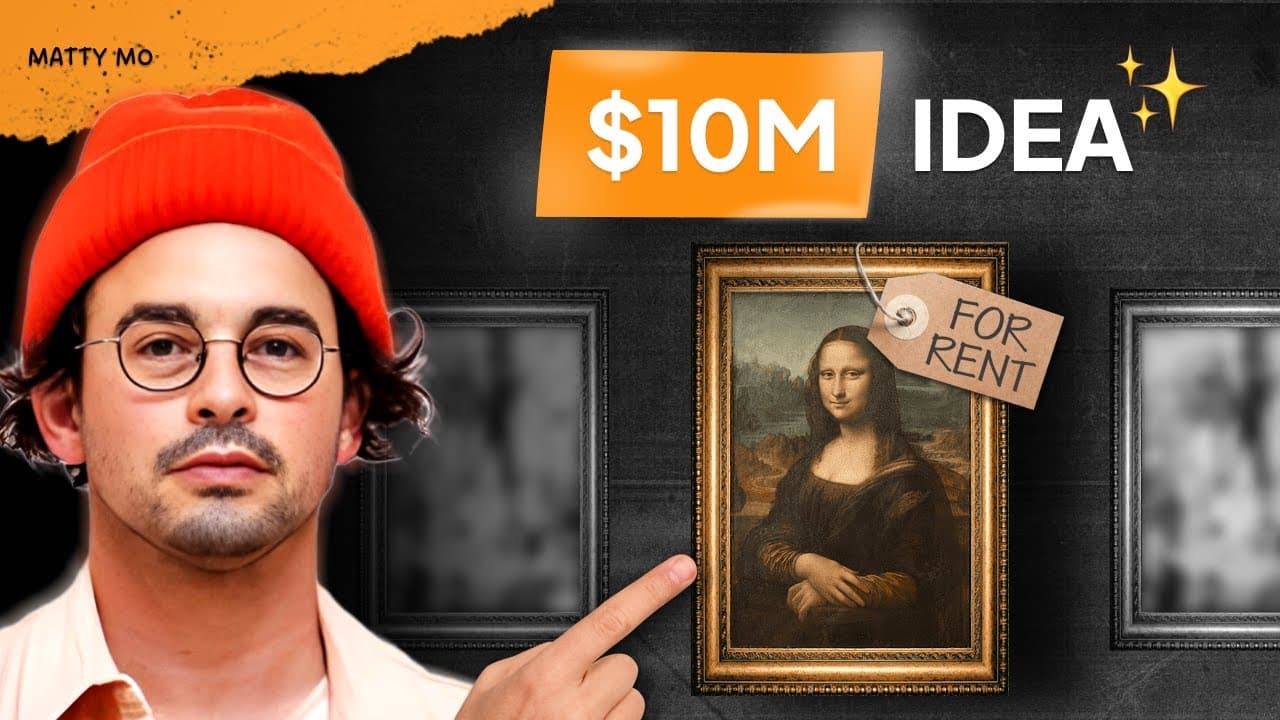
Build virality into the product so customers naturally create content, share the company’s story, and attract more business. A mural agency demonstrates the model: secure unused walls, package them as advertising inventory, and sell brands a placement whose production, finished artwork, artist participation, and customer photos can generate attention beyond ordinary billboard impressions.
Transcript
any content that's going viral related to a Creator inventing a new style of making work and sharing it on Tik Tok is a product that could be sold on a monthly basis as a as a box company or in a Marketplace and this is a product you buy that allows you to create content around your purchase and in doing so you're in inadvertently marketing the thi... Read More
Key Insights
- A built-in viral loop is a business advantage because customers can share the company’s story and bring in more business organically. The central entrepreneurial prompt is to choose an ordinary business, imagine its viral version, and design customer sharing into the operation.
- A product can market itself when purchasing it gives customers material for content. Products connected to creators, distinctive working styles, or trends spreading on TikTok could be packaged as monthly boxes or marketplace offerings that encourage buyers to publish their own demonstrations and reactions.
- Matty Mo’s creative process is based on starting with a headline and reverse engineering the result. The process includes deciding what action could justify the headline, identifying a suitable publication, and creating enough digital artifacts for others to understand and distribute the story.
- Art is broader than galleries, expensive objects, and paintings displayed in white rooms. It can describe a way of living that involves deliberate material choices, careful study of a craft, and meaningful work, giving entrepreneurs another lens for designing businesses and their lives.
- A mural agency works by converting blank urban walls into managed advertising inventory. The operator secures permission from property owners, records photographs and dimensions, estimates passing traffic, and packages each location for advertisers alongside creative production services.
- Mural placements can be priced through two components: advertising exposure comparable to billboard inventory and the artistic work required to produce the mural. The transcript says one placement can range from $1,000 to $20,000 in a high-traffic area, depending on the opportunity.
- Murals attract attention during production as well as after completion. Drivers can watch the work develop, form an emotional connection to the process, and later encounter the finished piece, giving the advertiser an attention opportunity that a static, already-installed billboard does not provide.
- Murals can generate organic social impressions because people may photograph and share artwork even though they would not normally share a billboard. Selecting an artist who posts the project can add the artist’s influence, while the unusual placement can also support earned media.
Install to Summarize YouTube Videos and Get Transcripts
Explore YouTube Video Summarizer or Get YouTube Transcript Extractor
Questions & Answers
Q: How do you build a viral loop into a startup?
Build the product or service so using or purchasing it naturally gives customers something worth sharing. The desired loop is that customers tell the company’s story, publish content connected to their purchase, and bring in additional business organically. A useful prompt is to take an existing business and ask what its viral version would look like, then make sharing part of the customer experience.
Q: How does a local mural advertising agency work?
The agency finds blank walls, approaches the relevant business or building owners, and offers them a few hundred extra dollars per month for permission to manage advertising placements. It then photographs and measures each wall, estimates traffic, prepares the location as sellable inventory, and charges advertisers for both the expected exposure and the artistic production required to paint the mural.
Q: How can a mural agency find suitable advertising locations?
The operator can drive around a city and identify blank walls that have not become conventional billboard placements. After finding a promising wall, the operator asks its owner for an agreement to manage advertising there. Each secured location should then be photographed, measured, evaluated for passing traffic, and presented in sales collateral that advertisers can assess before purchasing a campaign.
Q: How should a mural placement be packaged for advertisers?
A mural placement should be documented with photographs, wall dimensions, total square footage, passing-traffic estimates, projected daily and monthly impressions, and available artistic formats. The sales material can distinguish between a straightforward painted sign and a more detailed, photograph-like mural. This gives advertisers a clear view of the location, expected exposure, production possibilities, and associated price.
Q: Why might brands choose murals instead of billboards?
Murals can create attention while they are being painted and after they are completed. People driving past may notice the work developing, form an emotional connection to the process, and photograph the finished artwork. Those photos can create organic social impressions, while a participating artist may share the project with an existing audience and extend the campaign beyond the physical location.
Q: How can a mural agency estimate advertising impressions?
The agency can research how much traffic passes the building, use that figure to estimate daily exposure, and extrapolate it to a monthly total. That expected impression count becomes part of the placement’s sales package and helps support pricing comparable to billboard advertising. The estimate should appear alongside photographs, dimensions, square footage, and examples of the mural formats available to the advertiser.
Q: How can artists help a mural agency deliver campaigns?
A mural agency can recruit from the many artists who are not earning their living solely through independent art sales. These artists provide the production capacity needed to execute different mural formats. Choosing an artist with an active social audience can create an additional benefit because the artist may post the work, connecting the advertiser with that artist’s influence as well as the physical placement.
Q: How can entrepreneurs use memes and art to attract attention?
Entrepreneurs can begin with a headline or story people would want to discuss, then reverse engineer an authentic action that produces it. The process includes choosing where to pitch the story and creating digital artifacts that make it understandable and shareable. Art, memes, and unusual public projects can hijack an existing narrative, encourage audience participation, and turn attention into organic distribution for a business.
Summary & Key Takeaways
-
Matty Mo approaches art and entrepreneurship by identifying attention opportunities, imagining a compelling headline, and reverse engineering the actions, publication outreach, and digital artifacts needed to create the story. His broader lesson is that entrepreneurs can live artfully by studying their craft, making deliberate choices, and pursuing work with deeper meaning.
-
A local mural agency can turn blank walls into managed advertising placements. The operator signs agreements with building owners, photographs and measures each wall, estimates passing traffic, prepares sales collateral, and prices both the media exposure and artistic production. A portfolio of placements can become valuable inventory without owning conventional billboards.
-
Murals offer brands several layers of attention. People notice the artwork while painters create it, develop an emotional connection as it progresses, photograph the completed piece, and share those images online. An artist may also post the project to an existing audience, adding social reach and earned media to the physical placement.
Read in Other Languages (beta)
Share This Summary 📚
Summarize YouTube Videos and Get Video Transcripts with 1-Click
Try YouTube Summary with ChatGPT & Claude or YouTube Transcript Generator
Explore More Summaries from Greg Isenberg 📚



Summarize YouTube Videos and Get Video Transcripts with 1-Click
Try YouTube Summary with ChatGPT & Claude or YouTube Transcript Generator