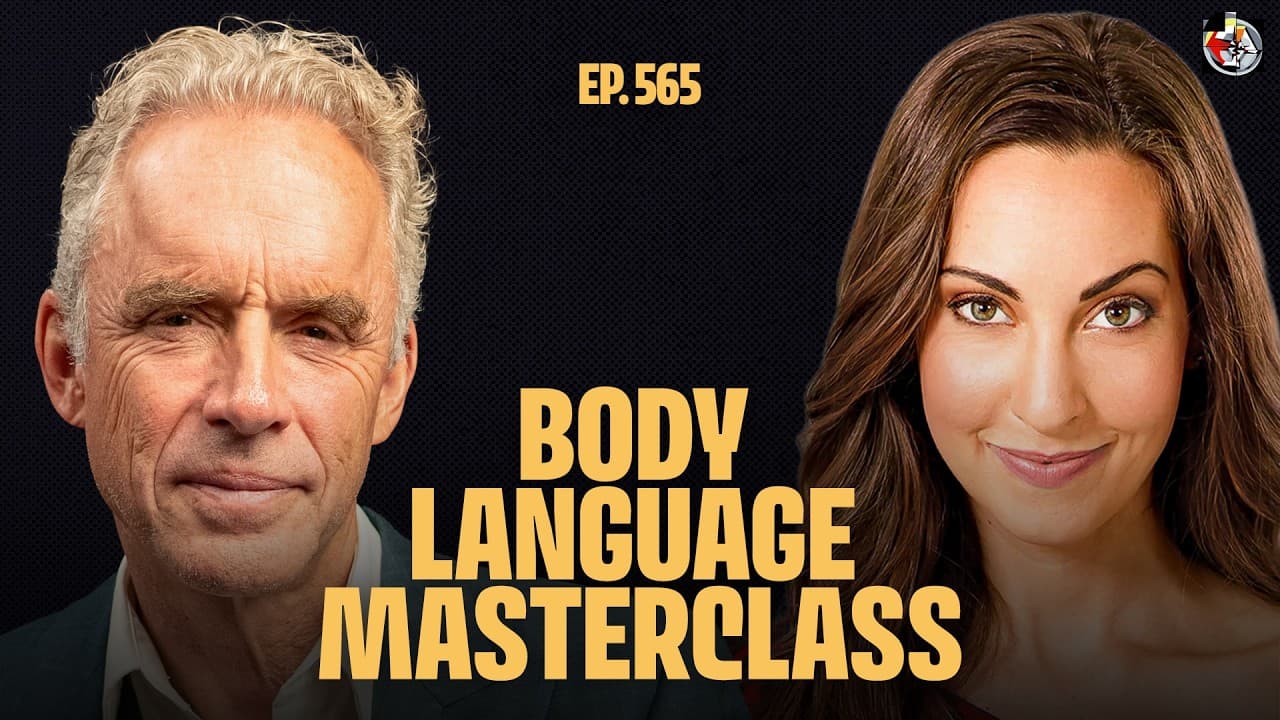
How to Overcome Awkwardness and Read Body Language with Vanessa Van Edwards | EP 565
TL;DR
You can overcome awkwardness by treating conversation and body language as learnable skills, according to behavioral researcher Vanessa Van Edwards. In first impressions, avoid “turtling,” which reduces oxygen, increases neck tension, and weakens vocal power; also watch for uptalk, which can make listeners scrutinize your words. Because impressions can form in less than a second, read on for specific posture and vocal cues to practice.
Transcript
Why don't you study for people like you study for chemistry? Why don't you study conversation and body language just like you study for subjects? Vanessa Van Edwards is a behavioral researcher, a best-selling author, an instructor at Harvard University, and a self-described recovering awkward person. I know I'm a recovering awkward person. I am the... Read More
Key Insights
- First impressions form in less than a second, based on non-verbal cues like whether two people are angled toward each other on parallel lines, which the brain prefers, versus angled halfway away.
- The distance between your ears and shoulders is a key anxiety cue: when afraid, people 'turtle' by sinking the head and creeping the shoulders up to take up as little space as possible.
- Turtling shortens vocal power because it reduces oxygen, adds neck tension, and clenches the jaw, which lowers volume and makes a person sound nervous during a first impression.
- Uptalk, or an accidental question inflection, shifts a listener's brain from listening to scrutinizing because liars often use it, subconsciously signaling that something is off even when the speaker is not lying.
- Space between the torso and arm signals comfort, while keeping arms tight to the side signals discomfort and an instinct to protect vital organs, though it can also stem from bad habits, cold, or allergies.
- The verbal first impression usually happens on the word 'hello,' where vocal flexibility or its absence is immediately detected by the listener.
- Uptalk has external causes (showing deference or harmlessness, or anxiety about a boss or negotiation) and internal causes (self-doubt, imposter syndrome, feeling unworthy), where people 'ask' their name, value, or salary.
- The book's main target is competent, well-prepared people whose social anxiety and awkwardness stop them from sharing good ideas, because they are anxious about their presence, not their ideas.
Install to Summarize YouTube Videos and Get Transcripts
Explore YouTube Video Summarizer or Get YouTube Transcript Extractor
Questions & Answers
Q: How can you overcome awkwardness in a first impression?
Treat conversation and body language as skills that can be studied and learned, even if they do not come naturally. Vanessa Van Edwards recommends recognizing a connected pattern: nervousness causes turtling, turtling weakens vocal power, and the resulting uncertainty can produce uptalk. Creating more distance between your ears and shoulders is one specific way to counter that compressed posture.
Q: What is the “trifecta of awkwardness” described by Vanessa Van Edwards?
First, nervousness makes you shrink and turtle by lowering your head and raising your shoulders. That posture reduces oxygen, creates neck tension, and can cause jaw clenching and lower vocal volume. You may then use uptalk, making statements sound like questions and prompting listeners to scrutinize you.
Q: What is uptalk, and how does it affect listeners?
Uptalk is an accidental question inflection in which the voice rises at the end of a statement. Van Edwards says it shifts the listener’s brain from listening to scrutinizing because liars sometimes use that inflection as if asking, “Do you believe this?” Even when the speaker is truthful, it can signal that something feels off.
Q: What does turtling mean in body language?
Turtling occurs when someone sinks their head and moves their shoulders toward their ears to occupy less space. It commonly appears when people feel anxious or afraid, including during first impressions. The posture can also weaken the voice by reducing oxygen and increasing tension in the neck and jaw.
Q: Which posture cues can signal comfort or anxiety?
Greater distance between the ears and shoulders suggests a less compressed posture, while raised shoulders and a lowered head can signal anxiety. Visible space between the torso and arms can suggest comfort because the person is not protecting the torso. Arms held tightly against the sides may suggest discomfort, although cold, allergies, or habit can produce the same posture.
Q: How quickly do people form first impressions?
Vanessa Van Edwards says people can form impressions in less than a second. Observers rapidly notice alignment, how much space someone occupies, whether the torso appears protected, and the flexibility of the voice. The verbal first impression usually begins with the word “hello.”
Q: Why does body posture affect vocal power?
A compressed, turtled posture gives the speaker less oxygen and creates more tension in the neck. It can also lead to jaw clenching, reduced volume, and a nervous-sounding voice. Because posture and voice are connected, shrinking physically can weaken how a greeting or statement is delivered.
Q: Can body language and conversation skills be learned?
Yes. Vanessa Van Edwards argues that people can study conversation and body language just as they study academic subjects. She describes herself as a recovering awkward person and says soft skills can be learned even when they do not come naturally, including details such as pause length and the number of pumps in a handshake.
Summary & Key Takeaways
-
Vanessa Van Edwards, a behavioral researcher, Harvard instructor, and self-described recovering awkward person, argues that soft skills like conversation and body language can be studied and learned just like chemistry, even if they do not come naturally to you.
-
A trifecta of awkwardness sabotages first impressions: nervousness makes people shrink and turtle their shoulders up, which weakens the voice, and then uptalk, an accidental question inflection, triggers the listener's brain to scrutinize rather than listen.
-
Uptalk stems from external factors like showing deference or anxiety, and internal factors like self-doubt and imposter syndrome. Her real target is competent people whose social anxiety prevents them from sharing brilliant ideas in interviews and meetings.
Read in Other Languages (beta)
Share This Summary 📚
Summarize YouTube Videos and Get Video Transcripts with 1-Click
Try YouTube Summary with ChatGPT & Claude or YouTube Transcript Generator
Explore More Summaries from Jordan B Peterson 📚





Summarize YouTube Videos and Get Video Transcripts with 1-Click
Try YouTube Summary with ChatGPT & Claude or YouTube Transcript Generator