How to hit $4m in ecommerce with Google ads
TL;DR
Google ads can generate large revenue when campaigns are structured with product-specific Performance Max groups and branded search. The key is separating products into cohorts, setting clear goals, and prioritizing branded search to protect against competitors while using a catch-all for all other products. Properly managing bids and leveraging conversion value helps scale efficiently.
Transcript
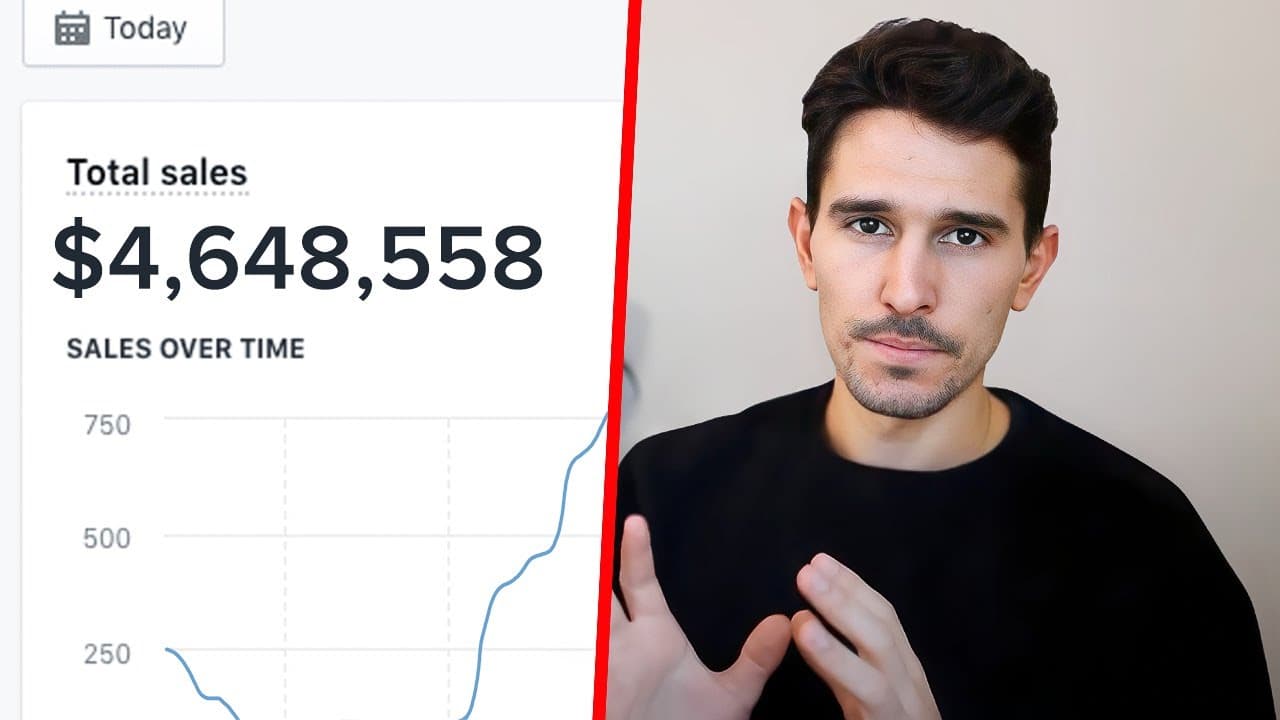
On my screen right now is a $4.6 million month from one of our clients that we managed. This did not happen because we ran Tik Tok shops. This didn't happen because we tested some random new trend. This happened with a Google ad strategy that we use across a portfolio of clients that is robust. It takes a lot of work, but I'm going to show you exac... Read More
Key Insights
- Performance Max campaigns perform best when campaigns are broken out by product value so spend can be aligned with expected returns.
- Avoid over grouping all products in one campaign; use listing groups or separate campaigns to protect demand and optimize for different product cohorts.
- A catch-all campaign helps capture demand that tests and groupings miss, preventing leakage of potential sales.
- Conversion value should guide bidding, with a target ROAS set to a level that supports scalable growth.
- Location and asset automation settings can streamline optimization and ensure ads reach the right audiences.
- Branded search is not optional; it protects your brand presence and can outperform competitors when allocated properly.
- Regularly review product-level performance to pause underperformers and promote best sellers, maintaining a healthy catalog mix.
- Using auto-generated assets can help Google learn and optimize, but you should monitor quality and relevance to maintain performance.
Install to Summarize YouTube Videos and Get Transcripts
Explore YouTube Video Summarizer or Get YouTube Transcript Extractor
Questions & Answers
Q: How to structure Performance Max campaigns by product value for ecommerce?
Structuring Performance Max campaigns by product value means creating separate campaigns or listing groups for different product tiers, so the algorithm can optimize against distinct average order values and margins. This approach enables precise control over budget allocation, ensures higher value items receive appropriate spend, and helps prevent a single catch-all from diluting performance across the catalog.
Q: Why should I use a catch-all campaign in addition to product-specific campaigns?
A catch-all campaign captures demand that may not fit neatly into specific product groups, ensuring that less-popular or new products still get visibility. This reduces missed opportunities and helps balance traffic across the catalog. It also provides a safety net that protects overall revenue when individual product performance fluctuates.
Q: What is the role of conversion value in setting ROAS targets?
Conversion value lets you optimize toward the revenue impact of each conversion rather than just the number of conversions. By setting a target ROAS based on your break-even point and scaling to a higher ROAS as you grow, you can maintain profitability while increasing overall revenue as campaigns learn and optimize.
Q: Why is branded search important for ecommerce advertisers?
Branded search is important because it ensures your brand appears at the top for queries that include your brand name, protecting against competitors bidding on brand terms. It helps capture high-intent users, reduces risk of lost revenue to rivals, and can drive a substantial portion of total revenue when properly structured with negative keywords and exact-match terms.
Q: How should I set goals and location targeting in Performance Max campaigns?
Set a single primary goal to the purchase event to keep optimization focused and avoid confusing the algorithm with multiple objectives. For location targeting, limit to the regions you serve (e.g., United States) and use appropriate user signals such as presence or interest to reach the right audience without overextending reach.
Q: What is the benefit of listing groups versus a single catch-all approach?
Listing groups allow you to align products with specific campaigns, budgets, and bidding rules, improving relevance and performance for each cohort. A catch-all complements this by ensuring no demand is left behind, offering broad reach for the rest of the catalog while protecting against revenue leakage.
Q: How can I leverage automatically created assets in Performance Max campaigns?
Automatically created assets help Google learn from your site and improve ad relevance over time. These assets can accelerate optimization when you have a large catalog, but you should monitor performance to ensure assets remain accurate and aligned with your brand messaging and product offerings.
Q: What should I monitor in branded search auctions to protect performance?
In branded search auctions, monitor impression share and top-of-page metrics to ensure you appear prominently for your brand terms. Regularly review auction insights to compare performance against competitors, maintain strong visibility, and adjust bids or budgets to preserve market dominance and prevent lost revenue to rivals.
Summary & Key Takeaways
-
A high-performing ecommerce Google Ads setup hinges on dividing campaigns by product value and using a catch-all for the rest, enabling precise control over cost and return.
-
Branding search plays a crucial role in capturing branded queries and countering competitors, contributing significantly to overall revenue and brand visibility.
-
The recommended setup favors dedicated campaigns for top products and a broad catch-all to avoid missing demand, with smart bid strategies and consistent optimization across campaigns.
Read in Other Languages (beta)
Share This Summary 📚
Summarize YouTube Videos and Get Video Transcripts with 1-Click
Try YouTube Summary with ChatGPT & Claude or YouTube Transcript Generator
Explore More Summaries from Sam Piliero 📚



Summarize YouTube Videos and Get Video Transcripts with 1-Click
Try YouTube Summary with ChatGPT & Claude or YouTube Transcript Generator