How Did Ancient Humans Survive Ice Age Winters?
TL;DR
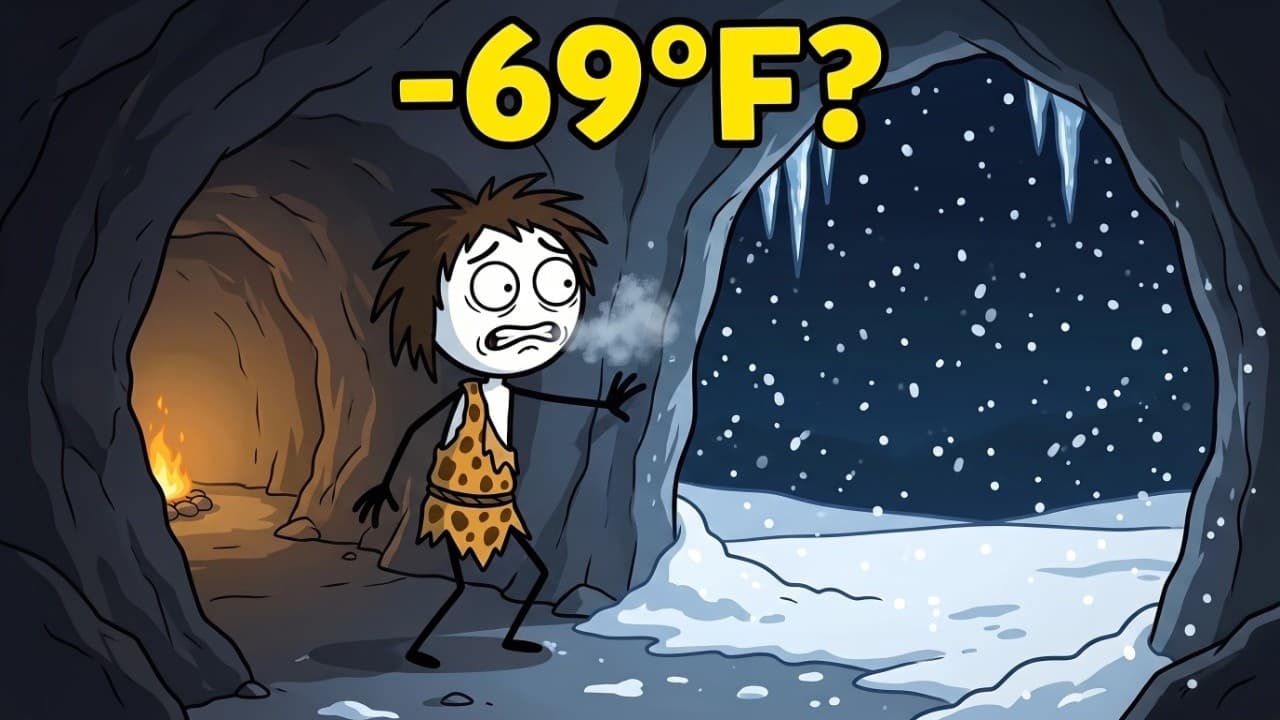
Ancient humans survived severe winters by combining cold acclimatization with controlled fire, fitted animal-skin clothing, insulated shelters, preserved food, and shared resources. These strategies protected core temperature, reduced caloric demands, and helped communities endure freezing winds, long darkness, and seasonal scarcity while fostering cooperation, planning, cultural memory, and group loyalty.
Transcript
The heat is on. You adjusted the thermostat without looking, somewhere between 68° and 72°, the range your body decided was comfortable, and now you have forgotten about temperature entirely. You are wearing a t-shirt in January. You have food in the refrigerator that will last another week. Outside it is below freezing and it does not concern you ... Read More
Key Insights
- The human body has a narrow thermal survival margin: core temperature normally sits at 37° C, confusion and failed coordination appear around 33° C, unconsciousness occurs near 30° C, and the heart can stop below 28° C.
- Vasoconstriction is the body’s first cold-defense mechanism, tightening blood vessels near the skin and drawing warm blood toward vital organs. This process protects the core by allowing fingers, toes, and the nose to become cold first.
- Shivering is an energy-intensive heating system that uses involuntary muscle contractions and consumes energy at roughly five times the resting rate. Winter survival therefore depended on retaining enough fat and stored calories to continue producing heat when food became scarce.
- Brown adipose tissue is specialized fat that produces heat directly without shivering. Research published in 2014 found that repeated cold exposure increases active brown fat and its heat-generating efficiency, allowing acclimatization within a lifetime and even within a season.
- Controlled fire is ancient survival infrastructure, with burned bone and plant ash at Wonderwerk Cave indicating deliberate use approximately 1 million years ago. Structured hearths at Beeches Pit show that humans were repeatedly building and maintaining fires roughly 400,000 years ago.
- Fitted clothing is portable insulation because it traps warm air close to the body and limits heat loss from wind. Body-louse genetics suggest clothing became a regular part of human life approximately 170,000 years ago, before modern humans left Africa.
- Layered animal skins can preserve warmth in extreme cold by managing insulation and air circulation. Traditional Inuit winter clothing used two caribou-skin layers with fur facing in alternating directions, maintaining survivable body temperature at minus 50° C with minimal caloric expenditure.
- Winter survival was a cooperative cultural achievement built on insulated shelter, preserved food, shared resources, planning, and remembered knowledge. Seasonal hardship may have strengthened storytelling, cultural memory, group loyalty, and the instinct to share scarce supplies within a community.
Install to Summarize YouTube Videos and Get Transcripts
Explore YouTube Video Summarizer or Get YouTube Transcript Extractor
Questions & Answers
Q: How did ancient humans survive Ice Age winters?
Ancient humans combined biological acclimatization with several complementary technologies and social practices. Vasoconstriction, shivering, and activated brown fat helped their bodies retain or generate heat. Controlled fire, fitted animal-skin clothing, caves, and constructed insulated shelters reduced exposure. Preserved food, underground storage, shared resources, and long-term planning supplied the calories needed to remain warm through freezing temperatures, strong winds, extended darkness, and seasonal scarcity.
Q: How does the human body protect itself from extreme cold?
The body first uses vasoconstriction, which tightens blood vessels near the skin and redirects warm blood toward the core, protecting vital organs while the extremities cool. Shivering then produces heat through involuntary muscle contractions, although it consumes energy at roughly five times the resting rate. Repeated cold exposure can also activate brown adipose tissue, which burns stored energy to create warmth without shivering.
Q: What happens when human core temperature falls too low?
Normal human core temperature is about 37° C, and the distance between normal function and death is less than 10°. At 35° C, uncontrollable shivering begins. Around 33° C, thinking becomes confused and coordination fails. Near 30° C, consciousness is lost. Below 28° C, the heart can stop, which made reliable protection during winter nights essential.
Q: Why were calories essential for ancient winter survival?
Cold conditions increase the body’s energy demands precisely when food becomes harder to obtain. Shivering burns energy at roughly five times the resting rate, so a person who exhausts stored fat eventually loses the ability to sustain this heat production. Ancient communities therefore needed to hunt, forage, dry, preserve, store, and share enough food before or during winter to keep their bodies producing warmth.
Q: When did early humans begin using controlled fire?
The oldest confirmed evidence described comes from Wonderwerk Cave in South Africa, where burned bone and plant ash date to approximately 1 million years ago. Their location deep inside the cave indicates deliberate fire use rather than a natural wildfire. At Beeches Pit in England, structured hearths dating to roughly 400,000 years ago show repeated construction and maintenance of fires in a colder northern environment.
Q: When did clothing become part of human survival?
Genetic research on human body lice estimates that clothing became a regular feature of human life approximately 170,000 years ago. Body lice depend on garments and live in their seams, so their divergence from head lice provides an indirect timeline. Clothing likely served as survival infrastructure by trapping air near the body and preventing wind from removing that protective layer of warmth.
Q: How did animal-skin clothing keep people warm?
Fitted animal-skin garments created portable insulation by holding warm air close to the body and reducing heat loss to wind. Traditional Inuit clothing illustrates the principle clearly: two layers of caribou skin, with the fur alternating inward and outward, formed an insulating system capable of maintaining survivable body temperature at minus 50° C while requiring minimal additional caloric expenditure.
Q: How did winter survival shape human cooperation and culture?
Severe winters rewarded communities that prepared ahead, preserved food, shared scarce resources, maintained shelters and fires, and transmitted practical knowledge. Storytelling around the fire could preserve cultural memory across generations, while repeated scarcity strengthened cooperation and group loyalty. Winter was therefore more than a physical challenge. It may have helped shape long-term planning and the human instinct to share during difficult periods.
Summary & Key Takeaways
-
Human winter survival began with physiological defenses. Vasoconstriction protected vital organs by reducing warm blood flow near the skin, while shivering generated heat at roughly five times the resting energy rate. Repeated cold exposure also activated brown adipose tissue, improving non-shivering heat production within a person’s lifetime and even within one season.
-
Technology expanded the narrow margin between survival and fatal hypothermia. Early humans deliberately maintained fire, fashioned fitted clothing that trapped warm air and resisted wind, and occupied caves or constructed insulated shelters. Traditional Inuit garments later demonstrated the same insulation principle through two alternating layers of caribou skin that worked at minus 50° C.
-
Winter survival depended on more than individual toughness. Food preservation, underground storage, shared resources, and advance preparation addressed the conflict between rising caloric needs and declining winter supplies. Repeated seasonal hardship also encouraged cooperation, long-term planning, storytelling, cultural memory, and group loyalty, helping knowledge pass between generations rather than being repeatedly rediscovered.
Read in Other Languages (beta)
Share This Summary 📚
Summarize YouTube Videos and Get Video Transcripts with 1-Click
Try YouTube Summary with ChatGPT & Claude or YouTube Transcript Generator
Explore More Summaries from ThinkMan 📚


Summarize YouTube Videos and Get Video Transcripts with 1-Click
Try YouTube Summary with ChatGPT & Claude or YouTube Transcript Generator