7 Signs The People Around You Are Slowly Destroying You
TL;DR
Recognize and escape toxic relationships that harm your health.
Transcript
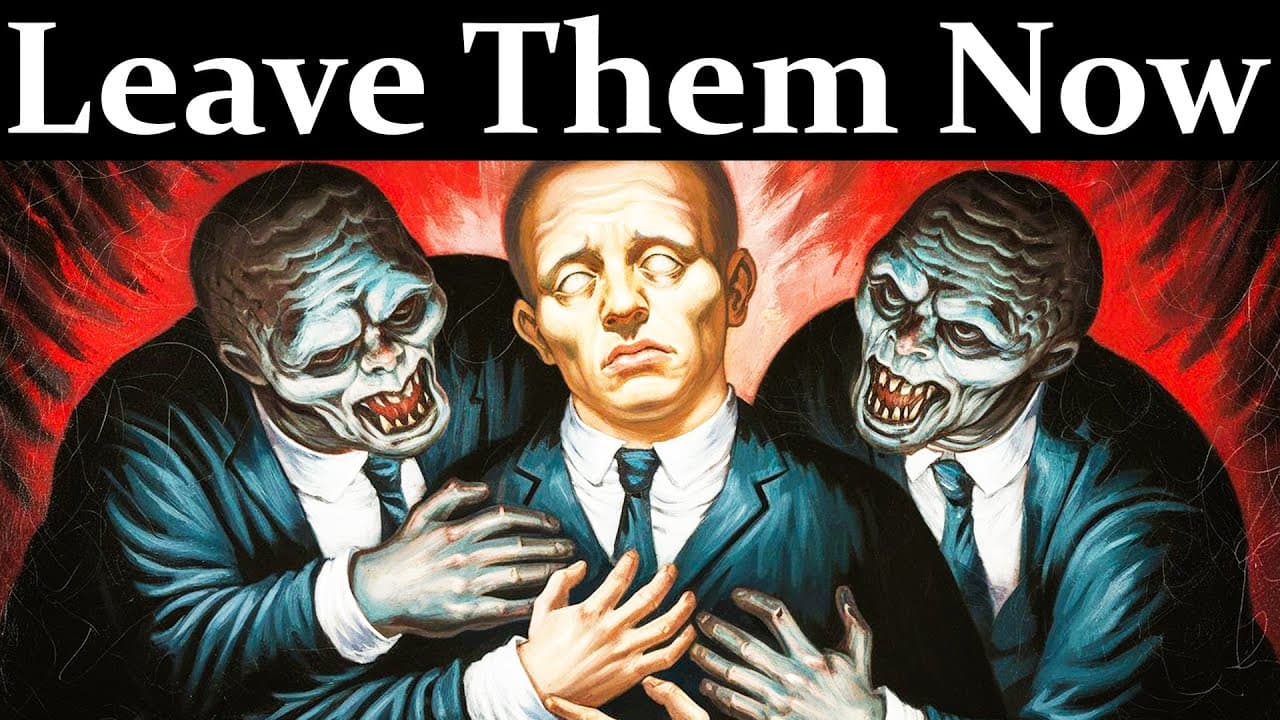
often the source of our suffering is not within us but around us and worse it disguises itself as normaly It's the subtly sarcastic coworker the controlling mother who calls it love the friend who constantly undermines you in public with harmless jokes Such relationships do not scream do not hit They suffocate in silence And while the mind tries to... Read More
Key Insights
- Toxic relationships often disguise themselves as normal, subtly undermining your mental and physical health over time.
- Emotional invalidation, where feelings are dismissed, can lead to chronic stress and physical ailments.
- Constantly being the emotional support for others without reciprocity can lead to exhaustion and health decline.
- Emotional control can be disguised as affection, subtly manipulating your choices to serve others' interests.
- Emotional sabotage, where achievements are undermined, can lead to anxiety and self-doubt.
- Induced isolation through undermining social connections can create loneliness and weaken mental health.
- Living in environments with constant judgment and competition can lead to chronic stress and physical symptoms.
- Emotional neglect, where expressed pain is ignored, can lead to psychosomatic illnesses and emotional disconnection.
Install to Summarize YouTube Videos and Get Transcripts
Explore YouTube Video Summarizer or Get YouTube Transcript Extractor
Questions & Answers
Q: What is emotional invalidation and how does it affect health?
Emotional invalidation occurs when an individual's feelings are dismissed or minimized. This behavior can lead to chronic stress, as the person learns to suppress their emotions. Over time, this suppression can manifest as physical ailments such as migraines, fatigue, and autoimmune diseases, as the body reacts to the persistent emotional neglect.
Q: How does being the sole emotional support affect an individual?
Being the sole emotional support for others without receiving any in return can lead to emotional exhaustion. This one-sided relationship creates a chronic state of stress, causing the individual to feel guilty for having needs and ashamed for asking for help. Over time, this can result in insomnia, low immunity, and a constant feeling of emptiness and disconnection.
Q: What is emotional control disguised as affection?
Emotional control disguised as affection involves subtle manipulation tactics that influence an individual's choices to serve someone else's interests. This can include concerned advice or subtle comments that generate doubt and insecurity. Such environments disable autonomy, leading to chronic stress and symptoms like anxiety, muscle pain, and fatigue, as the individual constantly fears rejection or criticism.
Q: How does emotional sabotage affect personal growth?
Emotional sabotage occurs when achievements are undermined by close individuals through subtle comments or reactions that drain joy and motivation. This behavior creates a pattern of self-annihilation, where the individual associates success with loneliness, leading to anticipatory anxiety and physical symptoms like headaches or insomnia, as the body perceives advancement as a threat.
Q: What is induced isolation and its impact?
Induced isolation is a form of emotional control where an individual's social connections are undermined through critical remarks and manipulations. This leads to a weakened support network, making the person easier to dominate. It creates a psychological state of learned helplessness, leading to anxiety, depression, and physical illnesses, as chronic loneliness impacts the body like smoking 15 cigarettes a day.
Q: How does constant judgment affect mental and physical health?
Constant judgment creates an environment where individuals live in a state of perpetual threat, leading to chronic stress. The nervous system remains on high alert, resulting in mental exhaustion, muscle tension, and migraines. The victim often believes their sensitivity is the problem, when in fact the environment is objectively toxic, reinforcing feelings of inadequacy and vulnerability.
Q: What is the impact of emotional neglect on health?
Emotional neglect occurs when expressed pain is ignored or dismissed, leading to psychosomatic illnesses. The nervous system, already overloaded, collapses, causing unexplained pains, fatigue, and anxiety attacks. This neglect teaches individuals that their emotions are inconvenient, leading to emotional disconnection and a reliance on the body to express unacknowledged pain.
Q: Why is recognizing toxic relationships important for well-being?
Recognizing toxic relationships is crucial for maintaining mental and physical health. These relationships, often subtle, can lead to chronic stress, emotional invalidation, and physical ailments. By identifying and addressing these toxic dynamics, individuals can take steps to protect their well-being, reclaim their autonomy, and foster healthier, more supportive connections.
Summary & Key Takeaways
-
The video discusses the subtle yet harmful effects of toxic relationships, which often masquerade as normal interactions. These relationships can lead to emotional invalidation, where feelings are dismissed, causing chronic stress and physical ailments.
-
The video highlights the dangers of being an emotional support without reciprocity, which can lead to exhaustion and health decline. It also discusses emotional control disguised as affection, manipulating choices for others' benefits.
-
The video emphasizes the impact of emotional sabotage, where achievements are undermined, leading to anxiety and self-doubt. It also warns against induced isolation and constant judgment, which can weaken mental health and cause physical symptoms.
Read in Other Languages (beta)
Share This Summary 📚
Summarize YouTube Videos and Get Video Transcripts with 1-Click
Try YouTube Summary with ChatGPT & Claude or YouTube Transcript Generator
Explore More Summaries from Psyphoria 📚



Summarize YouTube Videos and Get Video Transcripts with 1-Click
Try YouTube Summary with ChatGPT & Claude or YouTube Transcript Generator