How AI Is Rebuilding the Marketing Agency Model
TL;DR
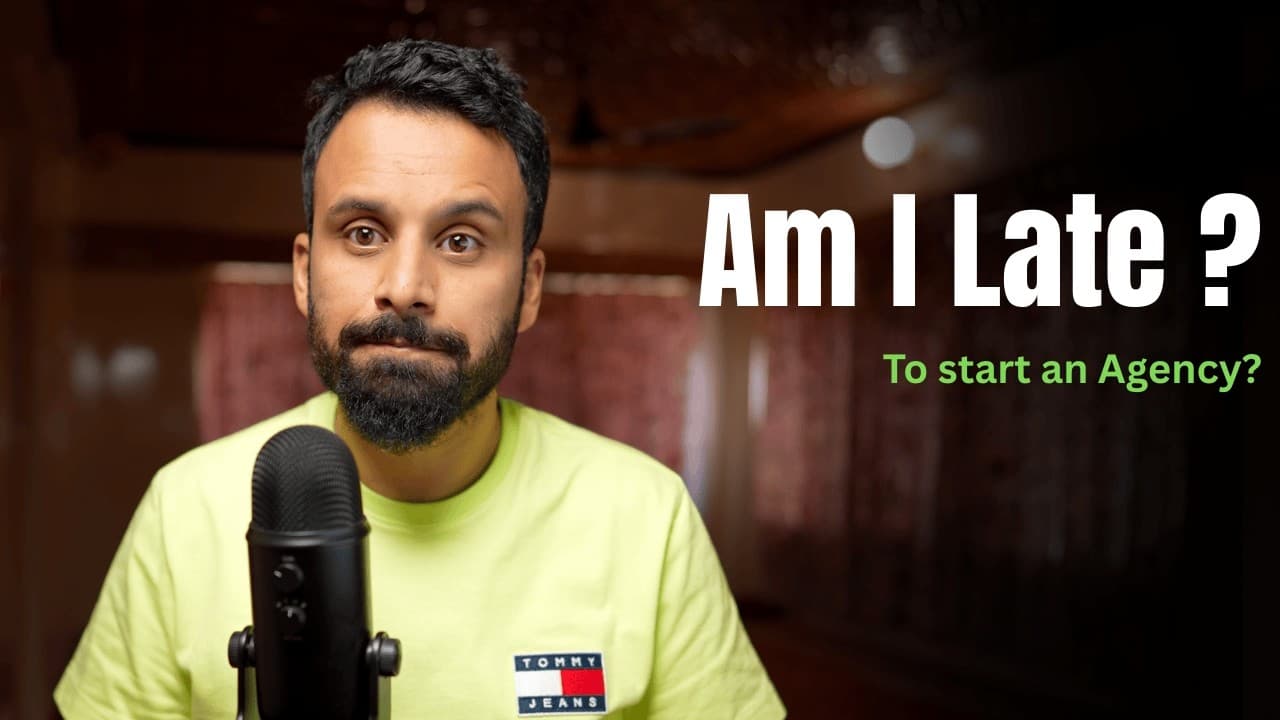
AI makes a leaner digital marketing agency possible by automating campaign structures, bidding, testing, copy, and creative production. Agencies can now replace siloed departments with client-focused pods of full-stack marketers who combine platform expertise, creativity, marketing fundamentals, and business acumen while operating as an extension of each client’s internal team.
Transcript
Okay, the update is I have started a new digital marketing agency that two in 2025. Some of you might know I already was partner in two agencies but this is completely a new agency with new direction. A lot of people have been telling me obvious so much about this industry. You have been in agency business for like almost a decade now. You know it'... Read More
Key Insights
- The old agency model is built around large retainers, bloated teams, narrow specialist roles, and multiple approval stages. Although many people participate, clients can still feel that they are not receiving enough value from the relationship.
- Traditional agency workflows separate creative development, media planning, business input, and data analysis into silos. Each team completes its work independently, passes an approval gate, and forces the next team to adapt its strategy to decisions already made.
- AI-driven advertising platforms automate tasks that once consumed much of a media buyer’s time, including bidding, keyword selection, ad copy selection, creative testing, and campaign organization. This automation leaves marketers with more time for strategy, creativity, and business thinking.
- Modern creative tools expand what performance marketers can produce themselves. Canva templates, for example, let professionals create more assets without relying entirely on Photoshop specialists, while AI tools accelerate work previously assigned to copywriters and other specialized contributors.
- Client expectations are shifting from visible attention and large organizational structures toward speed, agility, and responsiveness to changing trends. Clients increasingly want one knowledgeable contact who can define strategy, coordinate specialists, and understand the complete account.
- A modern performance marketer needs full-stack capability alongside a strong specialty. Media buying expertise alone is insufficient because the role now also requires creative strategy, knowledge of marketing fundamentals, and an understanding of how the client generates business.
- Business acumen is essential for agency marketers because they must understand client KPIs, revenue generation, customer lifetime value, and the wider commercial context. The agency can only function as an extended team when its people understand the business closely.
- The pod system assigns a compact, cross-functional team to each client. Designers, Meta and Google advertising specialists, account leaders, and copywriters can be allocated fully or partially according to scope, allowing the group to accumulate shared knowledge and work closely with the business.
Install to Summarize YouTube Videos and Get Transcripts
Explore YouTube Video Summarizer or Get YouTube Transcript Extractor
Questions & Answers
Q: Why is the traditional digital marketing agency model failing?
The traditional model depends on large retainers, bloated teams, narrow specialist roles, and several layers of approval. Creative agencies, media buyers, analysts, clients, and business teams often work in separate silos. That arrangement slows execution and forces later teams to accommodate earlier decisions. Despite all the staffing and meetings, clients can still feel that the agency is not delivering sufficient value.
Q: How has AI changed digital marketing agency work?
AI has changed agency work through both advertising platforms and separate production tools. Platforms now automate activities such as bidding, keyword selection, ad copy selection, creative testing, and campaign structure. Other tools accelerate copywriting and creative production. As repetitive execution shrinks, performance marketers can spend more time thinking about strategy, creative direction, client goals, and broader business outcomes.
Q: Why can starting a marketing agency still be an opportunity?
The opportunity comes from replacing the outdated agency structure with a leaner, AI-driven model. The speaker argues that demand for outsourced digital marketing has grown because businesses of many sizes, including clinics, salons, and restaurants in tier two and tier three cities, depend on digital channels. Success therefore depends on organizing the agency so it delivers speed, close collaboration, and useful business knowledge.
Q: What skills does a modern performance marketer need?
A modern performance marketer needs a strong specialty, such as media buying, plus working knowledge across creative strategy and other marketing functions. The role also requires marketing fundamentals, creativity, business acumen, and efficient use of AI tools. Marketers must understand the client’s KPIs, revenue model, customer lifetime value, and operational priorities instead of limiting themselves to campaign execution.
Q: What is a pod system in a digital marketing agency?
A pod system is a compact, cross-functional team assigned closely to a particular client. Depending on the client’s budget and scope, the pod can include lead and junior designers, Meta and Google advertising specialists, an account director, an account manager, and a copywriter. Team members may be fully or partially allocated, but they collectively build detailed knowledge of the client’s business.
Q: Why should an agency operate as an extension of the client’s team?
An agency should operate as an extended team because close business knowledge improves coordination, relevance, and responsiveness. Agency members need to understand the company almost as deeply as its employees do, including its goals, KPIs, customers, and revenue generation. A dedicated pod supports that closeness by preserving knowledge and connecting creative, advertising, account management, and business decisions within one collaborative group.
Q: Why do clients increasingly want one agency contact?
Clients increasingly want one informed contact because the scope of digital marketing is becoming more integrated. Instead of speaking separately with a business director, performance leader, media planner, and creative representative, the client can work with someone who understands the entire account. That person defines strategy, coordinates internal specialists, and provides a clearer connection between campaign decisions and business needs.
Q: How does automation affect advertising campaign structure?
Automation allows campaign structures to become simpler and more consolidated. The speaker recalls that marketers previously separated campaigns by device, audience, and other variables, sometimes creating seven campaigns where one may now perform better. Platforms also handle budget allocation, bidding, testing, keywords, and ad copy more automatically, reducing the need for continual manual adjustments by media buyers.
Summary & Key Takeaways
-
The traditional agency model relied on large retainers, bloated teams, specialized departments, and repeated approval gates. Clients often evaluated agencies by the attention they appeared to receive, while employees faced high pressure and poor work-life balance. Similar pitch decks, portfolios, and promises also made competing agencies difficult to distinguish.
-
AI changed agency work at both the platform and production levels. Advertising platforms automated bidding, keyword selection, creative testing, ad copy selection, and campaign structures. Meanwhile, tools such as Canva enabled marketers to produce creative assets faster, broadening the performance marketer’s role into copywriting, design, landing pages, and email marketing.
-
The proposed replacement is a pod-based agency that operates as an extension of the client’s team. Each pod allocates relevant designers, advertising specialists, account leaders, and copywriters to a client. This structure develops deeper business knowledge, supports faster reactions, and gives clients one informed point of contact across marketing activities.
Read in Other Languages (beta)
Share This Summary 📚
Summarize YouTube Videos and Get Video Transcripts with 1-Click
Try YouTube Summary with ChatGPT & Claude or YouTube Transcript Generator
Explore More Summaries from Senator We Run Ads 📚



Summarize YouTube Videos and Get Video Transcripts with 1-Click
Try YouTube Summary with ChatGPT & Claude or YouTube Transcript Generator