How to Learn Digital Marketing in the AI Era
TL;DR
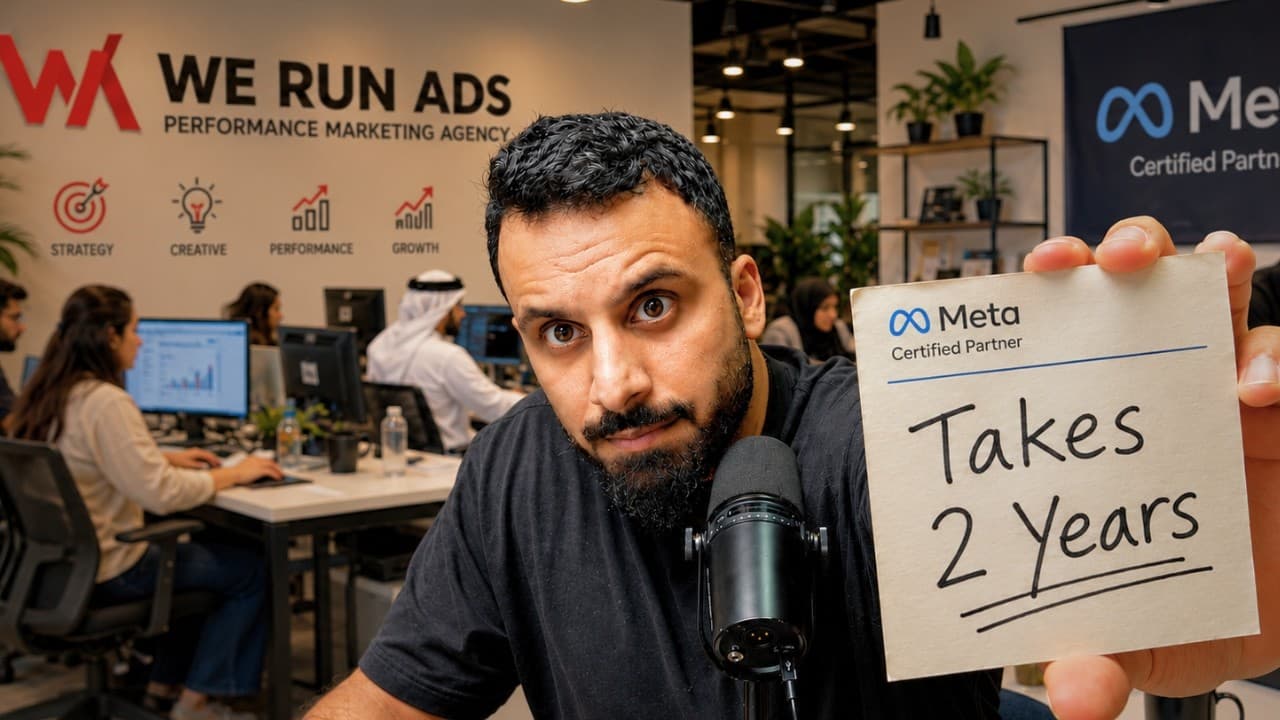
Become a full-stack marketer who understands marketing fundamentals, Google Ads, Meta Ads, measurement, creative work, and business economics. Build hypothetical campaigns, seek internships or opportunities to help experienced practitioners, and add AI to your workflow only after learning each task yourself, using it to expand ideas, accelerate research, analyze performance, and review your assumptions.
Transcript
Performance marketing is one of the top paid and most desired careers in the world. But for someone who is just starting in this age of AI, what does it take to become a top performance marketer? And that's what I'll be discussing in this video. A step-by-step road map I would follow as an absolute beginner with no network and no experience. To giv... Read More
Key Insights
- A full-stack marketing perspective is now more valuable than isolated platform knowledge. Companies want marketers who understand how channels, strategy, creative work, measurement, customer journeys, and business economics fit together, rather than specialists who know only Google Ads or Meta Ads.
- A digital marketing career requires time, deliberate practice, hard work, and a structured roadmap. Promises that someone can master the field in one week and immediately earn thousands every week create unrealistic expectations that often leave beginners disappointed or ready to quit.
- AI is an amplifier for capable marketers, not a substitute for their judgment. It can increase creativity and productivity, but the marketer must still supply the thinking, understand the task, evaluate the output, challenge assumptions, and decide what should be implemented.
- Marketing fundamentals provide the language needed for later specialization. A beginner should understand funnels, ideal customer profiles, marketing and consumer psychology, organic and paid marketing, channel differences, segmentation, targeting, positioning, value propositions, customer journeys, trust, social proof, urgency, and decision-making.
- Business and creative knowledge are part of modern performance marketing. Revenue, profit, margins, customer acquisition cost, lifetime value, unit economics, headlines, offers, hooks, calls to action, persuasive writing, creative fundamentals, and analytical thinking all support better campaign decisions.
- Google Ads and Meta Ads deserve detailed study because they will probably account for 80 to 90% of the advertising spend a performance marketer manages. Effective training must cover platform fundamentals, technical details, campaign types, objectives, bidding, audiences, measurement, optimization, reporting, and real-world feature selection.
- Hypothetical campaigns can become practical portfolio evidence. Beginners should create demo campaigns, structures, advertisements, strategies, tracking plans, and budget choices for examples such as real estate businesses, local restaurants, and SaaS products, treating every exercise as work for a genuine client.
- Real experience teaches far more than courses alone. Once beginners can propose campaigns, advertisements, bidding strategies, tracking, attribution, creative practices, landing pages, and funnels, they should pursue internships or offer assistance to agencies, brands, freelancers, and consultants instead of waiting to feel completely ready.
Install to Summarize YouTube Videos and Get Transcripts
Explore YouTube Video Summarizer or Get YouTube Transcript Extractor
Questions & Answers
Q: How should a beginner learn digital marketing in the AI era?
A beginner should first set realistic expectations, then spend two to four weeks understanding marketing and digital marketing fundamentals. The next stage is detailed study of Google Ads and Meta Ads, combined with hypothetical campaigns in demo accounts. AI should be introduced alongside practical work, but only after the beginner learns how to perform each underlying task independently.
Q: What does a full-stack digital marketer need to understand?
A full-stack marketer needs to understand how strategy, channels, audiences, creative work, measurement, optimization, and business outcomes connect. The required foundation includes segmentation, targeting, positioning, value propositions, customer journeys, consumer psychology, copywriting, analytical thinking, revenue, profit, margins, customer acquisition cost, lifetime value, unit economics, Google Ads, Meta Ads, tracking, attribution, landing pages, and funnels.
Q: How long should beginners spend on marketing fundamentals?
Two to four weeks is generally enough for the initial fundamentals stage, depending on how much time the learner commits. The goal is not to master every subject. It is to understand marketing language, principles, funnels, ideal customer profiles, psychology, digital channels, common terminology, tools, and project components well enough to create a map before exploring the field more deeply.
Q: What digital marketing fundamentals should beginners study?
Beginners should study traditional marketing compared with digital marketing, the meaning and benefits of digital marketing, organic and paid approaches, and its importance for small and large brands. They should also understand digital funnels, major channels and each channel's distinguishing value, commonly used terms, typical project components, relevant tools, customer behavior, positioning, persuasion, and business fundamentals.
Q: Why should beginners focus on Google Ads and Meta Ads?
Google Ads and Meta Ads will probably represent 80 to 90% of the advertising spend a performance marketer manages. Beginners should therefore study both platforms thoroughly, including campaign types, objectives, bidding strategies, audiences, creative measurement, optimization, reporting, tracking, and the real-world conditions that determine which feature, platform, or budget allocation is appropriate.
Q: How can a beginner build a digital marketing portfolio?
A beginner can build a portfolio by creating hypothetical campaigns in Google Ads and Meta Ads demo accounts. Suitable projects include a real estate business, a nearby restaurant, and a SaaS product the learner likes. Each project should be treated like client work, with campaign structures, advertisements, bidding choices, tracking plans, budgets, creative recommendations, landing pages, funnels, and strategic reasoning.
Q: When should a digital marketer start using AI?
AI can be introduced while a beginner is building hypothetical campaigns, so there is no need to finish learning Google Ads and Meta Ads first. However, the guiding rule is to learn each task independently before delegating parts of it to AI. For example, understand how to brainstorm and write headlines before using AI to accelerate or expand that process.
Q: How can AI support a digital marketing workflow?
AI can support brainstorming for campaign ideas and strategy, generating headlines and advertising copy, developing creative angles, researching audiences and keywords, improving landing-page messaging, analyzing campaign performance, challenging assumptions, and reviewing completed work. Its value is greatest when the marketer already understands the underlying concept and uses AI to accelerate execution or expand original thinking.
Summary & Key Takeaways
-
Begin by setting realistic expectations: platform specialization alone is insufficient, marketing is not a quick path to wealth, and AI does not replace the thinking required from a capable marketer. Spend two to four weeks learning the language of marketing, digital channels, funnels, customer behavior, positioning, copywriting, and business fundamentals.
-
Study Google Ads and Meta Ads in depth because they will probably represent 80 to 90% of the advertising spend managed during a performance marketing career. Learn campaign types, objectives, bidding, audiences, creative measurement, optimization, reporting, tracking, attribution, landing pages, funnels, and how platform choices vary across industries and business objectives.
-
Turn knowledge into evidence by building realistic campaigns in demo accounts for businesses such as a real estate company, local restaurant, or SaaS product. Use these projects in a portfolio, pursue internships and opportunities to assist practitioners, and integrate AI into brainstorming, research, copywriting, analysis, messaging improvement, assumption testing, and work reviews.
Read in Other Languages (beta)
Share This Summary 📚
Summarize YouTube Videos and Get Video Transcripts with 1-Click
Try YouTube Summary with ChatGPT & Claude or YouTube Transcript Generator
Explore More Summaries from Senator We Run Ads 📚




Summarize YouTube Videos and Get Video Transcripts with 1-Click
Try YouTube Summary with ChatGPT & Claude or YouTube Transcript Generator