How to Build an SEO Strategy Across Platforms
TL;DR
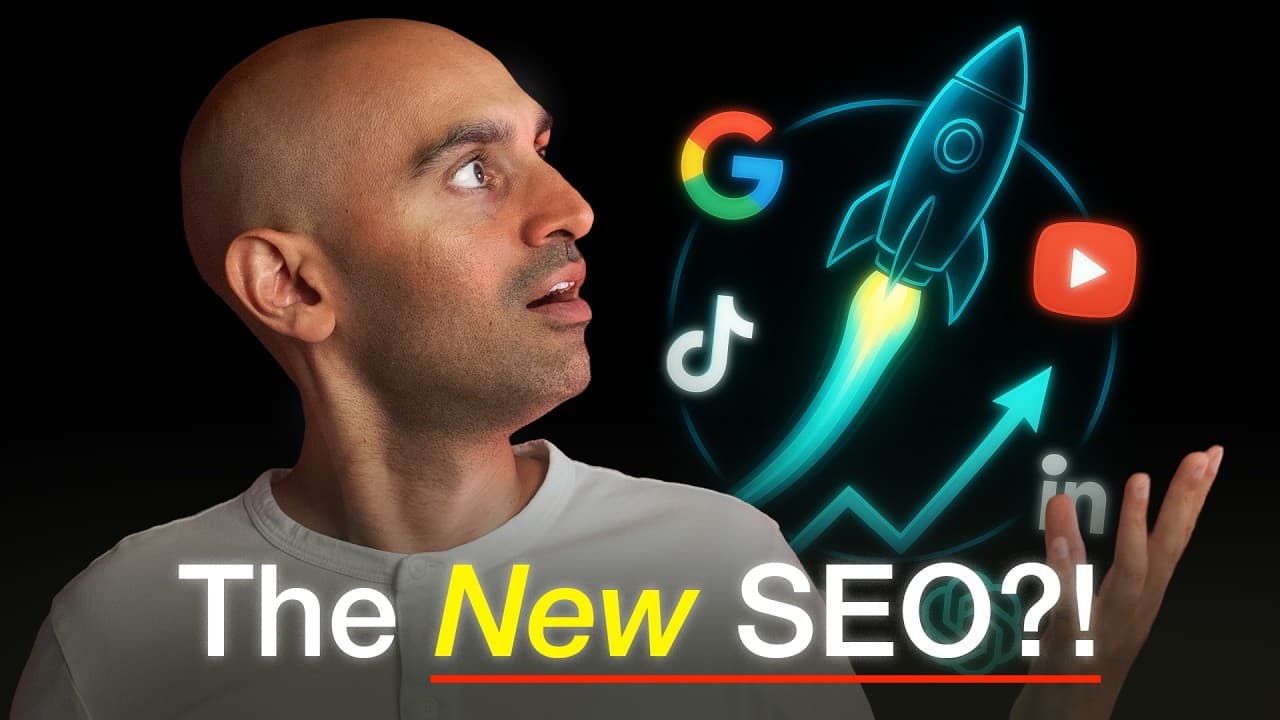
Build search visibility by mapping audience intent, defining a consistent brand identity, adapting content to each platform, strengthening technical systems, and continually measuring results. Focus deeply on the three or four platforms your customers actually use, then connect native videos, articles, profiles, and posts into a unified content ecosystem that earns trust from customers, traditional search engines, and AI tools.
Transcript
If you want to dominate search results everywhere customers are looking, I'm going to show you exactly how. In this video, I'll walk you through a five-step SEO strategy that my team and I use to help our clients rank number one, not just on Google, but on YouTube, Tik Tok, Amazon, LinkedIn, and even AI tools like Chat, GPT, and Perplexi. Because h... Read More
Key Insights
- Search is distributed across Google, TikTok, YouTube, Amazon, LinkedIn, Reddit, and AI tools, so a Google-only strategy misses many places where people discover information and make buying decisions. Visibility now depends on appearing throughout a fragmented customer journey rather than dominating one search engine.
- Platform intent is the reason the same customer behaves differently across search environments. TikTok supports entertainment-led discovery, YouTube supports long-form research, Reddit provides raw opinions, and Amazon places users in decision mode. Content must reflect the user’s state of mind on each selected platform.
- Audience mapping is the first step in the five-step strategy. Brands should identify where customers seek answers, examine the platforms where competitors are strongest, study the content that succeeds there, and concentrate on three or four priority platforms before attempting to expand further.
- Brand consistency is essential because AI interprets entities, context, and relationships rather than relying only on keywords. A company, executive, product, and service must be clearly defined and connected through consistent names, descriptions, positioning, profiles, biographies, and content across every platform.
- Content pillars are three or four recurring themes that a brand wants to own in the audience’s mind. These themes can address frequently solved problems, important industry trends, or distinctive points of view, giving every profile and content format a coherent foundation.
- A content ecosystem starts with a substantial anchor such as a long-form YouTube video, podcast, or in-depth blog. That anchor can become vertical clips, LinkedIn carousels, text posts, FAQs, TikToks, or Instagram Reels, with each version adapted to its platform.
- Native content performs according to platform-specific requirements. YouTube depends on titles, thumbnails, pacing, and retention, while TikTok and Reels favor quick hooks and vertical formatting. Blogs need headings, FAQs, structure, and citations, while LinkedIn rewards professional, text-first thought leadership.
- Technical systems are the foundation that powers visible content. Fast mobile loading, tracking, signals, and trust factors influence whether people remain engaged and whether algorithms rank the material. The final strategic layer is to measure, test, and optimize instead of treating publication as the endpoint.
Install to Summarize YouTube Videos and Get Transcripts
Explore YouTube Video Summarizer or Get YouTube Transcript Extractor
Questions & Answers
Q: How can a business build an SEO strategy beyond Google?
A business can expand SEO beyond Google by first identifying where its customers search and what they intend to accomplish on each platform. It should select three or four priority platforms, establish consistent brand information everywhere, create content suited to each environment, strengthen the underlying technical systems, and then measure, test, and optimize its performance over time.
Q: Why does platform intent matter for an SEO strategy?
Platform intent matters because the same person enters a different state of mind depending on the environment. TikTok is associated with entertainment-led discovery, YouTube with detailed research, Reddit with raw opinions, and Amazon with purchase decisions. Treating these searches identically can produce the wrong content even when the business has identified the right audience.
Q: How should a brand choose which search platforms to prioritize?
A brand should begin by asking where its audience goes when it needs answers. It can then examine where competitors have their strongest presence and study the content that works in those spaces. Instead of choosing platforms randomly or attempting to cover everything, the strategy recommends selecting the top three or four and mastering them before expanding.
Q: Why must business information remain consistent across platforms?
Business information must remain consistent because both customers and AI need a clear understanding of the brand. The company name, description, core identity, audience, problem solved, and differentiators should align across Google, TikTok, LinkedIn, Amazon, and other profiles. Conflicting identities weaken trust and make it harder for AI systems to understand the relationships among the company, people, products, and services.
Q: What are content pillars in an omnichannel SEO strategy?
Content pillars are the three or four themes a brand repeatedly addresses and wants to own in people’s minds. They may focus on problems the business solves, trends shaping its market, or a distinctive point of view. These pillars create consistency across profiles, biographies, videos, articles, and social posts while keeping the broader content ecosystem connected to clear positioning.
Q: How can one long-form asset become a content ecosystem?
A long-form YouTube video, podcast, or in-depth blog can serve as the anchor for multiple native assets. A video can produce standalone vertical clips, a podcast can become a LinkedIn carousel, and a blog can supply text posts and FAQs. Some pieces can be repurposed, while others should be recorded again so they feel natural on their destination platforms.
Q: How should content be adapted for different platforms?
Content should follow the conventions of the platform where it appears. YouTube requires effective titles, thumbnails, pacing, and retention. TikTok and Reels favor quick hooks and vertical formatting. Blogs require clear structure, headings, FAQs, and citations so Google and AI can reference them. LinkedIn favors professional, text-first thought leadership rather than identical copies of content from elsewhere.
Q: How can brands improve their visibility in AI answers?
Brands can improve AI visibility by building clear, authoritative, and citable content on sources that AI tools use. The agency’s study found that major AI platforms consistently pulled from Wikipedia, Reddit, and YouTube. A brand should also keep its entities and messaging consistent, publish structured FAQs and cited articles, create video, and connect related profiles, people, products, and services.
Summary & Key Takeaways
-
Search behavior now extends far beyond Google to platforms including TikTok, YouTube, Reddit, Amazon, LinkedIn, and AI tools. Each environment supports a different part of the customer journey, such as discovery, research, trust, or purchase decisions. Brands therefore need to understand both where their audiences search and why they use each platform.
-
The five-step strategy begins with mapping audience and platform intent, followed by establishing a consistent identity across profiles and content. Brands should define whom they serve, which problems they solve, why they are different, and which three or four themes they want to own. Connected entities help people and AI understand the brand.
-
Content should begin with an anchor such as a long-form video, podcast, or detailed blog, then be adapted into native formats for selected platforms. Technical foundations, tracking, trust signals, measurement, testing, and optimization support that ecosystem. Together, connected content pieces reinforce topical authority and create visibility across the customer journey.
Read in Other Languages (beta)
Share This Summary 📚
Summarize YouTube Videos and Get Video Transcripts with 1-Click
Try YouTube Summary with ChatGPT & Claude or YouTube Transcript Generator
Explore More Summaries from Neil Patel 📚
Summarize YouTube Videos and Get Video Transcripts with 1-Click
Try YouTube Summary with ChatGPT & Claude or YouTube Transcript Generator