How to Find and Identify Soft Shell Clams in Estuaries
TL;DR
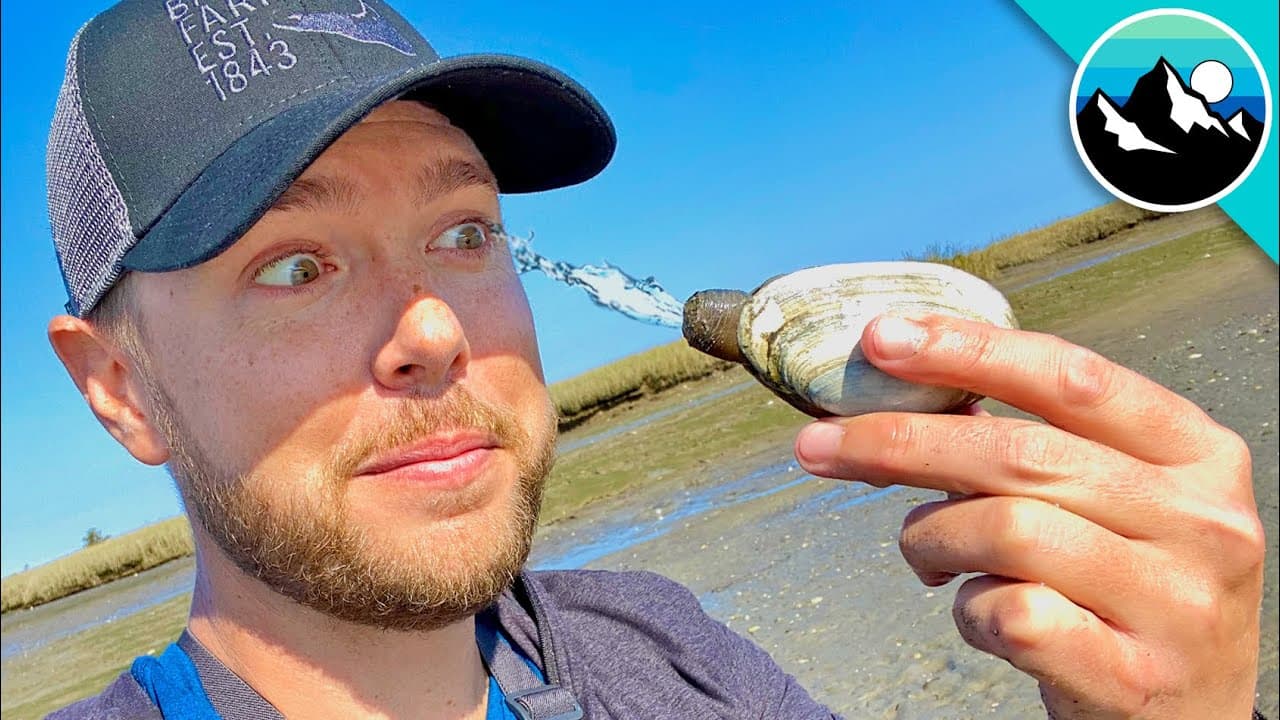
To find soft shell clams, look for 'clam shows' — small holes in the sand indicating clams below. Dig carefully, as these clams have brittle shells. They can filter up to 50 liters of water daily and have interesting life cycles: starting as planktonic larvae before settling in estuaries for up to 12 years.
Transcript
(lively upbeat music) - The creature we are after is right below the surface. Let me show you what I found. If you can see down in there, that is the top ridge. What I want to do is (whistling) (dramatic upbeat music) Whoa! (dramatic upbeat music) Quite the adventure, to get out to location we're on today. I had to paddle out about a mile and a hal... Read More
Key Insights
- ❣️ Soft shell clams are found in estuaries and intertidal zones.
- 💗 They have brittle shells made of calcium carbonate and can grow up to four inches in length.
- 👻 Soft shell clams have siphons that allow them to filter water and extract oxygen.
- 🛟 Their life cycle involves starting as planktonic larvae, becoming free-swimming organisms, and eventually settling in estuaries for the rest of their lives.
- 🐚 Soft shell clams can live for up to 12 years.
- ❣️ Clam shows in the sand are signs of clams just below the surface.
- ❣️ Soft shell clams are filter feeders that consume microscopic algae.
Install to Summarize YouTube Videos and Get Transcripts
Explore YouTube Video Summarizer or Get YouTube Transcript Extractor
Questions & Answers
Q: What is the significance of the clam shows in the sand?
The clam shows, or holes in the sand, indicate the presence of clams just below the surface. They are a telltale sign for clamming enthusiasts.
Q: Why are soft shell clams called squirting or spraying clams?
Soft shell clams are called squirting or spraying clams because they can expel water through their siphons. This behavior helps them filter water and obtain oxygen.
Q: How much water can soft shell clams filter in a day?
Soft shell clams can filter up to 50 liters of water a day. This impressive filtering ability allows them to consume microscopic algae and other food sources.
Q: How do soft shell clams know where to settle and spend the rest of their lives?
Soft shell clams release a sticky substance called byssal to attach themselves to the seabed. They then ride the tide back to estuaries and use their foot to dig down and find the perfect spot to live.
Summary & Key Takeaways
-
The video follows the host's journey to an estuary to find soft shell clams.
-
The host encounters various creatures along the way, including green crabs.
-
The video showcases the process of digging for clams and highlights interesting facts about their shells, siphons, and life cycle.
Read in Other Languages (beta)
Share This Summary 📚
Summarize YouTube Videos and Get Video Transcripts with 1-Click
Try YouTube Summary with ChatGPT & Claude or YouTube Transcript Generator
Explore More Summaries from Brave Wilderness 📚



Summarize YouTube Videos and Get Video Transcripts with 1-Click
Try YouTube Summary with ChatGPT & Claude or YouTube Transcript Generator