How Do Frameworks Improve Thinking Speed and Clarity?
TL;DR
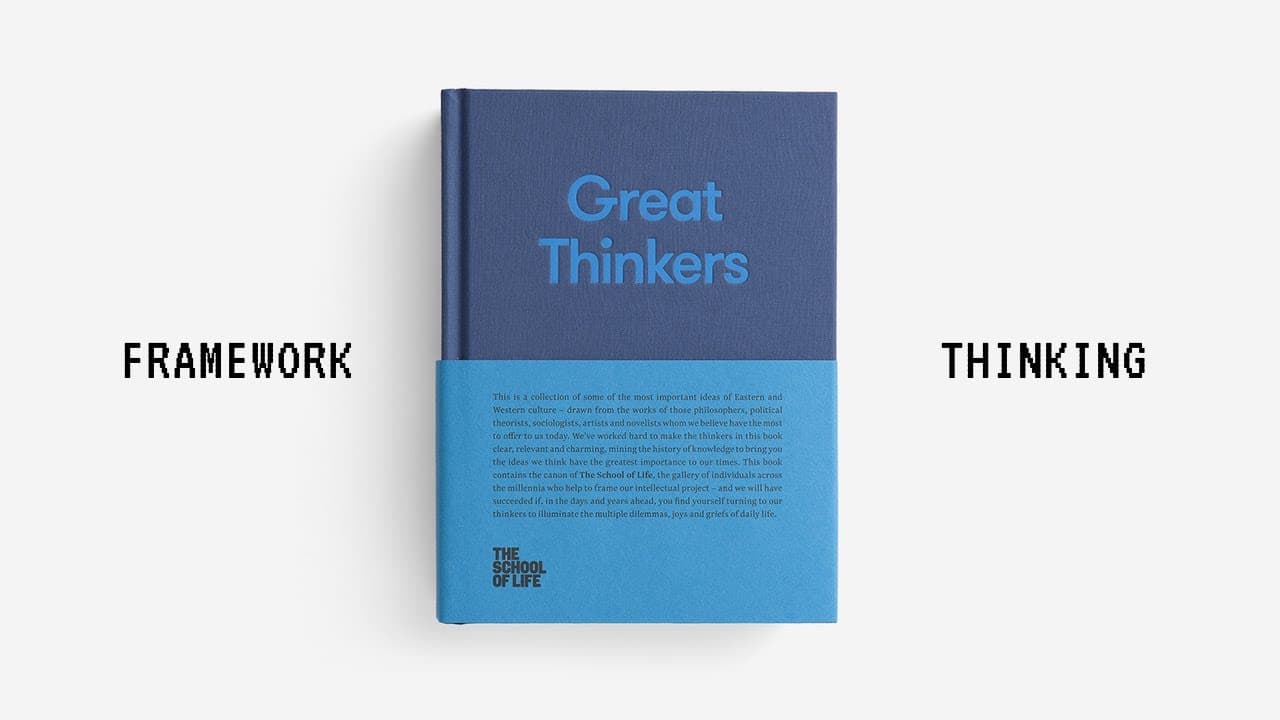
Frameworks enhance thinking speed and clarity by simplifying and categorizing information, which aids problem-solving. They allow the brain to retrieve and organize thoughts efficiently through relational memory, focusing on key concepts relevant to specific situations. To maximize their effectiveness, frameworks should be collected and contextualized rather than memorized as arbitrary lists.
Transcript
the difference between someone who thinks really fast and really clearly is not IQ but rather how they actively notice and structure information in order to understand how the world works my response time to questions like how do we set the Strategic direction for a new product launching in three new markets in order to maximize consumer demand and... Read More
Key Insights
- 😃 Frameworks are used by consulting firms, big tech companies, and successful investors as a thinking tool to solve complex problems.
- 💨 Sequential and relational memory are the two ways our brain organizes and retrieves information.
- 🖐️ Visual, functional, and conceptual categories play important roles in how our brain categorizes and simplifies information.
- ❓ Frameworks should be collected and applied in specific situations, rather than as arbitrary collections, to effectively solve problems.
- 📝 Writing tools, such as pen and paper or digital note-taking platforms, can enhance thinking capacity and storage.
- 🤔 Actively identifying and categorizing existing frameworks can improve thinking and problem-solving abilities.
- 💁 Contextualizing information with specific situations helps in leveraging frameworks for practical purposes.
Install to Summarize YouTube Videos and Get Transcripts
Explore YouTube Video Summarizer or Get YouTube Transcript Extractor
Questions & Answers
Q: How do Frameworks help improve thinking speed and clarity?
Frameworks simplify and categorize information, making problem-solving easier by focusing on key levers. They provide structure and organization to better understand complex situations.
Q: How can one leverage relational memory for efficient note-taking?
Relational memory allows for connecting different ideas, making note-taking with the zetocaster method (connecting ideas together) easier and more effective than linear note-taking. It aligns with how our brain naturally retrieves information.
Q: Why is it important to categorize information under conceptual categories?
Conceptual categories help contextualize information for specific situations. It allows learning and applying frameworks to be more practical and relevant, such as using math frameworks to split a bill at a restaurant.
Q: How can one actively identify and collect frameworks?
Actively observing and recognizing existing frameworks in the world is the first step. Categorizing and reorganizing information based on specific situations, rather than generic subjects, enables the creation of personal frameworks.
Key Insights:
- Frameworks are used by consulting firms, big tech companies, and successful investors as a thinking tool to solve complex problems.
- Sequential and relational memory are the two ways our brain organizes and retrieves information.
- Visual, functional, and conceptual categories play important roles in how our brain categorizes and simplifies information.
- Frameworks should be collected and applied in specific situations, rather than as arbitrary collections, to effectively solve problems.
- Writing tools, such as pen and paper or digital note-taking platforms, can enhance thinking capacity and storage.
- Actively identifying and categorizing existing frameworks can improve thinking and problem-solving abilities.
- Contextualizing information with specific situations helps in leveraging frameworks for practical purposes.
- Developing personal frameworks based on observed patterns and relationships can lead to more innovative and effective problem-solving approaches.
Summary & Key Takeaways
-
Frameworks are simplified representations of how the world works, used by consulting firms, big tech companies, and investors like Charlie Munger and Warren Buffett.
-
Our brain organizes information using sequential memory (in sequence) and relational memory (based on multiple cues).
-
There are three main types of mental categories: visual, functional, and conceptual, with the latter being situation-specific.
Read in Other Languages (beta)
Share This Summary 📚
Summarize YouTube Videos and Get Video Transcripts with 1-Click
Try YouTube Summary with ChatGPT & Claude or YouTube Transcript Generator
Explore More Summaries from Vicky Zhao [BEEAMP] 📚




Summarize YouTube Videos and Get Video Transcripts with 1-Click
Try YouTube Summary with ChatGPT & Claude or YouTube Transcript Generator