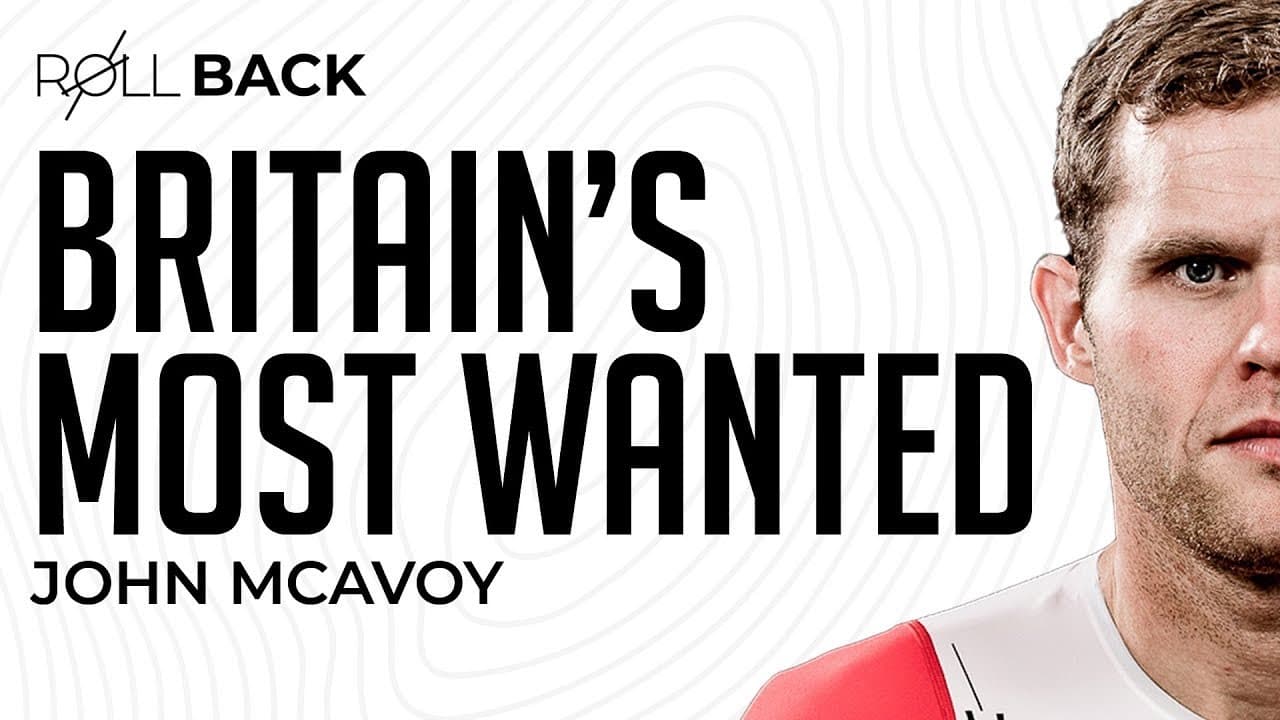
How Did John McAvoy Transform Through Sport?
TL;DR
John McAvoy redirected the endurance and defiance forged during crime and imprisonment into rowing and Ironman racing. Static-machine power gave him a strong athletic foundation, but cycling exposed a new challenge: converting laboratory fitness into technical road performance. His transformation shows how painful experience and disciplined effort can be repurposed toward sport, personal change, and prison reform advocacy.
Transcript
Hey, everybody, welcome to ROLLBACK, where we share the best episodes from the pre-video, audio-only RRP archive here on YouTube for the first time. Today's edition is, I gotta tell you, one of the most compelling, inspirational, cautionary and grippingly cinematic stories that I've ever heard in my entire life. It's the story of one John McAvoy an... Read More
Key Insights
- John McAvoy transformed from a high-profile armed bank robber serving a life sentence into a record-setting indoor rower and Ironman athlete. The introduction also identifies him as a Nike-sponsored competitor and an advocate whose personal evolution supports his work on prison reform.
- Static cycling performance does not automatically produce equal results on the road. McAvoy could sustain about 365 watts for half an hour at roughly 71 kilograms, yet limited experience with cornering, braking, and descending prevented him from translating that physical capacity fully into competitive road cycling.
- McAvoy's Ironman performance improved rapidly after he entered the sport in 2014. He describes a period when each race was approximately one hour faster than the previous one, culminating in an Ironman Frankfurt performance of about nine hours with a marathon close to three hours.
- Indoor rowing taught McAvoy how to tolerate extreme physical discomfort. He describes a two-kilometer rowing test as more painful than Ironman racing or cycling because the accumulated strain affects the back, legs, and arms, demanding sustained effort from nearly the entire body.
- McAvoy's endurance was shaped partly by painful life experiences rather than athletic training alone. He connects his capacity to suffer with the severe situations he encountered as a young man, including imprisonment and the year he chose to spend inside an isolation cell.
- McAvoy entered prison determined to educate himself, but his original goal was to become a better criminal. He viewed rehabilitation as weakness because his upbringing taught him that personal change meant the system had broken him rather than that he had genuinely improved.
- Reading about Nelson Mandela changed how McAvoy interpreted punishment and control. After learning that Mandela stopped smoking when prison officers used tobacco as leverage, McAvoy decided that voluntarily remaining isolated would prevent authorities from using release from the cell as power over him.
- McAvoy's refusal to call his mother on Christmas illustrates the personal cost of his defiance. Although he believed rejecting the telephone denied prison officers control and concealed weakness, he later recognized that the decision primarily harmed him rather than achieving victory over the authorities.
Install to Summarize YouTube Videos and Get Transcripts
Explore YouTube Video Summarizer or Get YouTube Transcript Extractor
Questions & Answers
Q: How did John McAvoy transform his life through sport?
John McAvoy redirected the determination and tolerance for suffering developed during crime and imprisonment into structured athletic training. After prison, he pursued rowing, set British and world indoor rowing records, and attempted to become a professional rower. Because he had entered rowing too late, he moved into Ironman racing, where he improved rapidly and became a Nike-sponsored athlete. He also used his story to inspire others and advocate for prison reform.
Q: Why did John McAvoy move from rowing to Ironman racing?
John McAvoy continued training after leaving prison and initially tried to become a professional rower. He concluded that he had taken up rowing too late to reach that goal, so he chose Ironman racing as his next athletic challenge. His rowing background gave him substantial power and an ability to endure intense discomfort, but Ironman competition required him to develop additional skills in swimming, running, and especially road cycling.
Q: What limited John McAvoy's Ironman cycling performance?
John McAvoy's main cycling limitation was technical experience rather than his ability to produce power. Most of his earlier training had taken place on stationary machines, so strong indoor numbers did not translate automatically to the road. He had started cycling at 30 and struggled with cornering, braking, and descending. Fear caused him to hold the brakes on mountain descents, costing time even though his laboratory physiology resembled that of capable professional Ironman athletes.
Q: What was John McAvoy's best Ironman performance in the transcript?
John McAvoy identifies Ironman Frankfurt, completed two years before the 2018 conversation, as probably his best performance. He says he finished in about nine hours and ran nearly a sub-three-hour marathon at the end. The result marked a major improvement in his form, although he believed his cycling still held him back because he lacked the road-riding technique needed to convert his indoor power into speed.
Q: How powerful was John McAvoy on a stationary bike?
John McAvoy says he could sustain approximately 365 watts for half an hour while weighing about 71 kilograms. Rich Roll characterizes that output as world-class for listeners without a frame of reference. McAvoy attributes some of this capacity to the transition from rowing, a leg-dominated sport whose athletes can become strong cyclists. However, he emphasizes that physical power alone could not compensate for limited road-cycling technique.
Q: Why did John McAvoy choose to remain in isolation for a year?
John McAvoy initially entered isolation after refusing to wear special clothing used to identify him as an escape risk. When officials later ordered him to work as a wing cleaner, he refused again and received another period of confinement. Influenced by reading about Nelson Mandela, he decided that voluntarily staying in the cell would remove the authorities' ability to use isolation as punishment. He consequently remained there for 365 days by choice.
Q: How did reading about Nelson Mandela influence John McAvoy?
John McAvoy read that Nelson Mandela had stopped smoking after recognizing that prison officers could use tobacco as a punishment. McAvoy applied that idea to isolation, reasoning that authorities could not control him with confinement if he chose to remain confined. The lesson strengthened his defiance at the time, although he later understood that his interpretation led him to inflict suffering on himself rather than meaningfully defeating the prison system.
Q: What did John McAvoy learn from refusing a Christmas phone call?
John McAvoy refused a prison officer's offer to call his mother on Christmas because he believed accepting anything would give the authorities something they could later take away. He also did not want to reveal weakness or suggest that confinement had broken him. In retrospect, he recognized that the refusal did not give him power over the officers. It only denied him contact with his mother and caused additional personal harm.
Summary & Key Takeaways
-
John McAvoy was born into a notorious London crime family and became a high-profile armed bank robber before receiving a life sentence. The introduction describes his later transformation through sport, including British and world indoor rowing records, Ironman competition, Nike sponsorship, and advocacy intended to inspire others and support prison reform.
-
McAvoy began Ironman racing in 2014 and improved by approximately one hour in each successive race for a period. At Ironman Frankfurt, he finished in about nine hours and nearly completed the marathon in under three hours. Cycling technique, particularly cornering, braking, and descending, remained a major limitation despite his strong physiology.
-
At 19, McAvoy voluntarily remained in an isolation cell for 365 days as an act of defiance against prison authorities. Reading about Nelson Mandela influenced his attempt to remove punishment's power over him. Looking back, he recognizes that refusing contact and assistance did not defeat the system, but primarily punished and hurt himself.
Read in Other Languages (beta)
Share This Summary 📚
Summarize YouTube Videos and Get Video Transcripts with 1-Click
Try YouTube Summary with ChatGPT & Claude or YouTube Transcript Generator
Explore More Summaries from Rich Roll 📚



Summarize YouTube Videos and Get Video Transcripts with 1-Click
Try YouTube Summary with ChatGPT & Claude or YouTube Transcript Generator