The Tragedy of Trump’s Second Impeachment
TL;DR
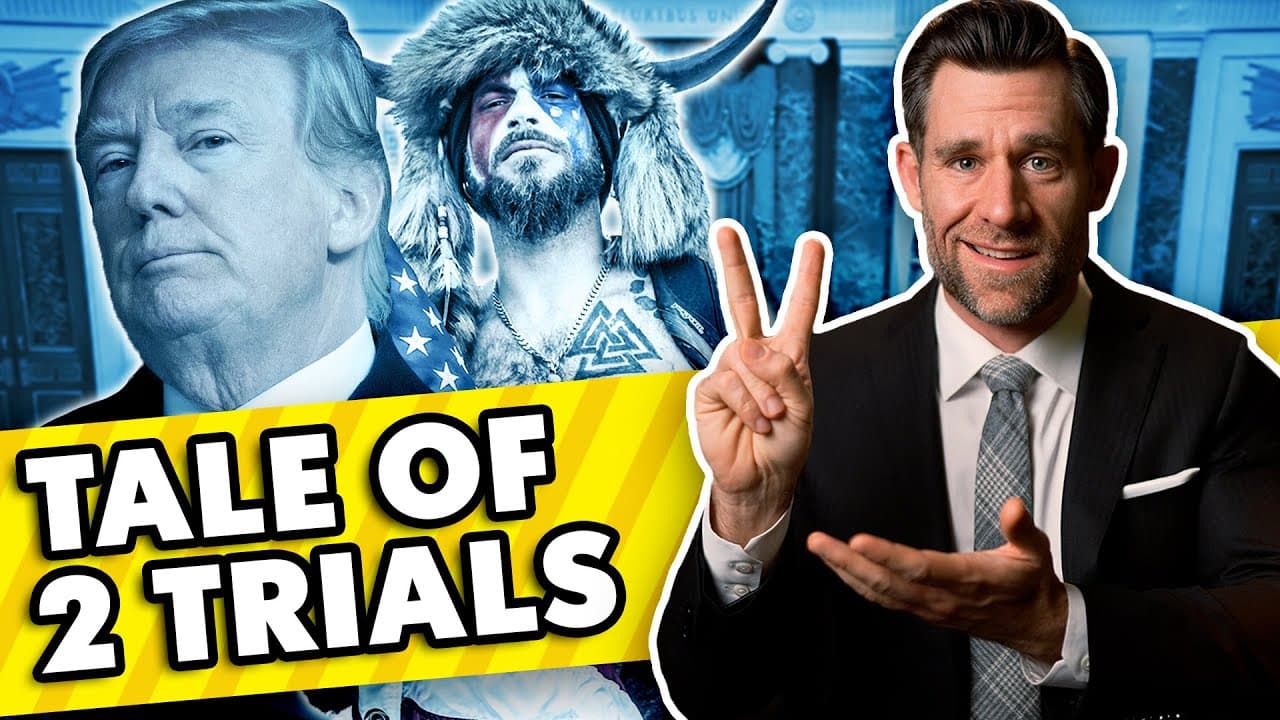
Trump was acquitted in his second impeachment trial because the Senate did not reach the required two-thirds majority to convict him of incitement to insurrection. The five-day trial examined whether a former official could be tried, how impeachment differs from criminal prosecution, and what history says about late impeachment. Read on for the central constitutional arguments and historical examples discussed.
Transcript
- So, the Senate failed to procure enough votes to convict Former President Trump of the charge of incitement to insurrection and thus, in a way, the Senate has acquitted President Trump of his record second impeachment. For many, this was a fait accompli, that there was simply no way it was possible for the Democrats or anyone else to convince eno... Read More
Key Insights
- 🤨 Impeachment trials are political, not criminal, proceedings, raising unique challenges in legal interpretations.
- 🤩 The arguments regarding jurisdiction, due process, and First Amendment rights played key roles in the impeachment trial.
- ❓ Bipartisan support for conviction signifies potential for criminal investigations and future accountability measures.
- 💠 Legal interpretations of the Constitution and historical precedents shaped the arguments and outcomes of the trial.
Install to Summarize YouTube Videos and Get Transcripts
Explore YouTube Video Summarizer or Get YouTube Transcript Extractor
Questions & Answers
Q: Why was Donald Trump acquitted in his second impeachment trial?
The Senate did not secure the two-thirds majority required to convict Trump of incitement to insurrection. Although a record number of senators from the former president’s own party voted to convict, there were still not enough votes.
Q: Is an impeachment trial the same as a criminal trial?
No. An impeachment trial is a political proceeding, described in the transcript as a trial by Parliament, so comparisons with criminal trials are imperfect. The Senate establishes its own rules rather than automatically following criminal-court procedures.
Q: Can the Senate apply criminal rules of evidence during an impeachment trial?
The Senate can adopt the federal rules of evidence, but it is not required to do so. Concepts such as hearsay and due process therefore may be considered without controlling the proceeding as they would in a criminal trial.
Q: What penalty can a Senate impeachment trial impose?
The impeachment clause does not authorize criminal penalties. The proceeding instead addresses the narrower issue of preventing someone from holding office again.
Q: Can the Senate hold an impeachment trial after an official leaves office?
That jurisdictional question occupied the trial’s first day because the Constitution does not answer it directly. The argument supporting late impeachment relied on English practice, early state constitutions, and examples of former officials being impeached.
Q: What historical evidence supported trying former officials after they left office?
Every impeachment during the Framers’ lifetimes concerned a former official, according to the transcript. It also says that every state constitution in the 1780s either expressly allowed such proceedings or was consistent with them, while none prohibited trials of former officials.
Q: Which early state constitutions explicitly permitted late impeachment?
Virginia, Delaware, Vermont, and Pennsylvania explicitly permitted late impeachment in constitutions written before the U.S. Constitution. The transcript presents these provisions as evidence that leaving office did not necessarily end impeachment jurisdiction.
Q: What historical cases were used to explain late impeachment?
Vermont representative Jonathan Fassett was impeached and later convicted after leaving office for joining a mob that sought to stop a county court from convening. British Governor-General of India William Hastings was also already out of office when impeached for corruption, and the Framers repeatedly referred to his case while shaping the Constitution.
Summary & Key Takeaways
-
Senate fails to convict Trump on incitement to insurrection charge, leading to his record second impeachment acquittal.
-
Legal arguments focused on jurisdiction, due process, and First Amendment rights, with conflicting views.
-
Seven Republican senators vote to convict, signaling potential for criminal prosecutions.
Read in Other Languages (beta)
Share This Summary 📚
Summarize YouTube Videos and Get Video Transcripts with 1-Click
Try YouTube Summary with ChatGPT & Claude or YouTube Transcript Generator
Explore More Summaries from LegalEagle 📚





Summarize YouTube Videos and Get Video Transcripts with 1-Click
Try YouTube Summary with ChatGPT & Claude or YouTube Transcript Generator