The Real Impacts of Archaeology on Native Americans: Ep 7 of Crash Course Native American History
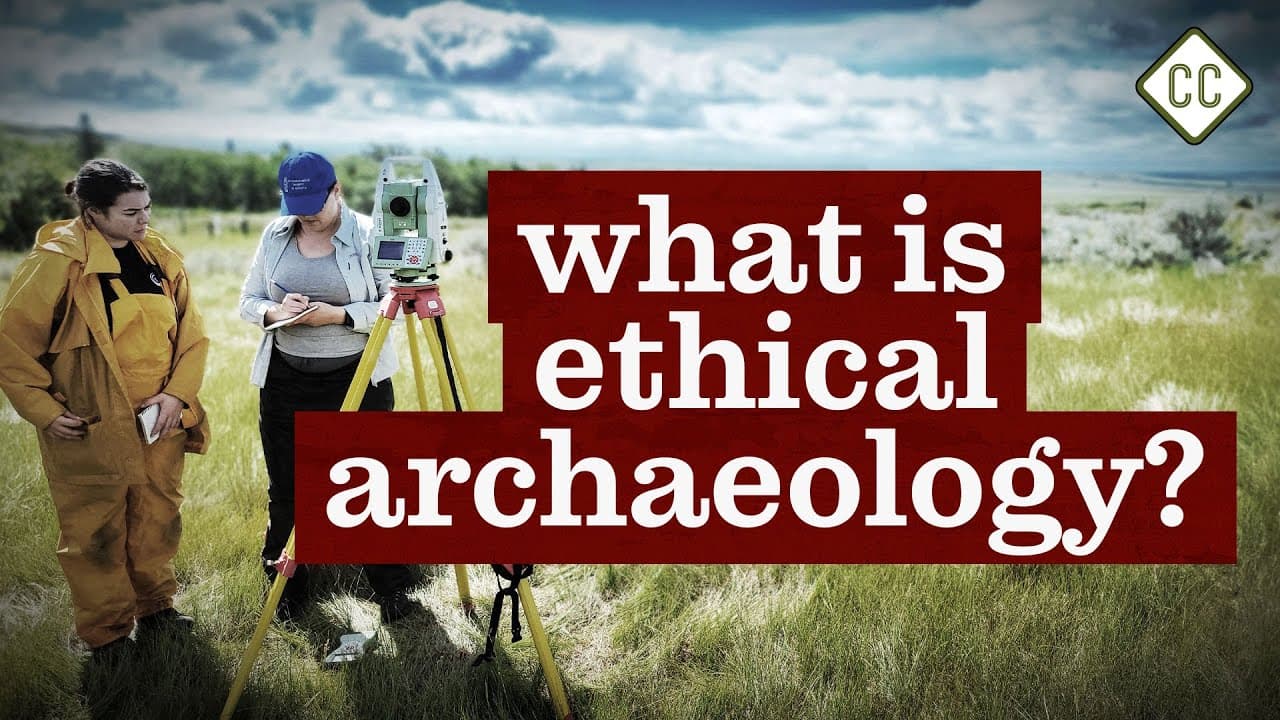
TL;DR
Explores historical mistreatment of Native Americans by archaeology and anthropology.
Transcript
In 1897, some 20,000 people paid a quarter each to gawk at six living, breathing Inuit who had just arrived in New York Harbor. They’d been brought from Greenland by explorer Robert E. Peary. Anthropologist Franz Boas had suggested inviting a single Inuk back to New York for the winter, to collect “information of the greatest scientific importance.... Read More
Key Insights
- In 1897, six Inuit were brought to New York by explorer Robert E. Peary, highlighting the problematic relationship between Native peoples and Western anthropologists.
- Early anthropology and archaeology were rooted in colonialism, often dehumanizing Indigenous peoples by treating them as specimens rather than humans.
- From the 1780s to the 1970s, up to 1 million Native graves in the U.S. were desecrated, with artifacts and remains often collected for scientific study or personal collections.
- Minik, an Inuk boy, was brought to New York and his father's remains were kept in a museum, despite his lifelong efforts to have them returned.
- The Native American Graves Protection and Repatriation Act (NAGPRA) of 1990 was a significant legislative step towards returning Native artifacts and remains to their rightful tribes.
- Despite NAGPRA, many Native remains are still held in museums, due to loopholes and difficulties in identifying the origins of the remains.
- Decolonized archaeology and anthropology involve Native peoples in the research process, ensuring their sovereignty and perspectives are respected.
- The American Anthropological Association issued an apology in 2021 for historical harms done to Indigenous peoples, marking a shift towards more respectful practices.
Install to Summarize YouTube Videos and Get Transcripts
Explore YouTube Video Summarizer or Get YouTube Transcript Extractor
Questions & Answers
Q: What was the relationship between early anthropologists and Native peoples?
Early anthropologists often viewed Native peoples as subjects to be studied rather than as humans with their own cultures and histories. This relationship was marked by a lack of respect and understanding, with Native peoples often dehumanized and their graves desecrated for scientific study or personal collection.
Q: How did Minik's story highlight the mistreatment of Native peoples?
Minik's story is a poignant example of the mistreatment of Native peoples by Western institutions. After being brought to New York, Minik's father died, and his remains were kept in a museum rather than being returned to their homeland. Minik spent his life fighting for the return of his father's remains, highlighting the lack of respect and agency afforded to Native peoples.
Q: What is the Native American Graves Protection and Repatriation Act (NAGPRA)?
NAGPRA is a U.S. law enacted in 1990 that aims to return Native American cultural items, including human remains and sacred objects, to their rightful tribes. The law requires institutions that receive federal funding to consult with tribes about these materials and outlines a process for repatriation. Despite its significance, challenges remain in fully implementing NAGPRA.
Q: How has the approach to anthropology and archaeology changed in recent years?
In recent years, there has been a shift towards decolonized anthropology and archaeology, which involves Indigenous peoples in the research process. This approach values Native sovereignty, knowledge, and perspectives, ensuring that research is conducted with, for, and by Indigenous peoples. This marks a significant departure from the exploitative practices of the past.
Q: What role did the American Indian Movement play in changing legislation?
The American Indian Movement (AIM), a Native-led civil rights coalition, played a crucial role in advocating for the rights of Indigenous peoples. By staging protests at excavation sites and attractions displaying Native remains, AIM helped raise awareness and apply pressure that led to legislative changes like the National Historic Preservation Act and the Archaeological Resources and Protection Act.
Q: What challenges remain in returning Native remains to tribes?
Despite legislative efforts like NAGPRA, challenges remain in returning Native remains to tribes. These include identifying the specific origins of remains, as well as the fact that NAGPRA only applies to institutions that receive federal funding. Some institutions have used these challenges as excuses to retain possession of Native remains.
Q: How did the Makah Tribe collaborate with archaeologists?
In the 1970s, the Makah Tribe collaborated with archaeologists to excavate an ancient whaling village exposed by a storm. The collaboration involved combining the Tribe's oral histories with scientific findings, resulting in a more complete picture of the area's history. The Makah retained all unearthed artifacts, which are now curated at the Makah Cultural and Research Center.
Q: What is the significance of the apology from the American Anthropological Association?
The American Anthropological Association's apology in 2021 for historical harms done to Indigenous peoples is significant as it acknowledges the field's past mistakes and marks a commitment to more respectful practices. This apology is part of a broader movement towards decolonized anthropology, where Indigenous peoples are involved in and control research about their own cultures.
Summary & Key Takeaways
-
The episode discusses the historical exploitation of Native peoples by anthropologists and archaeologists, with a focus on grave robbing and the collection of human remains. It highlights the story of Minik, an Inuk boy whose father's remains were kept in a museum, and the legislative changes that have since been made to protect Native heritage.
-
Anthropology and archaeology began with colonial intentions, often treating Indigenous peoples as objects of study rather than humans. This episode delves into the dark history of these fields, including the desecration of Native graves and the collection of artifacts and remains for scientific and personal purposes.
-
The episode explores the shift towards decolonized anthropology and archaeology, where Native peoples are involved in research processes. It discusses the Native American Graves Protection and Repatriation Act and the ongoing challenges in returning Native remains to their rightful tribes.
Read in Other Languages (beta)
Share This Summary 📚
Summarize YouTube Videos and Get Video Transcripts with 1-Click
Try YouTube Summary with ChatGPT & Claude or YouTube Transcript Generator
Explore More Summaries from CrashCourse 📚



Summarize YouTube Videos and Get Video Transcripts with 1-Click
Try YouTube Summary with ChatGPT & Claude or YouTube Transcript Generator