What Is Implicit Bias and How Does It Affect Us?
TL;DR
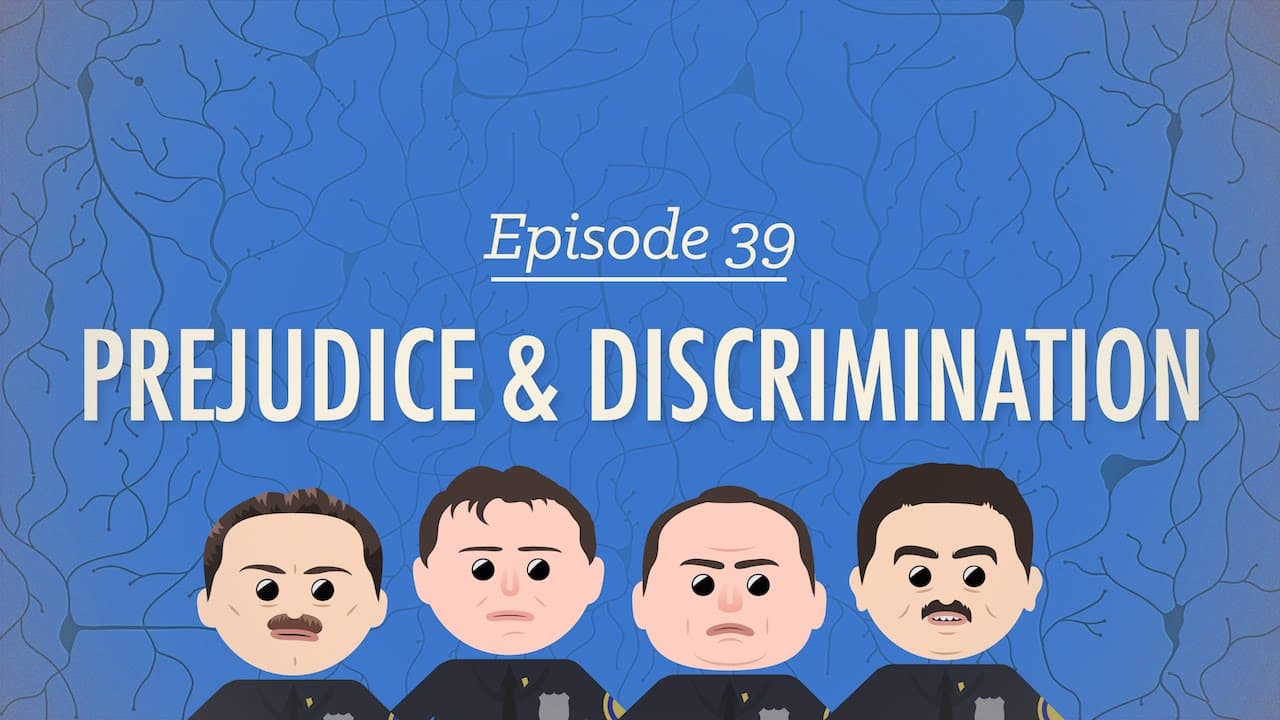
Implicit bias refers to the unconscious attitudes or stereotypes that affect our understanding, actions, and decisions, leading to discrimination and prejudice without our awareness. Tools like the Implicit Association Test (IAT) help reveal these biases, highlighting their impact on behaviors such as hiring practices and law enforcement interactions. Recognizing implicit biases is essential for addressing social inequalities and promoting equality.
Transcript
In February 1999, four New York City police officers were on patrol in the Bronx when they saw a young black man standing on a stoop. They thought he looked suspicious. When they pulled over, he retreated into the doorway and began digging in his pocket. He kept digging as the police shouted at him to show his hands; a few seconds later, the man, A... Read More
Key Insights
- Implicit biases are non-conscious attitudes that can influence behavior without individuals realizing it, affecting decisions like hiring and law enforcement interactions.
- Prejudice is an unjustified negative attitude towards a group, often rooted in stereotypes, which can lead to discrimination if acted upon.
- The Implicit Association Test (IAT) is a tool used to measure implicit biases by evaluating reaction times to stereotypical and counter-stereotypical pairings.
- In-group and out-group dynamics can exacerbate prejudice, creating a sense of solidarity within groups while fostering discrimination against others.
- Prejudices can serve as a way to justify social inequalities, leading people to believe that individuals deserve their social status.
- Stereotyping is a cognitive process that can sometimes be accurate but often leads to prejudicial attitudes when based on inaccurate beliefs.
- Discrimination studies reveal that biases can manifest in systemic ways, such as gender bias in academia, affecting opportunities and wages.
- Understanding the roots of prejudice and discrimination is crucial for addressing these issues and promoting social equality.
Install to Summarize YouTube Videos and Get Transcripts
Explore YouTube Video Summarizer or Get YouTube Transcript Extractor
Questions & Answers
Q: What is the significance of the Amadou Diallo case in the context of implicit bias?
The Amadou Diallo case exemplifies how implicit biases can lead to tragic outcomes. The police officers' actions were influenced by non-conscious biases, resulting in Diallo's death. This case highlights the dangers of implicit biases, as they can cause individuals to make erroneous and harmful judgments based on race or other factors without conscious intent.
Q: How does the Implicit Association Test (IAT) measure implicit biases?
The IAT measures implicit biases by evaluating the speed of categorizing stereotypical and counter-stereotypical pairings. For instance, participants sort images or words associated with different social groups and attributes, and their reaction times indicate implicit associations. Faster responses to stereotypical pairings suggest stronger implicit biases, revealing unconscious attitudes that might not align with explicit beliefs.
Q: What role do stereotypes play in forming prejudicial attitudes?
Stereotypes are generalized beliefs about groups that can form the basis for prejudicial attitudes. While stereotypes can sometimes be accurate, they often lead to negative prejudices when based on inaccurate or harmful assumptions. These prejudices can manifest as discrimination when individuals act on these biased attitudes, impacting social interactions and decision-making processes.
Q: How do in-group and out-group dynamics contribute to prejudice?
In-group and out-group dynamics contribute to prejudice by fostering a sense of belonging and superiority within one's group while promoting discrimination against others. This 'us vs. them' mentality can lead to favoritism towards the in-group and hostility towards the out-group, even when the group distinctions are arbitrary. Such dynamics can exacerbate social conflicts and reinforce prejudicial attitudes.
Q: What is the just-world phenomenon, and how does it relate to prejudice?
The just-world phenomenon is the belief that people get what they deserve, and deserve what they get. This belief can justify social inequalities by suggesting that individuals' social positions are deserved. It can lead to prejudices by reinforcing stereotypes and biases about why certain groups are disadvantaged, perpetuating discriminatory attitudes and behaviors as people rationalize inequalities as fair or deserved.
Q: Can implicit biases be changed, and if so, how?
Implicit biases can be changed through awareness and intentional effort. Strategies include exposure to counter-stereotypical examples, engaging in perspective-taking, and fostering environments that promote diversity and inclusion. Education and training can also help individuals recognize and mitigate their biases, leading to more equitable behaviors and decisions over time. However, changing implicit biases requires ongoing commitment and reflection.
Q: What evidence exists that implicit biases affect real-world outcomes?
Research, such as the 2012 Yale study, shows that implicit biases affect real-world outcomes, like gender discrimination in hiring. In the study, faculty members rated male applicants higher than identical female applicants. Implicit biases can influence decisions in various domains, including employment, law enforcement, and healthcare, leading to disparities in opportunities, treatment, and outcomes for different social groups.
Q: How can understanding prejudice help in promoting social equality?
Understanding prejudice helps promote social equality by identifying and addressing the root causes of discriminatory attitudes and behaviors. By recognizing implicit biases and the mechanisms driving prejudice, individuals and institutions can implement strategies to reduce bias and foster inclusivity. Education, policy changes, and awareness campaigns can challenge stereotypes and promote equitable treatment, contributing to a more just and fair society.
Summary & Key Takeaways
-
This episode of Crash Course Psychology delves into the complex topics of prejudice, stereotyping, and discrimination, highlighting how implicit biases influence our behavior and societal structures.
-
The episode discusses the Implicit Association Test (IAT) as a method to measure unconscious biases, demonstrating how these biases can predict discriminatory behavior in various contexts.
-
It also examines the social and psychological roots of prejudice, such as the just-world phenomenon and in-group/out-group dynamics, which perpetuate inequalities and discrimination.
Read in Other Languages (beta)
Share This Summary 📚
Summarize YouTube Videos and Get Video Transcripts with 1-Click
Try YouTube Summary with ChatGPT & Claude or YouTube Transcript Generator
Explore More Summaries from CrashCourse 📚



Summarize YouTube Videos and Get Video Transcripts with 1-Click
Try YouTube Summary with ChatGPT & Claude or YouTube Transcript Generator