What Is the Language of Life in Cells?
TL;DR
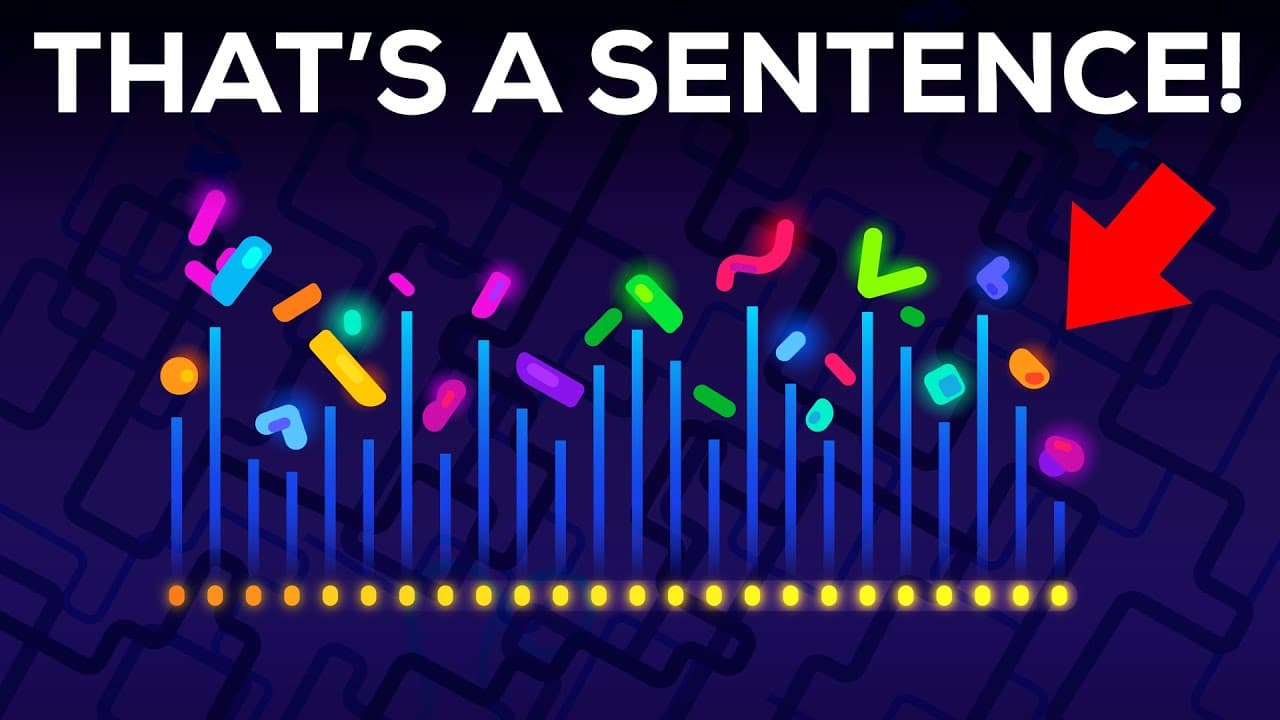
The language of life in cells is composed of proteins, which are made from 21 different amino acids. These proteins form complex structures and biological pathways essential for cellular functions, all guided by DNA that acts as a dictionary and instruction manual. This intricate language allows cells to perform vital processes, responding to stimuli and maintaining life.
Transcript
look around the room you're sitting in right now let's fill it top to bottom with trillions of grains of sand billions of grains of rice hundreds of thousands of grapes a few thousand apples and a dozen watermelons this is what the inside of your cells looks like in terms of numbers they're mostly filled up with water molecules the grains of sand w... Read More
Key Insights
- 💦 Cells are primarily made up of water molecules and proteins, which together enable various cellular functions.
- 🛟 Proteins serve as the language of life, with different combinations forming complex structures and pathways.
- 🧑🏭 DNA acts as the protein dictionary and building manual, regulating the production and functioning of proteins.
- 🖐️ Protein folding plays a crucial role in determining protein interactions and functions within a cell.
- 🛟 The language of life is highly complex, with thousands of different proteins and intricate biological pathways.
- 💦 Cells, although mindless individually, work together to form complex tissues and organ systems through emergent properties.
- 🧡 Proteins can perform a wide range of functions, from building structures to conveying information and responding to stimuli.
Install to Summarize YouTube Videos and Get Transcripts
Explore YouTube Video Summarizer or Get YouTube Transcript Extractor
Questions & Answers
Q: What are the main components of cells, and how do they contribute to cellular functions?
Cells are primarily composed of water molecules and proteins. Water provides the cells' consistency and enables movement, while proteins carry out various cellular functions, including growth, structure building, and response to stimuli.
Q: How is the language of life, represented by proteins, similar to human language?
The language of life, represented by proteins, uses amino acids as its alphabet. Just as human language uses letters to form words and sentences, proteins are made up of amino acids that string together to form words, which then combine to create biological pathways that carry out specific cellular functions.
Q: How does DNA regulate the production of proteins?
DNA contains genes, which act as protein dictionaries. Genes provide the instructions for assembling specific proteins, dictating which amino acids should be used and in what order. This regulation ensures that the correct proteins are produced at the right time and in the right quantities.
Q: What role does protein folding play in cellular functions?
Proteins fold into complex 3D structures, and the shape of a protein determines its interactions with other proteins and molecules. Protein folding allows proteins to perform specific functions, such as building complex structures, dismantling molecules, and conveying information within a cell.
Summary & Key Takeaways
-
Cells are primarily made up of water molecules and proteins, which give them a jelly-like consistency and enable various cellular functions.
-
Proteins, made up of amino acids strung together, serve as the language of life, with different combinations of proteins forming biological pathways that carry out essential cellular processes.
-
DNA, containing genes and instructions, acts as the protein dictionary and building manual, determining which proteins are made and when.
Read in Other Languages (beta)
Share This Summary 📚
Summarize YouTube Videos and Get Video Transcripts with 1-Click
Try YouTube Summary with ChatGPT & Claude or YouTube Transcript Generator
Explore More Summaries from Kurzgesagt – In a Nutshell 📚
Summarize YouTube Videos and Get Video Transcripts with 1-Click
Try YouTube Summary with ChatGPT & Claude or YouTube Transcript Generator