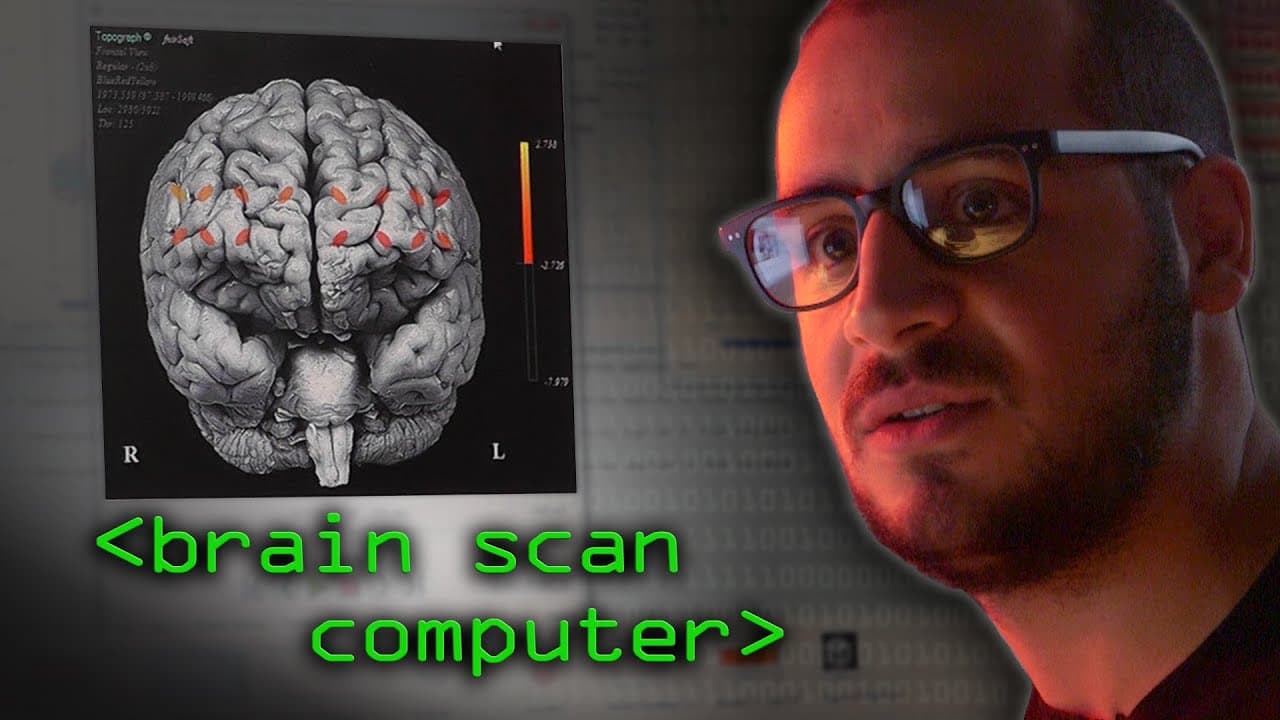
How Can Brain Scanners Measure Mental Workload?
TL;DR
Brain scanners offer insights into mental workload by assessing users' brain activity during tasks. This technology helps determine the optimal balance between resource allocation and task performance, aiming to prevent overloading or boredom. The ultimate goal is a real-time feedback system to aid users in managing their mental resources effectively.
Transcript
my work involves using a brain scanner the one you can see here to measure people's mental workload while they perform various tasks so this means that we can tell when software sucks as well as when we made it better humans have limited resources like computer processors if you want so let's draw a good line here and people can allocate less or mo... Read More
Key Insights
- 😘 Different tasks require varying levels of mental resources, with some tasks leading to high mental workload and others to low mental engagement.
- ❓ Maintaining a balanced mental workload is crucial for optimal performance and avoiding mistakes or boredom.
- 🧠 Brain scanners can detect changes in brain activity and oxygenation to measure mental workload.
- 🧠 Analyzing brain data requires expertise in signal processing and removing artifacts caused by movement.
- 🧠 The ultimate goal is to create user-friendly and wearable devices that can measure mental workload without the need for a brain scanner.
- 👤 Measuring mental workload can help improve software design and user interface for better user experience.
- 😷 Real-time feedback on mental workload can assist users in managing their resources, taking breaks, or asking for help.
Install to Summarize YouTube Videos and Get Transcripts
Explore YouTube Video Summarizer or Get YouTube Transcript Extractor
Questions & Answers
Q: How can brain scanners be used to measure mental workload?
Brain scanners can detect changes in brain activity and oxygenation, indicating the level of mental resources allocated to a task. By correlating this data with task performance, researchers can assess mental workload.
Q: What are the challenges in analyzing brain data from scanners?
Analyzing brain data involves signal processing and removing movement artifacts. Researchers need to transform raw data into meaningful information about brain activity and oxygenation. It requires expertise and careful analysis.
Q: How can measuring mental workload help improve software design?
Measuring mental workload can identify when software design is causing excessive mental strain or leading to boredom. This information can guide improvements in user interface design and interaction.
Q: What is the goal of developing a system to measure and communicate mental workload in real time?
The goal is to provide users with real-time feedback on their mental workload. This can help them make adjustments, such as taking breaks or seeking assistance, to maintain optimal performance and avoid burnout or boredom.
Summary & Key Takeaways
-
Brain scanners are used to measure people's mental workload during tasks, allowing researchers to identify areas of improvement in software design.
-
Different tasks require different levels of mental resources, with air traffic controllers operating near maximum resources and train drivers being prone to boredom due to repetitive tasks.
-
The goal is to create a system that can measure and communicate users' mental workload in real time to help maintain a balanced level of engagement.
Read in Other Languages (beta)
Share This Summary 📚
Summarize YouTube Videos and Get Video Transcripts with 1-Click
Try YouTube Summary with ChatGPT & Claude or YouTube Transcript Generator
Explore More Summaries from Computerphile 📚



Summarize YouTube Videos and Get Video Transcripts with 1-Click
Try YouTube Summary with ChatGPT & Claude or YouTube Transcript Generator