Why Did the FBI Arrest Judges Hannah Dugan and Jose Joel Cano?
TL;DR
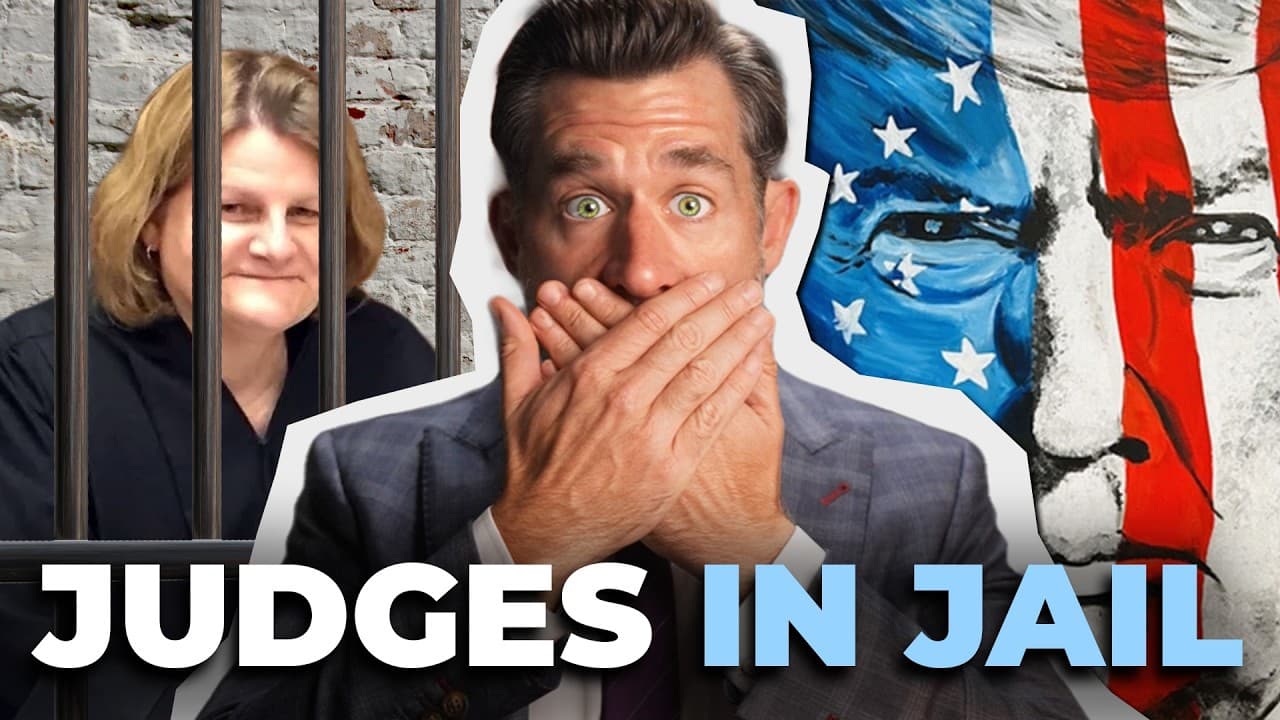
The FBI arrested Judges Hannah Dugan and Jose Joel Cano over alleged obstruction of federal immigration proceedings, but the cases were still at an early stage and neither judge had been found guilty. Dugan’s case arose from an attempted immigration arrest at her Milwaukee County courthouse on April 18, 2025, while Cano faced allegations involving firearms and evidence tampering. Read on to understand the accusations, due-process concerns, and key differences between the cases.
Transcript
Look, everyone, calm down. It won't be time to panic until they start arresting the judges. Uhhuh. Well, crap. They started arresting the judges. The Trump administration has been pretty open about his war on the judiciary, but last week it took a huge, almost unprecedented step forward in an intimidation campaign against judges. Who gets to make t... Read More
Key Insights
- The Trump administration arrested Judges Hannah Dugan and Jose Joel Cano for obstructing immigration proceedings, a move seen as part of a broader intimidation campaign against the judiciary.
- Judge Dugan was charged with obstructing federal immigration proceedings by allegedly aiding an undocumented immigrant's escape, though the circumstances suggest she followed courtroom protocols.
- The arrests have sparked controversy due to the administration's public gloating and perceived political motivations, bypassing traditional judicial processes.
- The distinction between judicial and administrative warrants plays a crucial role in Judge Dugan's case, with implications for how law enforcement can operate in court settings.
- Judge Cano's case involves more serious allegations, including evidence tampering, which may provide a stronger basis for conviction compared to Judge Dugan's case.
- The Trump administration's actions are part of a broader strategy to enforce stricter immigration policies and challenge sanctuary city protections.
- Media coverage of the arrests highlights significant bias, with different outlets framing the events in ways that reflect their political leanings.
- The cases underscore tensions between federal and state authorities, particularly regarding immigration enforcement and judicial independence.
Install to Summarize YouTube Videos and Get Transcripts
Explore YouTube Video Summarizer or Get YouTube Transcript Extractor
Questions & Answers
Q: Why did the FBI arrest Judges Hannah Dugan and Jose Joel Cano?
Federal officers charged Judges Hannah Dugan of Wisconsin and Jose Joel Cano of New Mexico with crimes related to allegedly obstructing federal immigration proceedings. The transcript stresses that these were government accusations in early-stage cases, not facts established through a trial or guilty verdict.
Q: What is Judge Hannah Dugan accused of doing?
The government accused Dugan of interfering with officers who planned to arrest Eduardo Flores Ruiz at her Milwaukee County courthouse. After learning that federal officers were waiting outside her courtroom, she left the courtroom and, alongside another judge, confronted them in the hallway.
Q: Why were federal agents at Judge Dugan’s courthouse?
Agents went there to arrest Eduardo Flores Ruiz under immigration authorities after seeing his name on the court docket. The six agents included an ICE officer, a CBP officer, two FBI special agents, and two DEA special agents, and courthouse personnel told them to wait until his hearing ended.
Q: Who is Eduardo Flores Ruiz?
Flores Ruiz is described as an undocumented immigrant from Mexico who received a removal order in 2013, was removed to Mexico, and later returned to the United States without permission. He was appearing before Dugan after being charged on March 18, 2025, with several battery counts arising from an alleged fight with his roommate.
Q: Had either judge been found guilty when the arrests were discussed?
No trial or finding of guilt had occurred, and the cases were still in their early stages. The available details came from government charges and news reports, so the transcript repeatedly characterizes them as unproven accusations.
Q: Why does the transcript emphasize due process in these cases?
A criminal complaint contains accusations that must later be supported by evidence and witness testimony. The government must prove every required element beyond a reasonable doubt, and a jury must make the guilty finding.
Q: Why were the arrests considered controversial?
The transcript portrays them as part of an intimidation campaign against judges and criticizes administration officials for publicly treating the defendants as guilty before trial. It also points to the potential chilling effect on the judiciary and argues that fact-finding and adjudication should occur through the courts.
Q: How do the allegations against Judges Dugan and Cano differ?
Dugan’s case concerns her conduct during an attempted immigration arrest at her courthouse and whether she obstructed the officers. Cano’s case involves allegations of evidence tampering connected to firearms and gang associations, which the existing page summary describes as potentially stronger than the case against Dugan.
Summary & Key Takeaways
-
The Trump administration's arrest of Judges Hannah Dugan and Jose Joel Cano marks an unprecedented step in its campaign against the judiciary, with both judges facing charges related to obstructing immigration proceedings. The arrests have raised concerns about political motivations and due process.
-
Judge Dugan's case centers on her actions during an immigration-related arrest at her courthouse, with the government alleging she obstructed justice. However, the legal basis for the charges appears weak, and her actions may have been within her judicial rights.
-
Judge Cano's case involves allegations of evidence tampering related to firearms and gang associations, presenting a potentially stronger case for the government. Both cases reflect broader tensions over immigration enforcement and judicial independence under the Trump administration.
Read in Other Languages (beta)
Share This Summary 📚
Summarize YouTube Videos and Get Video Transcripts with 1-Click
Try YouTube Summary with ChatGPT & Claude or YouTube Transcript Generator
Explore More Summaries from LegalEagle 📚





Summarize YouTube Videos and Get Video Transcripts with 1-Click
Try YouTube Summary with ChatGPT & Claude or YouTube Transcript Generator