How Does Light and Darkness Exposure Affect Mental Health?
TL;DR
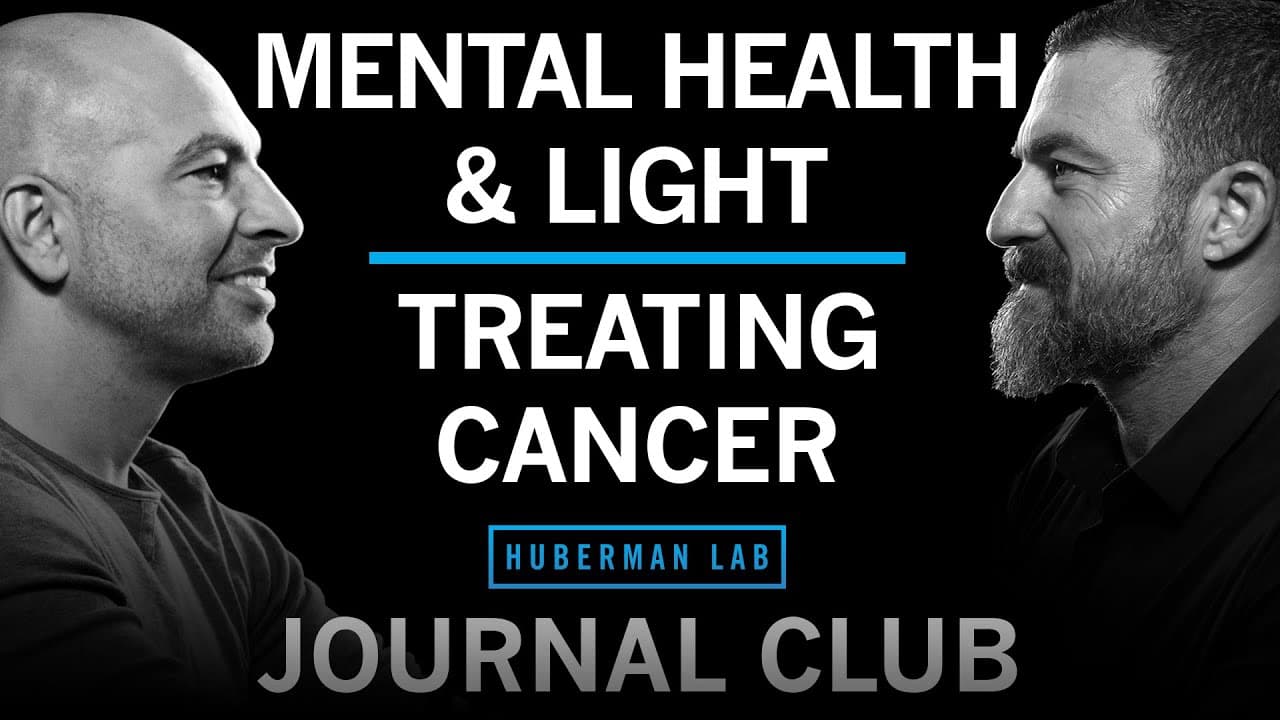
Exposure to light during the day and darkness at night has significant benefits for mental health. Morning sunlight and bright light throughout the day improve mood and reduce mental health disorder symptoms, while adequate darkness exposure at night is crucial for maintaining mental well-being. Both elements play essential roles in enhancing overall mental and immune health.
Transcript
welcome to the huberman Lab podcast where we discuss science and science-based tools for everyday life I'm Andrew huberman and I'm a professor of neurobiology and Opthalmology at Stanford school of medicine today marks the second episode in our Journal Club series with myself and Dr Peter AA Dr Peter AA as many of you know is a medical doctor who i... Read More
Key Insights
- 🧑⚕️ Light exposure during the morning and daytime has independent and positive effects on mental health, reducing symptoms of depression, anxiety, and other mental health disorders.
- 🧑⚕️ Darkness exposure at night is important for mental health, and inadequate darkness exposure can negatively impact mood and health.
- 🙂 Morning sunlight, bright light exposure throughout the day, and darkness exposure at night each have their own unique benefits for mental health.
- 🙂 Light exposure plays a key role in the immune system, with red and near-infrared light having positive effects on cellular and organ health.
- 🎙️ More videos with Peter Attia:
Install to Summarize YouTube Videos and Get Transcripts
Explore YouTube Video Summarizer or Get YouTube Transcript Extractor
Questions & Answers
Q: How does light exposure impact mental health?
Light exposure during the morning and daytime has positive effects on mental health, reducing symptoms of depression, anxiety, bipolar disorder, PTSD, and self-harm. Adequate darkness exposure at night is also important for mental health.
Q: What are the benefits of morning sunlight and bright light exposure throughout the day?
Morning sunlight and bright light exposure throughout the day can improve mood, reduce symptoms of mental health disorders, and help regulate circadian rhythms. They also play a role in regulating hormone and neurotransmitter levels that impact mental health.
Q: How does darkness exposure at night affect mental health?
Darkness exposure at night can positively impact mental health by regulating circadian rhythms, promoting restful sleep, and reducing symptoms of mental health disorders. Inadequate darkness exposure at night can disrupt sleep and mood regulation.
Q: What role does light exposure play in the immune system and cancer treatments?
Light exposure affects the immune system, with red light and near-infrared light having positive effects on cellular and organ health. These forms of light have been shown to improve wound healing, reduce inflammation, and enhance mitochondrial function. Light therapy has potential applications in cancer treatments, particularly in combination with other therapies.
Summary & Key Takeaways
-
Light exposure during the morning and daytime, as well as darkness exposure at night, have positive effects on mental health and can potentially reduce symptoms of mental health disorders.
-
Morning sunlight and bright light exposure throughout the day are important for optimal mental health outcomes.
-
Darkness exposure at night is also important for mental health, and inadequate darkness exposure at night can negatively impact mood and health.
-
Light exposure plays a key role in the immune system and has potential applications in cancer treatments.
Read in Other Languages (beta)
Share This Summary 📚
Summarize YouTube Videos and Get Video Transcripts with 1-Click
Try YouTube Summary with ChatGPT & Claude or YouTube Transcript Generator
Explore More Summaries from Andrew Huberman 📚
Summarize YouTube Videos and Get Video Transcripts with 1-Click
Try YouTube Summary with ChatGPT & Claude or YouTube Transcript Generator