How True Detective Turns Pessimism Into Inquiry
TL;DR
Rust and Marty become true detectives only after their certainties collapse and they learn to investigate from a position of acknowledged ignorance. The analysis argues that pessimism can expose false hopes, but detachment becomes another rigid attachment unless curiosity, compassion, and sustained attention reopen a person to mystery, suffering, connection, and unexpected meaning.
Transcript
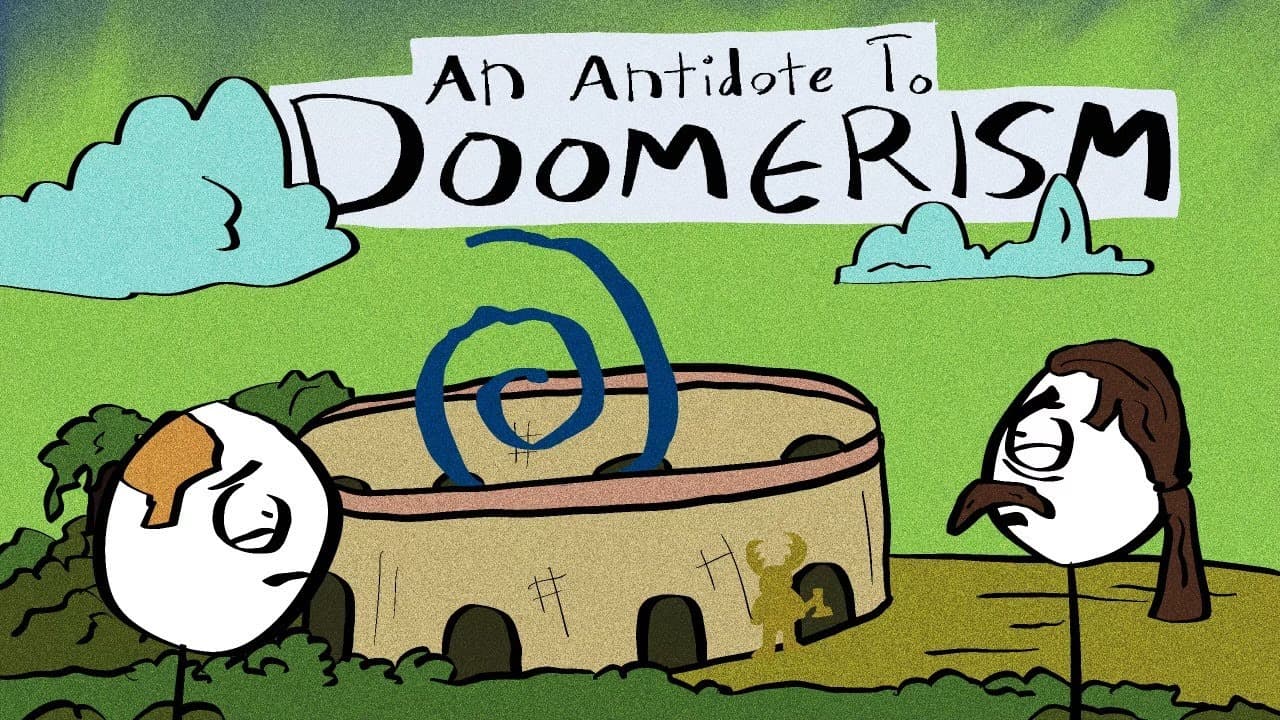
the Doomer is the quintessential pessimist of our time reserved to small hits of pleasure and a plain viewed acceptance that we are all screwed the Doomer is often lampooned as an alarmist or at the very least a party pooper but who hasn't at times completely given up on the world look around people suck the world sucks it's far from an unpopular S... Read More
Key Insights
- Rust Cole's pessimism is rooted in the belief that self-awareness separates human beings from nature, producing alienation and the illusion of an individual self. He views religion, status, and political identity as constructed consolations that help people justify lives they never chose.
- Control societies work by encouraging people to internalize social ideals rather than relying exclusively on explicit coercion or discipline. Marty demonstrates this process because he willingly performs the culturally approved roles of heroic detective, family provider, prestigious homeowner, and sexually successful man.
- Cruel optimism is an attachment to something desired that becomes an obstacle to flourishing. Marty's vision of the good life promises fulfillment, but maintaining that image encourages infidelity, self-deception, emotional damage, and ignorance about both his own impulses and the surrounding world.
- The impasse is a period after crisis or loss in which familiar coordinates disappear and the world becomes unusually present. Marty's collapse places him in this uncertainty, while Rust already appears to inhabit it by rejecting conventional attachments, comforting ideals, and promises of salvation.
- Pessimistic detachment is still a form of attachment when a person depends on nihilistic certainty for protection. Rust and the Doomer remain committed to believing that nothing larger exists and nothing will be enough, thereby avoiding the vulnerability required for genuine openness.
- Receptivity is the temporary loosening of rigid truths so that attention can reach what existing beliefs exclude. It does not require admitting total error. Rust and Marty need this openness after learning that their earlier investigation may not have identified the full crime or killer.
- A true detective is philosophical because effective detection occurs at the boundary between knowledge and ignorance. Rust and Marty advance only when they abandon personal agendas, institutional identities, and higher certainties, then allow careful attention to unfamiliar evidence to guide their investigation.
- Curiosity and compassion are the guiding principles of philosophical detection. By accepting that the world cannot be completely understood and that suffering connects people, Rust becomes receptive to spiritual awe and the felt love of his dead daughter, leaving him less securely pessimistic.
Install to Summarize YouTube Videos and Get Transcripts
Explore YouTube Video Summarizer or Get YouTube Transcript Extractor
Questions & Answers
Q: Why is Rust Cole pessimistic in True Detective?
Rust believes self-awareness has estranged humanity from nature and trapped people inside the illusion that each individual is a distinct somebody. In his view, people cope with this alienation by creating religion, status, political beliefs, and social identities. His pessimism rejects those consolations, but it also shields him from confronting a world that may remain permanently mysterious and beyond his understanding.
Q: What is cruel optimism in the analysis of Marty?
Cruel optimism describes a situation in which something a person desires becomes an obstacle to flourishing. Marty pursues a socially approved good life built around professional heroism, a loving family, a large house, prestige, and sexual access. Instead of securing happiness, his attachment to that image enables harmful behavior, conceals his lack of self-control, damages others, and eventually leaves him alone.
Q: How do control societies shape Marty's behavior?
Control societies shape behavior by teaching individuals to internalize social ideals as useful and desirable, reducing the need for direct coercion. Marty adopts his culture's model of masculinity and success, then treats his actions as acceptable or necessary within that model. He plays the heroic detective, provider, homeowner, and womanizer even as those roles make him increasingly unhappy and harm his family.
Q: Why is Rust's detachment not genuine freedom?
Rust's detachment remains dependent on the optimism and disappointment he claims to reject. His certainty that nothing larger exists and nothing will ever be enough functions as a protective shield against surprise, vulnerability, and possible error. Because he is attached to detachment itself, he sacrifices receptivity and risks overlooking evidence or experiences that do not fit his established nihilistic logic.
Q: What does it mean to become a true detective?
Becoming a true detective means pursuing zones of possible ignorance without relying on comforting certainty, personal agendas, or higher ideals. Rust and Marty reach this condition after recognizing that their apparent solution was incomplete and that their earlier confidence concealed ignorance. Outside the police force, they become more attentive investigators who derive direction from the evidence and the larger mystery rather than fixed identities.
Q: How are philosophy and detective work connected?
Philosophy and detective work are connected through their shared movement along the boundary between knowledge and ignorance. Both require questioning assumptions, surrendering false certainty, and paying sustained attention to what remains unexplained. The analysis argues that an average or pessimistic detective can still be restricted by rigid beliefs, while a true detective remains receptive enough to transform ignorance into new understanding.
Q: Why must Rust and Marty acknowledge their ignorance?
Rust and Marty must acknowledge ignorance because their earlier investigation did not fully uncover the crime, and people died after they failed to look closely enough. The disturbing possibility that they had not truly caught the killer turns the case into a more sinister mystery. Progress becomes possible only when they accept that their beliefs and institutional conclusions were incomplete, then reopen the investigation with greater attention.
Q: How does Rust's final spiritual experience change him?
Rust experiences spiritual awe after he and Marty risk their lives and catch the killer. He briefly feels connected with the love of his dead daughter, and the experience leaves him visibly less pessimistic whether or not it was objectively real. The moment shows that reality may exceed his rigid expectations and that connection, compassion, and meaning can remain possible alongside suffering and uncertainty.
Summary & Key Takeaways
-
Rust Cole treats self-awareness as humanity's burden, arguing that people invent identities, religions, and ideals to justify lives shaped by alienation. His pessimism protects him from comforting illusions, yet it also supplies a rigid certainty that prevents genuine receptivity to experiences and possibilities he cannot explain.
-
Marty embodies society's approved image of the good life through professional status, family, property, and sexual conquest. These achievements fail to make him flourish and instead damage his relationships. His collapse illustrates cruel optimism, where an intensely desired object or lifestyle becomes an obstacle to well-being.
-
After discovering that their apparent solution was incomplete, Rust and Marty must admit their ignorance and investigate beyond institutional and personal certainties. They become philosophical detectives by attending closely to everything. Their final confrontation, shared suffering, and Rust's spiritual experience suggest that compassion and curiosity can loosen pessimism without denying suffering.
Read in Other Languages (beta)
Share This Summary 📚
Summarize YouTube Videos and Get Video Transcripts with 1-Click
Try YouTube Summary with ChatGPT & Claude or YouTube Transcript Generator
Explore More Summaries from Sisyphus 55 📚



Summarize YouTube Videos and Get Video Transcripts with 1-Click
Try YouTube Summary with ChatGPT & Claude or YouTube Transcript Generator