Why Do Ignored Problems Grow Like Dragons?
TL;DR
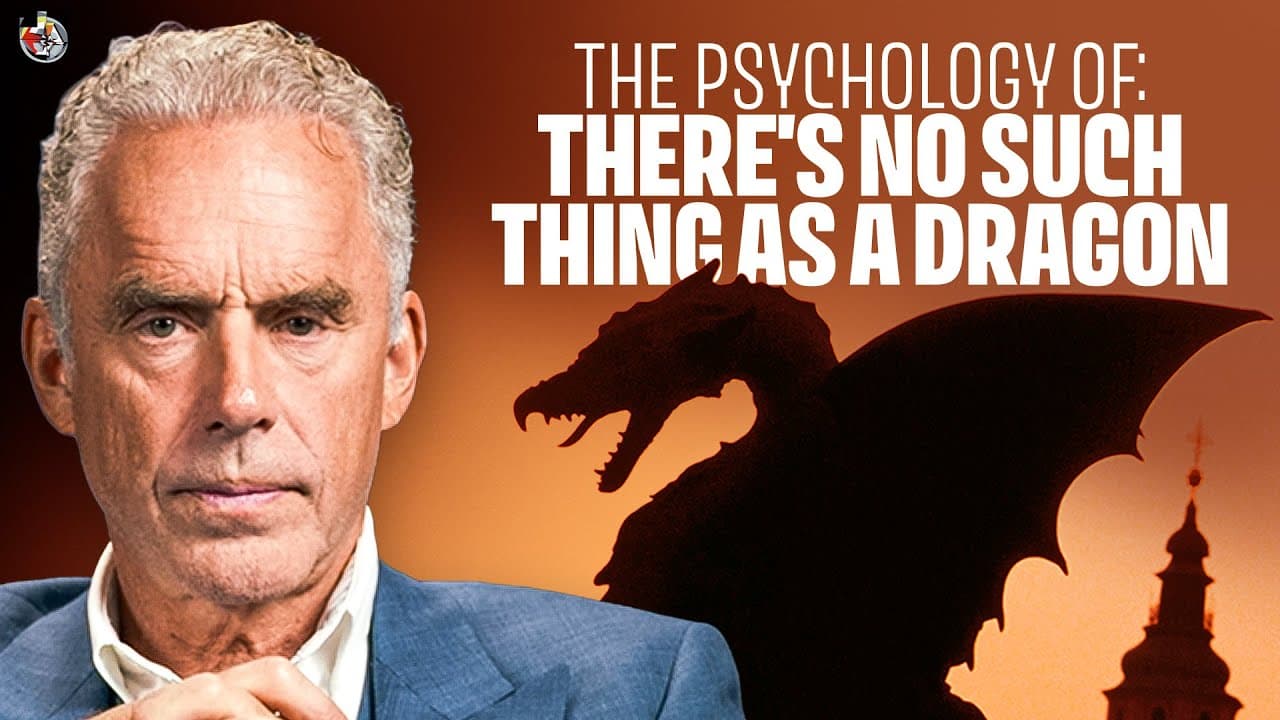
Problems should be acknowledged and addressed when they first appear, because ignoring them allows them to grow and disrupt ordinary life. The dragon symbolizes danger, possibility, and the unknown, while Billy represents the attentive hero who initially approaches an unexpected problem voluntarily. His mother’s denial teaches willful blindness, causing a manageable anomaly to become increasingly powerful.
Transcript
So recently I recorded some analysis of children's stories once again. I had done this years ago with Pinocchio and the Lion King. Uh that was part and parcel of the lectures that I did at Harvard and at the University of Toronto. More recently I recorded an analysis of Snow White, the Grims Brother version and also of Hansel and Gretle. I'm going ... Read More
Key Insights
- The dragon is an abstraction of predator, danger, and the unknown, combining features associated with threats faced by human beings and their evolutionary ancestors. Its meaning is real at the conceptual level, much as broad categories such as predator or danger are real.
- The unknown contains both danger and promise, which explains why dragons are associated not only with threats but also with treasure. A dragon encounter represents the human task of entering uncertainty, finding what is valuable there, and becoming transformed through the pursuit.
- Billy is presented as a juvenile hero because he notices an unexpected change and interacts with it voluntarily. His initial attention partly tames the kitten-sized dragon, which responds happily when he pats its head rather than fleeing from it or pretending it is absent.
- Willful blindness is the deliberate refusal to acknowledge an uncomfortable reality. Billy’s mother models this attitude by insisting that dragons do not exist, and Billy then suppresses his own direct experience by refusing to continue interacting with the creature he has already encountered.
- Ignored problems grow because they continue changing while attention is withheld. The dragon expands from the size of a kitten to nearly the size of a dog after Billy accepts his mother’s denial, illustrating how a small anomaly can become increasingly difficult to manage.
- Early attention can keep an unfamiliar problem manageable and potentially productive. The small dragon initially wags its tail and behaves benevolently, suggesting that an unexpected occurrence may first appear as a matter of interest rather than as an immediate and overwhelming threat.
- Family stability depends on acknowledging anomalies that interfere with ordinary routines. As the dragon grows, it follows Billy to breakfast and sits on the table, behavior that is normally forbidden, showing how denied problems gradually disrupt peaceful domestic patterns.
- The Egyptian story of Osiris and Seth portrays willful blindness as a danger to an established state. Osiris ignores his brother’s hostile plans and is overthrown, illustrating how unacknowledged malevolence can threaten individuals, families, communities, states, and nations.
Install to Summarize YouTube Videos and Get Transcripts
Explore YouTube Video Summarizer or Get YouTube Transcript Extractor
Questions & Answers
Q: What does the dragon symbolize in the story?
The dragon symbolizes predators, danger, possibility, and the unknown itself. Peterson describes it as an abstraction that gathers many threatening features into one image, including elements associated with tree-dwelling cats, snakes, birds, and fire. Because the unknown can contain both serious danger and valuable opportunities, the dragon is also connected with treasure and the possibility of personal transformation.
Q: Why does the dragon grow when Billy ignores it?
The dragon grows because it represents an anomaly or problem that receives no acknowledgment or corrective attention. After Billy’s mother insists that dragons do not exist, Billy stops responding to what he directly perceives. The creature then grows from kitten-sized to almost dog-sized, illustrating how neglected problems can change over time and become more disruptive, threatening, and difficult to address.
Q: What is willful blindness in the story?
Willful blindness is the refusal to recognize something troubling even when evidence of it is present. Billy sees, touches, and receives a friendly response from the dragon, but his mother’s categorical denial persuades him to act as though it does not exist. The story presents that denial as dangerous because ignored realities do not necessarily remain small, harmless, or contained.
Q: Why is Billy described as a hero?
Billy plays the heroic role because he wakes up, notices something unexpected, and approaches it voluntarily. Instead of immediately fleeing or denying the small dragon, he pats its head and establishes a peaceful interaction. His conduct reflects the broader heroic pattern of paying careful attention, confronting the unknown, discovering what it contains, and potentially transforming through that encounter.
Q: Why is the small dragon initially friendly?
The small dragon is initially friendly because an unfamiliar development does not necessarily begin as an overwhelming threat. It wags its tail and responds happily when Billy pats it, indicating relatively benevolent intent. This suggests that problems or anomalies can often be approached productively when they first appear, before neglect allows them to grow into forces that disturb ordinary life.
Q: How can ignored problems disrupt a family?
Ignored problems can grow until they interfere with the routines that support peaceful domestic life. In the story, the expanding dragon follows Billy downstairs and sits on the breakfast table, even though such behavior is not normally permitted. Its increasing presence shows how an unacknowledged issue can move beyond its original setting and begin destabilizing the household’s established expectations and practices.
Q: How does the tax notice example explain the dragon?
The tax notice illustrates that an ignored problem does not simply preserve its original form. Throwing away or filing a notice without responding allows the underlying matter to continue developing across time. Like the growing dragon, a manageable administrative issue can mutate into something much more serious. The example supports the principle that timely attention prevents avoidable escalation.
Q: How does the story of Osiris and Seth relate to willful blindness?
The Egyptian story presents Osiris as the heroic founder and ruler who establishes a habitable state, while Seth emerges as the threatening force seeking to overthrow him. Osiris turns a blind eye to his brother’s hostile plans and is consequently defeated. The comparison shows how refusing to recognize emerging malevolence can endanger stable structures at personal, familial, communal, and national levels.
Summary & Key Takeaways
-
The dragon represents an abstraction that combines predators, danger, possibility, and everything lurking in the unknown. Its traditional association with treasure shows that unfamiliar territory can contain both threats and benefits. Confronting the dragon therefore means voluntarily facing uncertainty, discovering what is valuable within it, and changing through that difficult pursuit.
-
Billy initially responds heroically when he discovers the kitten-sized dragon. He notices the anomaly, approaches it voluntarily, and pats it, prompting a friendly response. His mother insists that dragons do not exist, however, and Billy adopts her denial. Once attention and acknowledgment disappear, the dragon grows from kitten-sized to nearly dog-sized.
-
The growing dragon illustrates how ignored problems can expand until they disrupt stable family routines. Peterson connects this pattern to tax notices, unspoken household problems, and the Egyptian story of Osiris overlooking Seth’s hostile intentions. Across these examples, willful blindness permits a manageable warning to develop into a destructive and overwhelming force.
Read in Other Languages (beta)
Share This Summary 📚
Summarize YouTube Videos and Get Video Transcripts with 1-Click
Try YouTube Summary with ChatGPT & Claude or YouTube Transcript Generator
Explore More Summaries from Jordan B Peterson 📚



Summarize YouTube Videos and Get Video Transcripts with 1-Click
Try YouTube Summary with ChatGPT & Claude or YouTube Transcript Generator