How Did HubSpot Build Product-Led Growth?
TL;DR
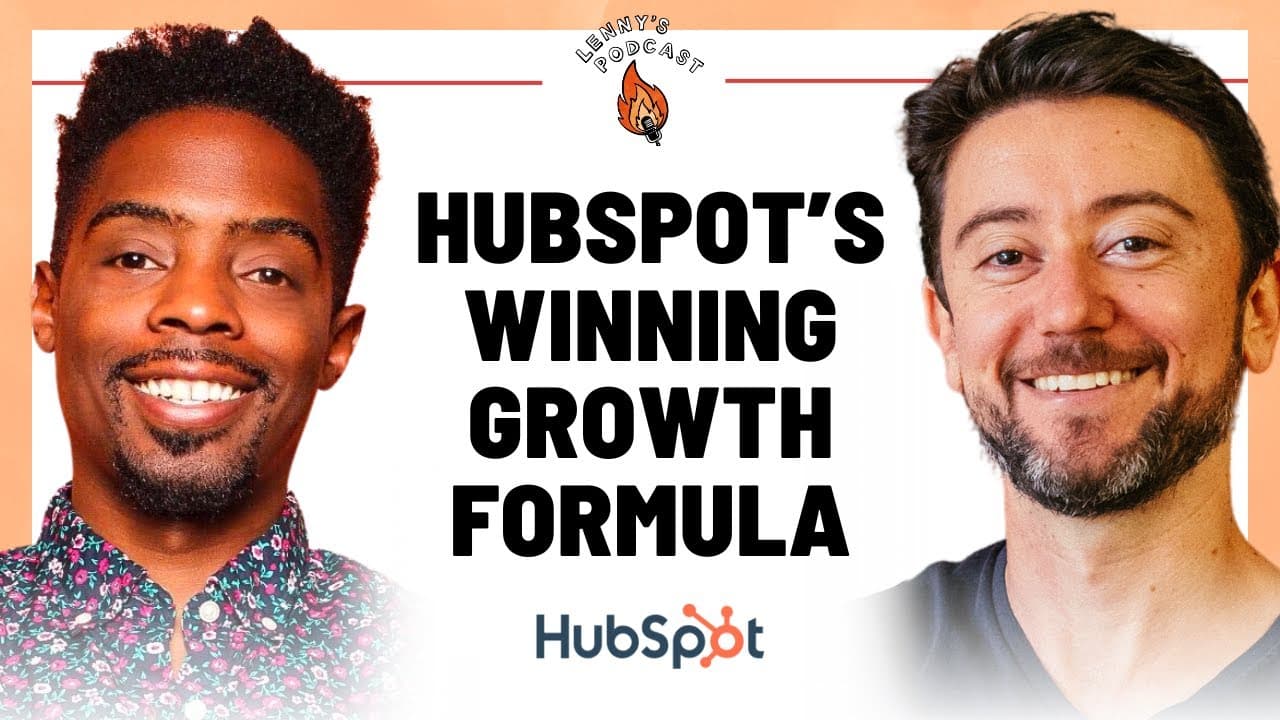
HubSpot built product-led growth by treating unassigned business problems as opportunities, taking radical accountability, and connecting product decisions to broader company goals. Chris Miller’s career shows that growth leaders earn influence by taking informed risks, learning directly from customers and sales teams, and developing strategies beyond their immediate responsibilities.
Transcript
like the actual really small initial growth team we really had an aggressive mentality and aggressive approach and what that looked like was at the time a very small percentage of I think hubspot's subscription Revenue would be described as like self-service so we approached a team who owned it we were like are y'all working on this right and they ... Read More
Key Insights
- Radical accountability is the belief that every important business problem can become your responsibility, even when nobody explicitly assigns it to your team. HubSpot’s early growth group used this ownership mentality to uncover opportunities that were important to the company but not receiving focused attention.
- HubSpot’s free CRM was a disruptive strategic move without a fully formed plan for generating leverage and enterprise value afterward. Miller recognized that the company was pursuing product-led growth, although employees did not yet share that terminology for describing the opportunity.
- Miller’s growth perspective differed from the background of product managers who had moved into product from support. Those managers possessed deep customer and product knowledge from resolving thousands of support tickets, while Miller approached the free CRM through a growth-oriented lens.
- Career influence is earned by taking informed risks and advocating for strategies that extend beyond an immediate team’s execution responsibilities. Miller pushed into important conversations before his title automatically granted access, and successful participation eventually led others to invite him into those discussions.
- Broader business context is essential for identifying larger product opportunities. Miller spent time on the sales floor and spoke with people working across the company, helping him understand how business functions connected and where his team could contribute beyond its formal assignment.
- Self-service subscription revenue was a small part of HubSpot’s business when the early growth team investigated it. After learning that the responsible team was focused elsewhere, the growth team requested ownership, took over the area, and expanded it substantially.
- Customer obsession can be strengthened by direct exposure to customer problems. HubSpot product managers who began in support had intimate familiarity with customers and the product because some had handled thousands of support tickets before transitioning into product roles.
- Hybrid work provides personal flexibility but makes spontaneous organizational learning more difficult. Miller valued being able to spend time with his son between meetings, while acknowledging that scheduled video calls require teams to become more deliberate about knowledge sharing, context transfer, and informal discovery.
Install to Summarize YouTube Videos and Get Transcripts
Explore YouTube Video Summarizer or Get YouTube Transcript Extractor
Questions & Answers
Q: How did HubSpot begin building a product-led growth strategy?
HubSpot’s product-led growth strategy emerged after the company launched its free CRM as a disruptive strategic move. The organization had not yet developed a complete perspective on how to turn that large free product into leverage and enterprise value. Chris Miller viewed the challenge through a growth lens, recognized the underlying product-led growth model, and pushed for opportunities that connected free usage with broader business outcomes.
Q: What does radical accountability mean for a growth team?
Radical accountability means treating every important business problem as potentially belonging to your team, even when the organization has not formally assigned it. HubSpot’s early growth team used this mentality to find neglected opportunities, determine why they mattered to the business, and volunteer to solve them. Demonstrating ownership and delivering results encouraged the company to give the team additional opportunities and responsibility.
Q: How did HubSpot’s growth team expand self-service revenue?
The early growth team noticed that only a small percentage of HubSpot’s subscription revenue was described as self-service. Team members approached the group that owned the area and asked whether it was actively working on the opportunity. Because that group had other priorities, the growth team requested ownership, received permission to take it on, and then expanded the initiative substantially through an aggressive approach.
Q: How can a product manager earn influence without a senior title?
A product manager can earn influence by taking informed risks, forming well-supported opinions, and contributing to strategic questions beyond the team’s immediate execution work. Miller entered conversations where his individual contributor title did not automatically provide a seat, then advocated for ideas he believed made business sense. Over time, pushing into useful discussions led to being invited into them and receiving broader responsibility.
Q: Why should product managers learn from sales and support teams?
Sales and support teams provide product managers with context that feature work alone may not reveal. Miller spent time on HubSpot’s sales floor and talked with employees working on different parts of the business, which helped him understand how company functions connected. Product managers who came from support also brought deep customer knowledge gained through resolving large numbers of support tickets and learning the product intimately.
Q: How does broad business context improve growth decisions?
Broad business context helps growth leaders see opportunities larger than the tasks assigned to their immediate team. By understanding how sales, support, product, pricing, packaging, and market segments relate, a leader can identify neglected problems and explain why solving them matters to the company. Miller described this as widening the aperture beyond heads-down execution so potentially valuable opportunities are not missed.
Q: What role did risk-taking play in Chris Miller’s HubSpot career?
Risk-taking helped Miller move from an individual contributor product manager into broader strategic leadership. He advocated for ideas about product-led growth, pricing, packaging, and company strategy even when his title did not inherently place him in those discussions. His willingness to pursue ideas he believed were sound, combined with curiosity about the wider business, helped establish credibility and expand his influence.
Q: How does hybrid work affect learning and collaboration?
Hybrid work offers meaningful flexibility, including the ability to spend time with family between meetings, but it can reduce spontaneous learning. Miller noted that remote schedules often involve tightly arranged video calls, leaving fewer opportunities for casual conversations, sales-floor observation, or water-cooler discoveries. Teams therefore need to be more creative and deliberate about sharing context, transferring knowledge, and recreating organizational learning that once happened organically.
Summary & Key Takeaways
-
Chris Miller joined HubSpot after the company launched its free CRM, when the business had not yet formed a complete plan for turning that free product into enterprise value. His growth-oriented perspective helped identify the underlying product-led growth opportunity, even before the organization shared a standard vocabulary for describing that strategy.
-
Miller expanded his influence by taking informed risks, entering strategic conversations, and developing opinions about issues beyond his assigned product work. He studied how sales, support, product, pricing, and packaging connected, which allowed him to recognize business opportunities that a team focused exclusively on feature execution might have overlooked.
-
HubSpot’s early growth team adopted an ownership mentality in which every relevant problem could become its problem. After discovering that self-service subscription revenue was not a priority for its existing owner, the team assumed responsibility and expanded it. Successful results made the team appear hungry, capable, and ready for greater responsibility.
Read in Other Languages (beta)
Share This Summary 📚
Summarize YouTube Videos and Get Video Transcripts with 1-Click
Try YouTube Summary with ChatGPT & Claude or YouTube Transcript Generator
Explore More Summaries from Lenny's Podcast 📚


Summarize YouTube Videos and Get Video Transcripts with 1-Click
Try YouTube Summary with ChatGPT & Claude or YouTube Transcript Generator