Why Is Fukushima’s Reconstruction Taking So Long?
TL;DR
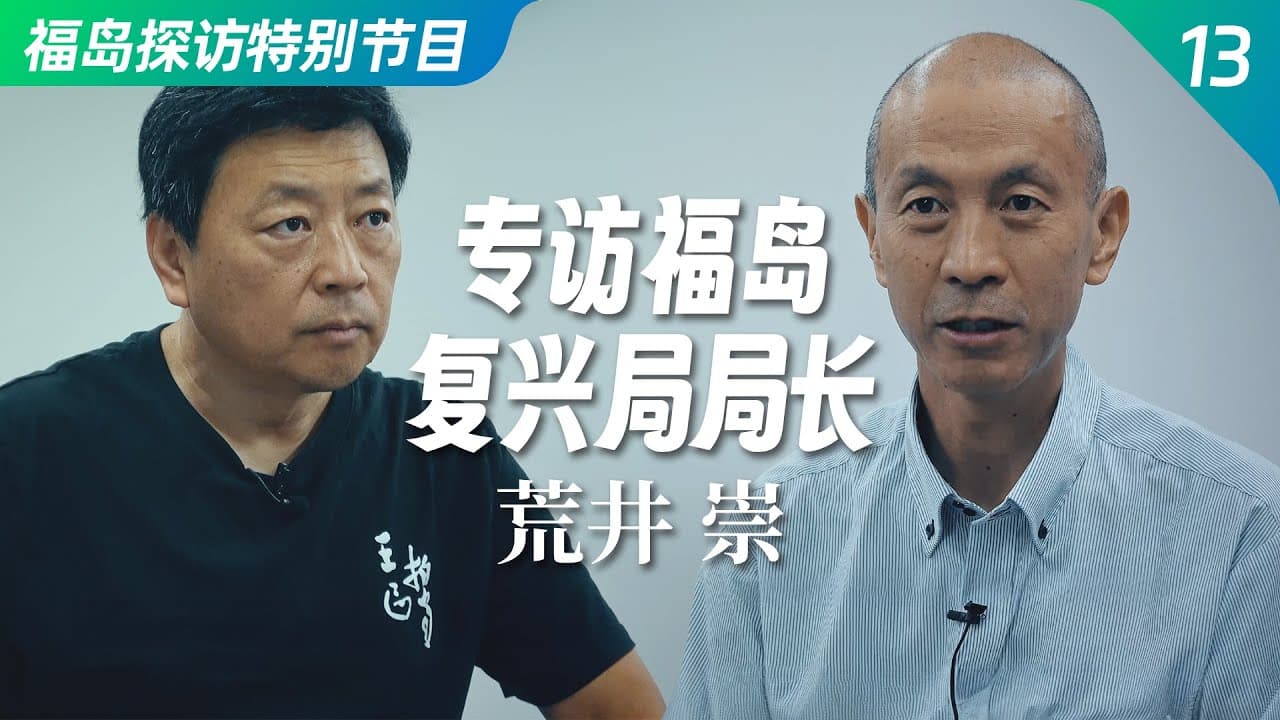
Fukushima’s reconstruction remains unfinished because radiation delayed decontamination, infrastructure construction, and the reopening of residential areas. The government has invested about 40 trillion yen across areas affected by the Great East Japan earthquake, including Fukushima, Miyagi, and Iwate, but officials still cannot provide a completion date, while low return rates make shops, hospitals, schools, and housing difficult to sustain.
Transcript
"How much time is needed to complete the entire reconstruction work?" "Frankly, it's currently unclear how many years it will take." "I want to know how much money the Japanese government has spent in total." "About 40 trillion yen." "If no one really wants to return to this area," "will it still be revitalized?" "Did you come to work from Tokyo, o... Read More
Key Insights
- Fukushima’s reconstruction has been delayed by the nuclear accident because authorities could not immediately rebuild in areas where radiation remained high. Decontamination and the natural decline of radiation had to occur before communities could reopen and construction of public facilities could begin.
- The completion date for Fukushima’s reconstruction remains unknown. The Fukushima Reconstruction Bureau director said difficult-to-return zones still require extensive roads, buildings, and other infrastructure, and official construction in some formerly residential areas had only recently begun when the interview was conducted.
- Futaba and Namie illustrate the scale of continued restrictions. According to the official interviewed, 85 percent of Futaba remained classified as difficult to return, leaving 15 percent livable, while 80 percent of Namie remained difficult to return and 20 percent was available for habitation.
- The Japanese government has spent about 40 trillion yen on reconstruction across prefectures affected by the Great East Japan earthquake. The amount covers Fukushima, Miyagi, Iwate, and other areas, so it should not be interpreted as spending exclusively on Fukushima communities affected by the nuclear accident.
- Reconstruction funding has supported roads, ports, embankments, decontamination work, and industrial parks intended to revive local industries. The official described the 40 trillion yen as national budget spending and said future expenditures would likely continue because reconstruction and revitalization remain incomplete.
- Population recovery is constrained by a circular infrastructure problem. Residents hesitate to return without supermarkets, hospitals, schools, housing, and other services, but businesses cannot operate sustainably without enough residents, making it difficult to rebuild both community life and commercial activity simultaneously.
- Displaced families have developed lasting ties elsewhere after 12 years. Children have grown up in evacuation communities, parents may have secured new employment, and connections to former hometowns have weakened, so restoring physical infrastructure does not guarantee that younger residents or their descendants will return.
- The government’s stated responsibility is to create safe living conditions for residents who want to return while avoiding wasteful spending. The official also acknowledged the need to attract outsiders, build facilities with future uses, and consider whether taxpayers can understand and support reconstruction expenditures.
Install to Summarize YouTube Videos and Get Transcripts
Explore YouTube Video Summarizer or Get YouTube Transcript Extractor
Questions & Answers
Q: Why has Fukushima’s reconstruction taken so long?
Fukushima’s reconstruction has taken so long because the affected area suffered both earthquake and tsunami damage and a nuclear power plant accident. Roads and public facilities in areas affected only by the earthquake and tsunami could be rebuilt relatively quickly. Nuclear-affected communities first required decontamination and reductions in radiation levels before areas could reopen and authorities could begin constructing roads, buildings, and other facilities.
Q: When will Fukushima’s reconstruction be completed?
The Fukushima Reconstruction Bureau director could not provide a completion year or even a rough time range. He said the process would take considerable time because areas surrounding the nuclear power station still lacked many roads, buildings, and other facilities. Infrastructure construction in some difficult-to-return zones that were previously residential had only recently started, leaving substantial work before complete community restoration could be considered.
Q: How much has Japan spent on disaster reconstruction?
The Japanese government had spent about 40 trillion yen on reconstruction during the 12 years discussed in the interview. That figure covers areas affected by the Great East Japan earthquake across Fukushima, Miyagi, Iwate, and other prefectures. It is therefore an overall reconstruction figure, not the amount spent only on Fukushima or solely on consequences of the nuclear power plant accident.
Q: What has Japan’s reconstruction funding paid for?
Reconstruction funding has mainly paid for physical infrastructure and measures needed to restore safe living and economic conditions. The official listed roads, ports, embankments, decontamination operations, and industrial parks among the major uses. Industrial parks were intended to help revive local industries. Spending also supports the broader effort to reopen communities and establish facilities necessary for residents who wish to return.
Q: Will Tokyo Electric Power Company repay reconstruction costs?
The official said the approximately 40 trillion yen discussed came from the national budget. He was not fully certain about the repayment arrangements, but said it was possible for the state to pay some nuclear accident expenses first and later recover certain costs from Tokyo Electric Power Company. He distinguished such reimbursement from compensation paid to residents and indicated that any recovery would likely cover only part of total spending.
Q: Why are few displaced residents returning to Fukushima?
Many displaced residents have built new lives during 12 years away from their former communities. Their children have grown up elsewhere, parents may have found new jobs, and family connections with their original hometowns have weakened. Others cannot return because shopping, medical care, schools, housing, and other living conditions remain insufficient. Elderly residents may still strongly wish to return, but younger family members may not share that intention.
Q: Why are shops and public services difficult to restore?
Shops and public services face a circular population problem. Residents need supermarkets, hospitals, schools, housing, and commercial facilities before they can comfortably return. However, businesses and services need enough customers and users to operate. When only a small number of people return, commercial facilities cannot easily open, but their absence gives other residents another reason to remain in their evacuation communities.
Q: How does the government justify rebuilding sparsely populated towns?
The official argued that residents were forced from their homes by the accident, so the state has a responsibility to create safe conditions for those who still want to return. At the same time, he acknowledged that reconstruction uses taxpayers’ money and must avoid waste or extravagant spending. The government therefore seeks to build essential facilities with future uses and attract people from outside the original communities.
Summary & Key Takeaways
-
Reconstruction in nuclear-affected communities has taken longer than recovery from earthquake and tsunami damage because radiation levels remained high. Authorities first had to conduct decontamination and wait for radiation to decline before reopening areas and beginning major construction of roads, buildings, housing, and other facilities needed for residents to return.
-
The Japanese government has invested about 40 trillion yen in reconstruction across Fukushima, Miyagi, Iwate, and other affected prefectures. The money has supported roads, ports, embankments, decontamination, and industrial parks. The Fukushima official said some nuclear accident expenses may be recovered from Tokyo Electric Power Company, but not necessarily all spending.
-
The central policy dilemma is whether restored communities can remain viable when many displaced families have established jobs, schools, and homes elsewhere. Officials argue that the state must support residents who still want to return, especially elderly evacuees, while also attracting newcomers, controlling waste, and building only facilities that can serve future populations.
Read in Other Languages (beta)
Share This Summary 📚
Summarize YouTube Videos and Get Video Transcripts with 1-Click
Try YouTube Summary with ChatGPT & Claude or YouTube Transcript Generator
Explore More Summaries from 王志安 📚




Summarize YouTube Videos and Get Video Transcripts with 1-Click
Try YouTube Summary with ChatGPT & Claude or YouTube Transcript Generator