What Led to the Creation of Pascal Programming?
TL;DR
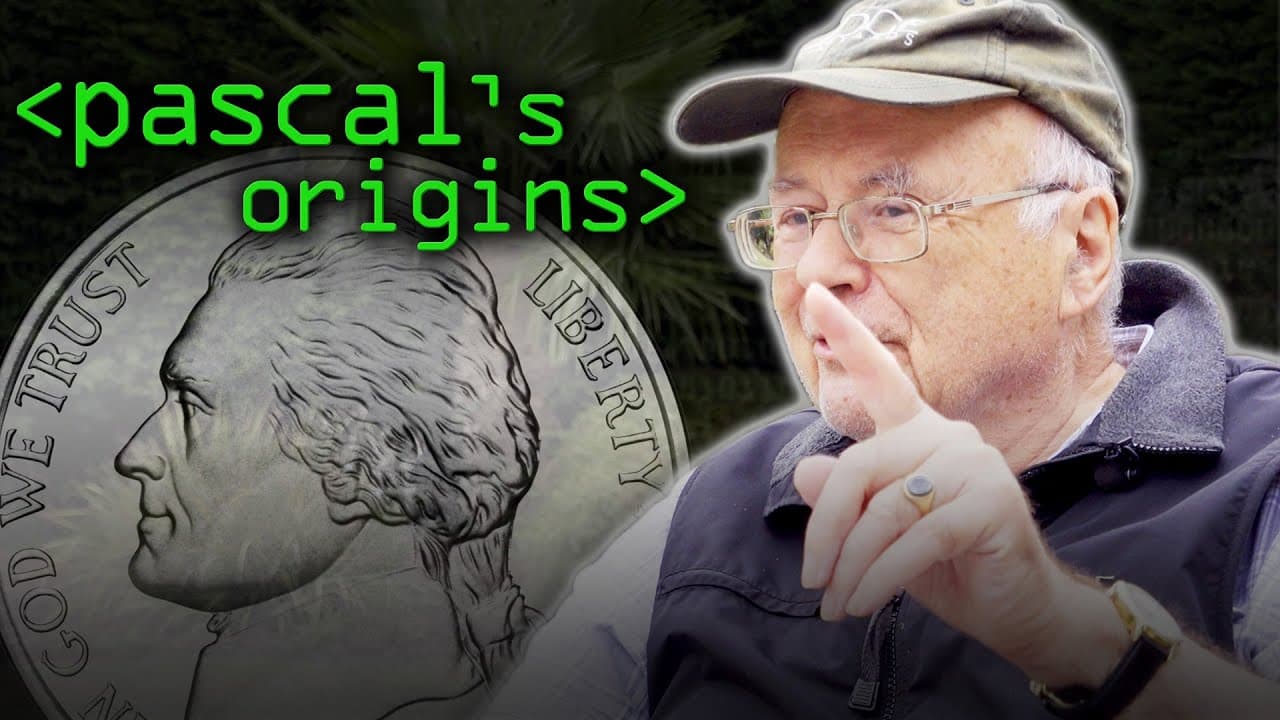
Pascal was developed as an evolution of Algol W, created by Niklaus Wirth to address the limitations of Algol 60, which was a vital benchmark in programming language history. While it became popular as a teaching language, critics like Brian Kernighan pointed out several shortcomings, highlighting its focus on simplicity at the expense of advanced features.
Transcript
last time we were here last release i did i think was uh all about algol 60 and its 60th birthday we left it in a situation i think where algol 60 it was agreed by everybody had been enormously influential it was a rallying point for discussions and so on there were aspects of it that some people didn't like but it did set down a kind of benchmark ... Read More
Key Insights
- 😫 Algol 60 was highly influential and set a benchmark for high-level languages.
- 🤙 Niklaus Veirth ran a parallel project called Algol W, which offered a more sensible approach to programming language design.
- 🥺 Algol X was a proposed subcommittee project to improve upon Algol 60, but it faced opposition from those who wanted a giant leap forward, leading to the development of Algol 68.
- 🚨 Pascal emerged from Algol W and became popular as a teaching language, offering a simpler and restricted environment for beginners.
- 🥇 Algol 68 was the result of the Algol X subcommittee and introduced significant advancements in programming language design.
- 🙂 Brian Kernighan identified nine areas where Pascal fell short, shedding light on its limitations.
- 🥺 Algol 60 provided a solid foundation at the syntactic and implementation level, leading to further developments in programming languages.
Install to Summarize YouTube Videos and Get Transcripts
Explore YouTube Video Summarizer or Get YouTube Transcript Extractor
Questions & Answers
Q: What was the significance of Algol 60 in the evolution of programming languages?
Algol 60 was influential and acted as a benchmark for high-level languages. It sparked discussions and further developments in programming language design.
Q: Who was Niklaus Veirth, and what was the purpose of Algol W?
Niklaus Veirth was a respected computer scientist who ran the Algol W project parallel to the Algol 60 committee. Algol W aimed to address some of the issues and create a more sensible version of Algol.
Q: Why did Algol X come into the picture, and what were the differing views?
Algol X was proposed as a subcommittee project to improve upon Algol 60, but there were differing opinions. Some believed in refining Algol 60, while others, like Adrian van Wijngaarden, wanted to take a giant leap forward and create Algol 68.
Q: How did Algol W lead to the creation of Pascal?
Algol W, with its sensible approach, eventually developed into Pascal, which became a widely-used teaching language. Pascal restricted complexity to make it suitable for beginners while allowing some advanced features like records and pointers.
Summary & Key Takeaways
-
Algol 60 was influential and set a benchmark for high-level languages, but there was a need for progress in programming language design.
-
Niklaus Veirth, a respected computer scientist, ran a parallel project called Algol W with a more sensible approach, while a minority believed in a giant leap forward with Algol X.
-
Algol 68 emerged from the Algol X subcommittee, while Algol W led to the development of Pascal, which became popular as a teaching language.
Read in Other Languages (beta)
Share This Summary 📚
Summarize YouTube Videos and Get Video Transcripts with 1-Click
Try YouTube Summary with ChatGPT & Claude or YouTube Transcript Generator
Explore More Summaries from Computerphile 📚






Summarize YouTube Videos and Get Video Transcripts with 1-Click
Try YouTube Summary with ChatGPT & Claude or YouTube Transcript Generator