A View from the Frontier | AI for Science Forum
TL;DR
AI enhances discovery in science but poses risks.
Transcript
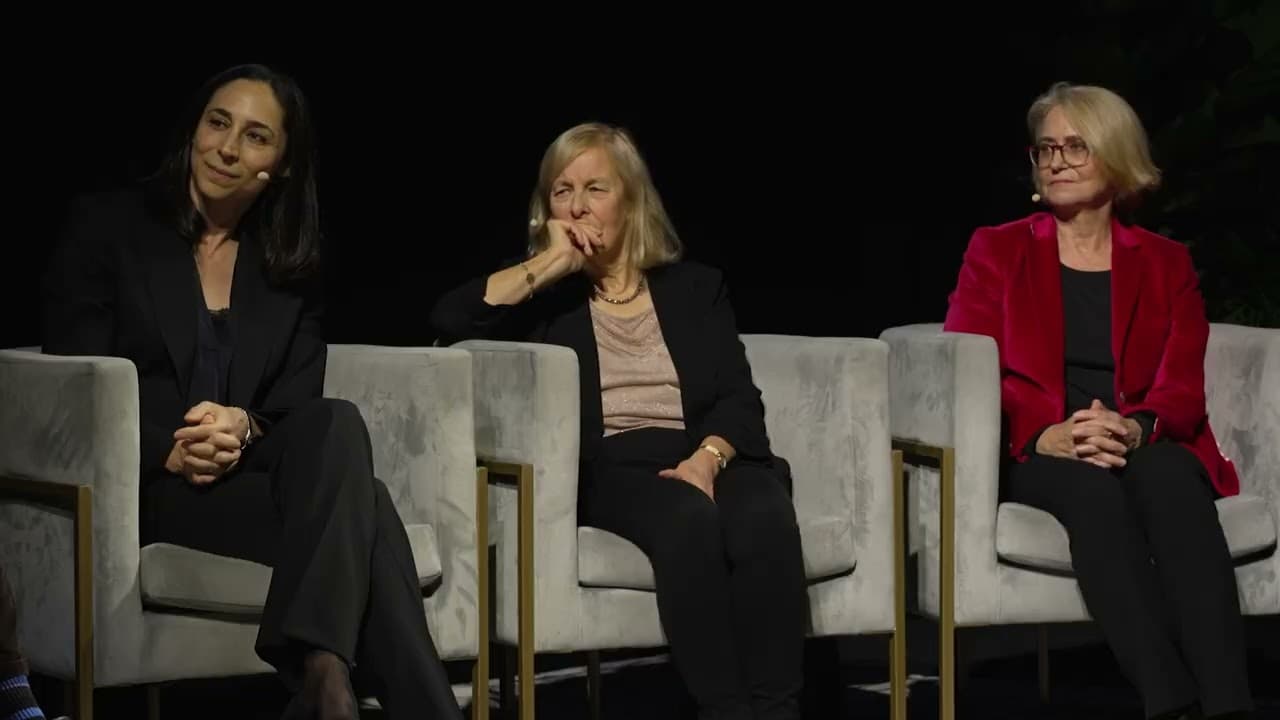
[APPLAUSE] SIDDHARTHA MUKHERJEE: This panel has to do with the frontiers of science. And I've interpreted and we've interpreted-- we had a conversation before-- the word frontiers very broadly. Obviously, one of the frontiers of AI is the human. Another frontier of AI is what is going to be done with all the knowledge that is being collected and ho... Read More
Key Insights
- 👨🔬 The integration of AI in scientific fields is transforming research methodologies, improving the speed and accuracy of discoveries.
- 🔨 Ethical considerations, including data privacy and ownership, are crucial as AI tools become more integrated into biology and medicine.
- 💊 AI models like AlphaFold can create significant advancements in understanding protein structures, impacting both fundamental biology and practical applications in medicine.
- 👨🔬 Collaboration between scientific fields and industry is essential to develop robust AI tools that enhance research productivity and accuracy.
- 🪡 There is a need for educational initiatives to help the public understand the implications and benefits of AI in science, fostering trust and acceptance.
- ⚖️ Future regulatory frameworks should aim to balance innovation with safeguarding against the misuse of scientific advancements.
- 😫 The panel advocates for the creation of centralized, clean data sets to advance collective knowledge across various branches of science.
Install to Summarize YouTube Videos and Get Transcripts
Explore YouTube Video Summarizer or Get YouTube Transcript Extractor
Questions & Answers
Q: What do the panelists believe is a frontier of AI related to human experience?
Panelists discuss how the human experience serves as a frontier of AI, integrating emotions, personhood, and ethics into discovery processes. They emphasize understanding not only data but the human context in which scientific advancements occur, making empathy a core component of AI’s evolution in science.
Q: How is AI being utilized in pathology according to Anne Vincent-Salomon?
Anne Vincent-Salomon describes the integration of AI in pathology through collaboration with startups to enhance diagnostic tools, particularly in breast cancer. AI helps to analyze histological slides efficiently and accurately, although she emphasizes that human pathologists will continue to play an essential role in diagnosis.
Q: What impact has AlphaFold made on structural biology as discussed by Janet Thornton?
Janet Thornton highlights AlphaFold's transformative effect on structural biology, increasing the models of protein structures from 20 to over 214 million. This advancement allows scientists worldwide to validate and better understand protein interactions, facilitating breakthroughs in fields like medicine and evolutionary biology.
Q: What concerns about data privacy did the panel address?
The panelists expressed that data privacy remains a significant concern in the integration of AI in science. They discussed the need for robust anonymization methods and public trust, especially regarding how data derived from patients is managed and who owns it, underscoring the importance of transparency in data use.
Q: How do the panelists view the relationship between AI and potential misuse?
The panelists acknowledged that while AI has great potential for discovery, it also carries risks of misuse, such as developing bioweapons. They stressed the necessity to create systems for responsible AI use, regulatory frameworks, and public education to mitigate these risks while fostering innovation.
Q: What optimistic future applications of AI do the panelists envision?
Each panelist shared their hopes for AI's future applications, with Anne Vincent-Salomon emphasizing enhanced tools for diagnosing cancer, Janet Thornton aspiring for deeper biological understanding, and Anna Greka advocating for a comprehensive data set to better comprehend cellular biology and its complexities.
Summary & Key Takeaways
-
The panel discusses how AI can aid scientific discovery across various fields, emphasizing its ability to enhance pathology and genomics.
-
Speakers share real-world examples of AI applications, like using machine learning for image analysis in biology and predictive modeling for drug discovery.
-
Concerns about privacy, data ownership, and potential misuse of AI are highlighted, calling for a balance between innovation and ethical regulations.
Read in Other Languages (beta)
Share This Summary 📚
Summarize YouTube Videos and Get Video Transcripts with 1-Click
Try YouTube Summary with ChatGPT & Claude or YouTube Transcript Generator
Explore More Summaries from Google DeepMind 📚

Summarize YouTube Videos and Get Video Transcripts with 1-Click
Try YouTube Summary with ChatGPT & Claude or YouTube Transcript Generator