How to learn Java from JDK to JDBC for beginners
TL;DR
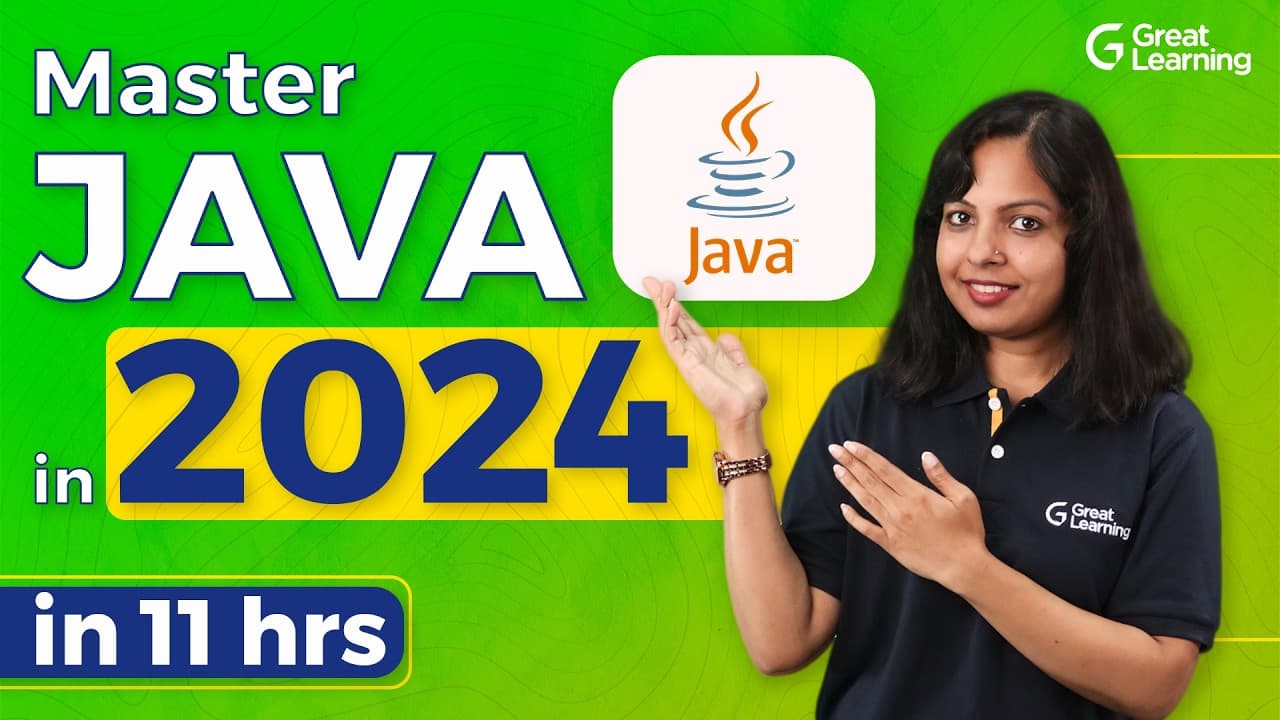
Java is explained starting with JDK, JVM, and JRE, then setting up the environment and writing your first program. The course covers data types, loops, classes, objects, and methods, followed by advanced topics like exceptions, collections, multi threading, and JDBC. It also notes using AI tools and prepares for interviews.
Transcript
Java is a versatile language used in everything from mobile apps to large software systems. Today we are exploring Java from the ground up. We'll begin with the essentials. That is understanding Java Development Kit, JDK, Java Virtual Machine and Java Runtime Environment. That is JRE then, we will set up the development environment. Once we have go... Read More
Key Insights
- Java is built around three core components: JDK, JVM, and JRE, which together enable writing, running, and packaging Java programs.
- The JVM executes Java bytecode and uses a class loader, heap, stack, and method area to manage memory and program state.
- Java code is converted to bytecode by the compiler or interpreter, making it portable across platforms as a key feature of the language.
- JVM components include a class loader, interpreter, Just In Time compiler, and garbage collector, which optimize execution and memory management.
- The Just In Time compiler improves performance by compiling bytecode to native code at runtime.
- Java packaging and libraries are essential for building real applications, with JDBC enabling database connectivity.
- Multithreading and exception handling are core language features that enable robust and responsive applications.
- Modern Java courses often include tools likeGitHub Copilot to boost productivity and code quality.
Install to Summarize YouTube Videos and Get Transcripts
Explore YouTube Video Summarizer or Get YouTube Transcript Extractor
Questions & Answers
Q: How do JDK, JVM, and JRE relate to writing and running Java programs?
JDK provides the tools to write, compile, and package Java applications, including the compiler and runtime libraries. JVM runs the compiled bytecode, providing an execution environment, memory management, and performance features. JRE is the runtime environment that contains the essential libraries and JVM for running Java applications. Together they enable developers to write code once and run it anywhere.
Q: What is the role of the JVM in Java program execution?
The JVM executes Java bytecode, translating it into machine code suitable for the host system. It uses a class loader to load class files, a heap and stack to manage memory and variables, and an execution engine consisting of an interpreter and a just in time compiler to optimize performance. Garbage collection frees unused objects automatically.
Q: Why is bytecode portability a key feature of Java?
Java compiles source code into platform independent bytecode that can run on any device with a compatible JVM. This portability means developers can write code once and deploy it across Windows, Mac, and Linux without modification, simplifying distribution and consistency across environments.
Q: What topics are typically covered after basic Java syntax in this course?
The course progresses from data types, variables, loops, and conditionals to object oriented concepts like classes and objects, and then to methods, constructors, strings, packages, and interfaces. It then covers more advanced topics such as lambda expressions, exception handling, collections, multithreading, and JDBC.
Q: How does JDBC enable database connectivity in Java applications?
JDBC provides a standard API for connecting to relational databases from Java applications. It allows executing SQL statements, retrieving results, and handling database connections and transactions. This enables Java programs to interact with databases in a consistent way across different database systems.
Q: What is the significance of garbage collection in Java?
Java automatically manages memory through garbage collection, which reclaims memory occupied by objects that are no longer in use. This reduces memory leaks and manual management burden on developers, helping maintain performance and stability in long running applications.
Q: How do language features like multithreading and exceptions influence app design?
Multithreading enables concurrent execution of tasks, improving responsiveness and resource utilization, but requires careful synchronization and race condition handling. Exceptions provide a structured way to handle errors and edge cases, allowing clean separation of success paths from error handling, which improves reliability and maintainability.
Q: What real world skills does this Java course aim to build besides syntax?
The course builds practical coding practice, understanding of the JVM memory model, bytecode interpretation, and use of development tools and libraries. It also covers interview preparation and ways to leverage AI tools like Copilot to improve code quality and project outcomes, preparing learners for entry level roles.
Summary & Key Takeaways
-
This course introduces Java basics and the core components JDK, JVM, and JRE, then guides setup and first program creation, followed by syntax elements and core object oriented concepts. It also surveys advanced topics such as exceptions, collections, and multithreading, ending with database access via JDBC.
-
The material emphasizes practical coding practice, with hands on exploration of memory concepts in the JVM, bytecode interpretation, and the role of the Just In Time compiler, along with how to use libraries and development tools.
-
The program concludes with interview preparation content and guidance on leveraging GitHub Copilot to improve Java projects, offering a pathway from fundamentals to job readiness.
Read in Other Languages (beta)
Share This Summary 📚
Summarize YouTube Videos and Get Video Transcripts with 1-Click
Try YouTube Summary with ChatGPT & Claude or YouTube Transcript Generator
Explore More Summaries from Great Learning 📚

Summarize YouTube Videos and Get Video Transcripts with 1-Click
Try YouTube Summary with ChatGPT & Claude or YouTube Transcript Generator