How to understand IoT and how it works
TL;DR
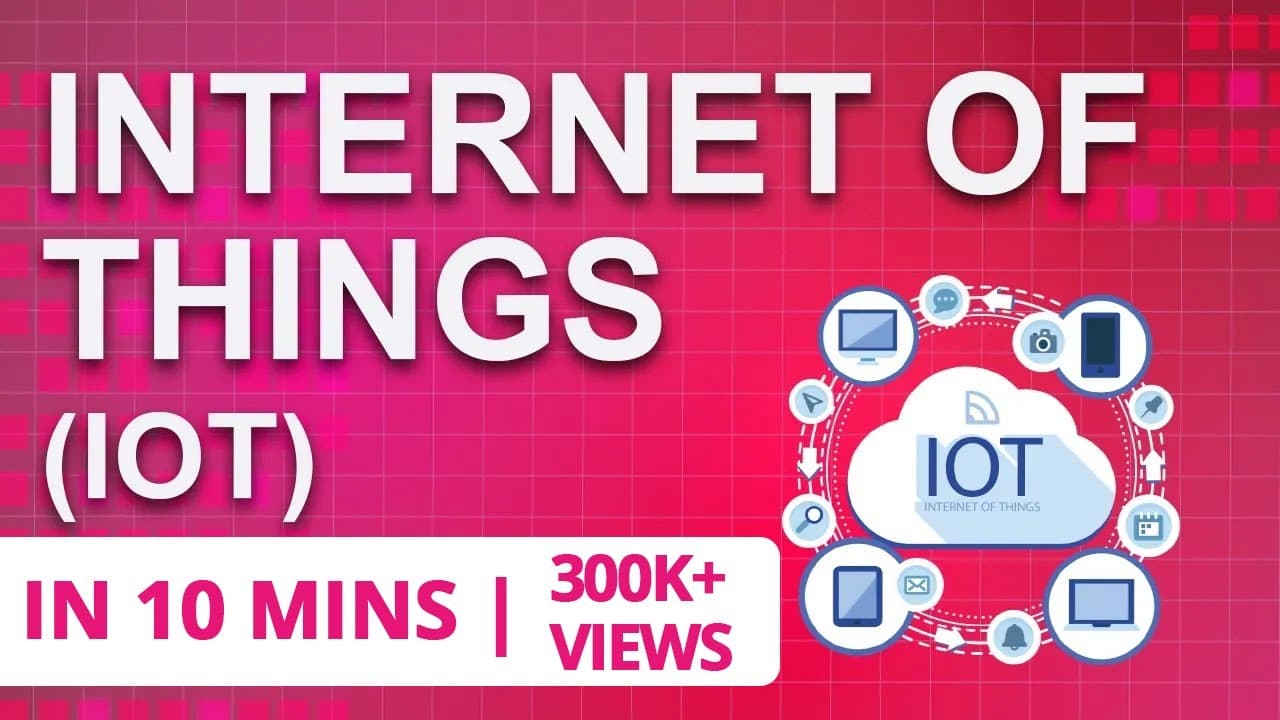
IoT refers to devices that connect to the internet and collect or share data. The video explains four layers of IoT: sensing devices, connectivity, data processing in the cloud, and the user-facing application. It also gives examples like smart phones, smart homes, and smart fridges, and describes how sensors, connectivity, and analytics enable automated decisions.
Transcript
If you look around, you'll find at least one thing that has the ability to connect to the internet. It may be your phone. It may be a laptop, your TV, or even your fridge, internet of things generally refers to the collection of all those devices. But now just, you can argue that anything that has the ability to connect to the internet and collect ... Read More
Key Insights
- IoT is defined by devices that connect to the internet and collect or share data, forming a network of connected things.
- The sensing layer is where devices gather data through sensors and actuators, forming the input for the IoT system.
- The connectivity layer transfers data from devices to the cloud or central systems using methods like Bluetooth, cellular, or other links.
- The data processing layer analyzes collected information with algorithms to extract insights and drive decisions.
- The application layer is the user-facing front end where results are displayed or controls are provided.
- IoT benefits include easier life and improved efficiency across homes, healthcare, farming, manufacturing, and education, by automating tasks and coordinating devices.
- A future with widespread IoT implies most everyday items will be connected and data-driven, enabling smarter environments.
- The video encourages exploring IoT careers as a challenging and rewarding field.
Install to Summarize YouTube Videos and Get Transcripts
Explore YouTube Video Summarizer or Get YouTube Transcript Extractor
Questions & Answers
Q: How does IoT connect devices to the internet, and what role do sensors play?
IoT connects devices to the internet by using sensors and actuators to collect data from the environment, which is then sent through a connectivity layer to the cloud or central systems. Sensors are the primary data collectors, translating physical phenomena such as temperature, pressure, or motion into digital information that the system analyzes to derive insights and trigger actions.
Q: What are the four layers of the IoT architecture and what does each do?
The four layers are sensing devices, connectivity, data processing, and application. Sensing devices collect data via sensors and actuators. The connectivity layer transmits this data to the cloud or processing systems. Data processing analyzes the data using algorithms to generate insights and decisions. The application layer presents results to users and enables interaction with the system.
Q: Why is IoT considered beneficial for households and society?
IoT benefits households by enabling automatic lights, climate control, entertainment management, and security, which save time and improve comfort. At a societal level, IoT can improve healthcare through remote interactions, enhance data-driven decision making, and boost efficiency in farming and manufacturing, ultimately supporting better resource management and service delivery.
Q: How does a smart fridge illustrate IoT functionality?
A smart fridge collects data on temperature and stored items through sensors, then sends this information to the cloud where processing determines the optimal internal temperature. The result is shown on the fridge interface, demonstrating how sensing, connectivity, processing, and the user interface work together to automate a daily task.
Q: What is the role of data processing in IoT and why is it important?
Data processing in IoT analyzes the collected data using various algorithms to extract meaningful insights, patterns, and decisions. This step is crucial because it turns raw sensor readings into actionable information that can control devices, adapt conditions, and improve efficiency and safety across different sectors.
Q: Can you name some real-world IoT applications mentioned in the video?
Real-world applications mentioned include smart homes with automated lighting and security, remote doctor-patient interactions in healthcare, smart farming with data-driven soil analysis, and manufacturing automation that increases productivity and efficiency by coordinating machines and processes.
Q: What future implications does IoT have for everyday objects?
The video suggests a future where almost everything we touch, including furniture and appliances, is connected to the internet and cloud-based data systems. This connected environment enables continuous data collection, smarter automation, and more personalized interactions, potentially transforming daily life and many industries.
Q: What makes IoT a viable career path according to the video?
IoT is a viable career path because it combines hardware, software, data analytics, and cloud technologies, offering challenging and satisfying work. The field is growing across industries like healthcare, farming, manufacturing, and education, providing opportunities to design, implement, and optimize connected devices and systems.
Summary & Key Takeaways
-
IoT is the collection of devices that can connect to the internet and share data, enabling remote monitoring and control.
-
IoT architecture has four layers: sensing devices, connectivity, data processing, and application, which together drive automation and smart decisions.
-
The video uses practical examples, such as smart homes and smart fridges, to illustrate how data from sensors is analyzed in the cloud to adjust devices.
Read in Other Languages (beta)
Share This Summary 📚
Summarize YouTube Videos and Get Video Transcripts with 1-Click
Try YouTube Summary with ChatGPT & Claude or YouTube Transcript Generator
Explore More Summaries from Great Learning 📚






Summarize YouTube Videos and Get Video Transcripts with 1-Click
Try YouTube Summary with ChatGPT & Claude or YouTube Transcript Generator