How to Treat Anxiety Beyond Coping Skills
TL;DR
Lasting anxiety improvement requires three kinds of support: short-term coping skills for immediate stability, long-term treatments that change anxiety-producing patterns, and maintenance practices that preserve progress. Coping tools such as breathing, grounding, distraction, and support can keep a crisis manageable, but resolving recurring anxiety also requires addressing worry, avoidance, safety behaviors, negative beliefs, and cognitive distortions.
Transcript
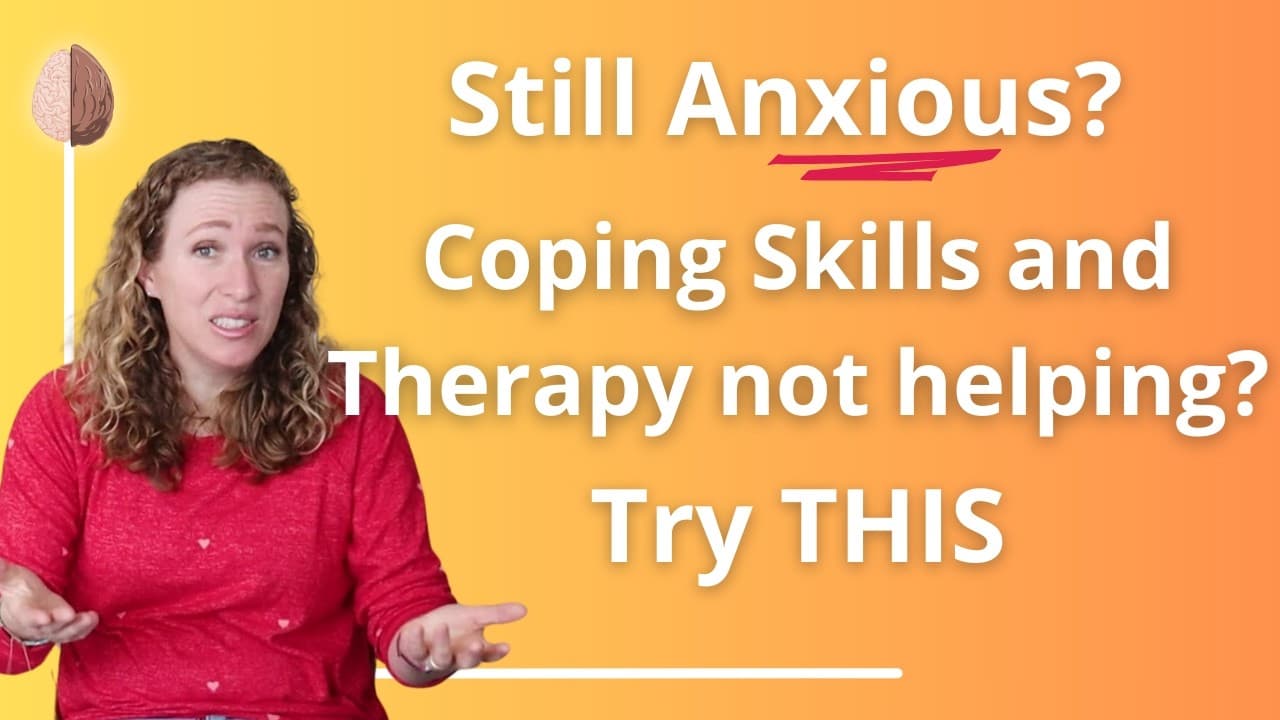
Have you tried a bunch of stuff to manage anxiety and depression but you're still struggling? This might be why. Some strategies that work great for the short term do not help in the long run. They might make you feel better in the moment but they do nothing to resolve your anxiety in the long run. Let me give you an example. Gwen had anxiety. ... Read More
Key Insights
- Coping skills are short-term tools that reduce distress or prevent harmful actions during a crisis, but they do not necessarily resolve the patterns producing recurring anxiety. Breathing, grounding, distraction, exercise, relaxation, and support can keep someone functioning while more lasting work becomes possible.
- The boat analogy distinguishes symptom management from lasting treatment: bailing water represents immediate coping, while repairing the leak represents addressing anxiety's underlying causes. Bailing is necessary when the boat may sink, but relying on the bucket indefinitely becomes exhausting and leaves the original problem unchanged.
- Long-term anxiety treatment is designed to change a person's relationship with anxiety or reduce its intensity over time. Cognitive treatment, therapy, and medication may contribute to this process, although lasting interventions can require greater effort and may initially provide little immediate relief or even feel worse.
- Suppression and avoidance can be valid short-term responses in dangerous or highly demanding situations, including war or first-responder work. They become poor long-term strategies when used repeatedly because emotions remain unprocessed and avoidance continues to reinforce the habits associated with anxiety.
- Worry fuels anxiety by repeatedly bringing perceived danger to mind and activating the fight, flight, or freeze response. Scheduled worry addresses this pattern by intentionally reserving 30 minutes each day for worrying, helping Gwen reduce worry during the remaining 23 and a half hours.
- Safety behaviors are subtle forms of avoidance that can maintain social anxiety even when someone attends social situations. Drinking, requiring a companion, or talking constantly to prevent silence may provide temporary reassurance while preventing the person from learning that the situation can be handled without those protections.
- Exposure therapy and new social skills helped Gwen reduce social anxiety after she identified perfectionistic beliefs and safety behaviors. Her progress came from practicing different responses, rather than merely attending parties while continuing to depend on behaviors that preserved her fear.
- Maintenance skills are the third part of anxiety care because improvement must be supported after therapy or crisis treatment ends. Short-term coping keeps a person afloat, long-term treatment repairs recurring problems, and maintenance helps prevent a return to the same cycle.
Install to Summarize YouTube Videos and Get Transcripts
Explore YouTube Video Summarizer or Get YouTube Transcript Extractor
Questions & Answers
Q: Why do coping skills sometimes fail to reduce anxiety long term?
Coping skills are mainly designed to lower immediate distress, prevent dangerous behavior, or help someone endure a difficult situation. Breathing, grounding, distraction, avoidance, and reassurance may calm anxiety temporarily without changing worry, negative beliefs, or avoidance patterns. When these tools become the entire treatment, the person must repeatedly manage returning symptoms and may eventually feel exhausted by the effort.
Q: What is the difference between coping and resolving anxiety?
Coping focuses on immediate stability, such as calming the body, leaving a stressful situation, seeking support, or distracting attention from distress. Resolving anxiety involves examining and changing the processes that keep it active, including worry, avoidance, safety behaviors, cognitive distortions, and unhelpful beliefs. The first approach manages rising water, while the second repairs the leak causing it.
Q: Which short-term skills can help during an anxiety crisis?
Short-term cognitive tools include a brain dump, meditation, gratitude practice, temporary thought suppression, distraction, and simply enduring the moment. Body-based options include grounding, tapping, vagus nerve exercises, breathing, stretching, vigorous exercise, progressive muscle relaxation, hugging someone, petting an animal, and washing the face with cold water. Support, professional care, and crisis stabilization can also help.
Q: When can avoidance or thought suppression be useful?
Avoidance, distraction, numbing, and thought suppression can be useful when immediate survival or effective action matters more than emotional processing. The transcript gives dangerous situations, war, and first-responder work as examples. These strategies become problematic when they are the only response used over time, because emotions can remain bottled up and avoidance can continue fueling anxiety rather than resolving it.
Q: How does scheduled worry help reduce anxiety?
Scheduled worry involves deliberately setting aside a specific period to worry rather than trying to suppress worry throughout the day. Gwen practiced worrying on purpose for 30 minutes daily. According to the account, this retrained her brain and freed her from much of her worry and anxiety during the other 23 and a half hours, making the pattern more contained and manageable.
Q: What are safety behaviors in social anxiety?
Safety behaviors are subtle avoidance strategies used to feel protected while remaining in a feared social situation. Gwen's examples included getting drunk, requiring a friend to accompany her, and talking excessively to prevent awkward silence. Although these behaviors can reduce discomfort temporarily, they continue teaching the person that ordinary social interaction is unsafe unless special protections are available.
Q: What long-term strategies address recurring anxiety?
Long-term strategies include active learning in therapy, processing emotions, identifying cognitive distortions, replacing negative beliefs, and studying the patterns that fuel a disorder. The transcript also discusses scheduled worry, journaling, gratitude, mindfulness, attention redirection, exposure therapy, and social-skills practice. These methods require curiosity about stressors and deliberate choices instead of automatic reaction or avoidance.
Q: Why are short-term, long-term, and maintenance skills all necessary?
Each skill category solves a different problem. Short-term coping prevents a crisis from becoming overwhelming, long-term treatment addresses the patterns that repeatedly produce anxiety, and maintenance supports continued health after therapy or intensive treatment ends. Using only coping leaves the cause untouched, while attempting long-term repair without crisis support may leave someone unable to remain stable long enough to complete the work.
Summary & Key Takeaways
-
Short-term coping skills help people remain safe, calm their bodies, and manage overwhelming moments. Examples include breathing, grounding, meditation, distraction, exercise, muscle relaxation, social support, fast-acting medication, and hospitalization during a crisis. These interventions can be essential, but repeatedly relying on them does not necessarily address what keeps anxiety returning.
-
Long-term treatment moves a person from crisis management into learning and problem-solving. It examines worry, avoidance, safety behaviors, negative beliefs, and distorted thinking patterns that fuel anxiety. Strategies discussed include scheduled worry, emotional processing, journaling, mindfulness, exposure therapy, developing social skills, and replacing unhelpful thoughts with more useful alternatives.
-
Maintenance skills preserve progress after immediate symptoms and underlying patterns have been addressed. The boat analogy illustrates the complete approach: coping skills bail out rising water, long-term treatment repairs the leak, and maintenance reduces the chance of repeating the same crisis. All three skill categories serve different, complementary purposes.
Read in Other Languages (beta)
Share This Summary 📚
Summarize YouTube Videos and Get Video Transcripts with 1-Click
Try YouTube Summary with ChatGPT & Claude or YouTube Transcript Generator
Explore More Summaries from Therapy in a Nutshell 📚

Summarize YouTube Videos and Get Video Transcripts with 1-Click
Try YouTube Summary with ChatGPT & Claude or YouTube Transcript Generator