How do factory ships harvest Alaska pollock in the Bering Sea
TL;DR
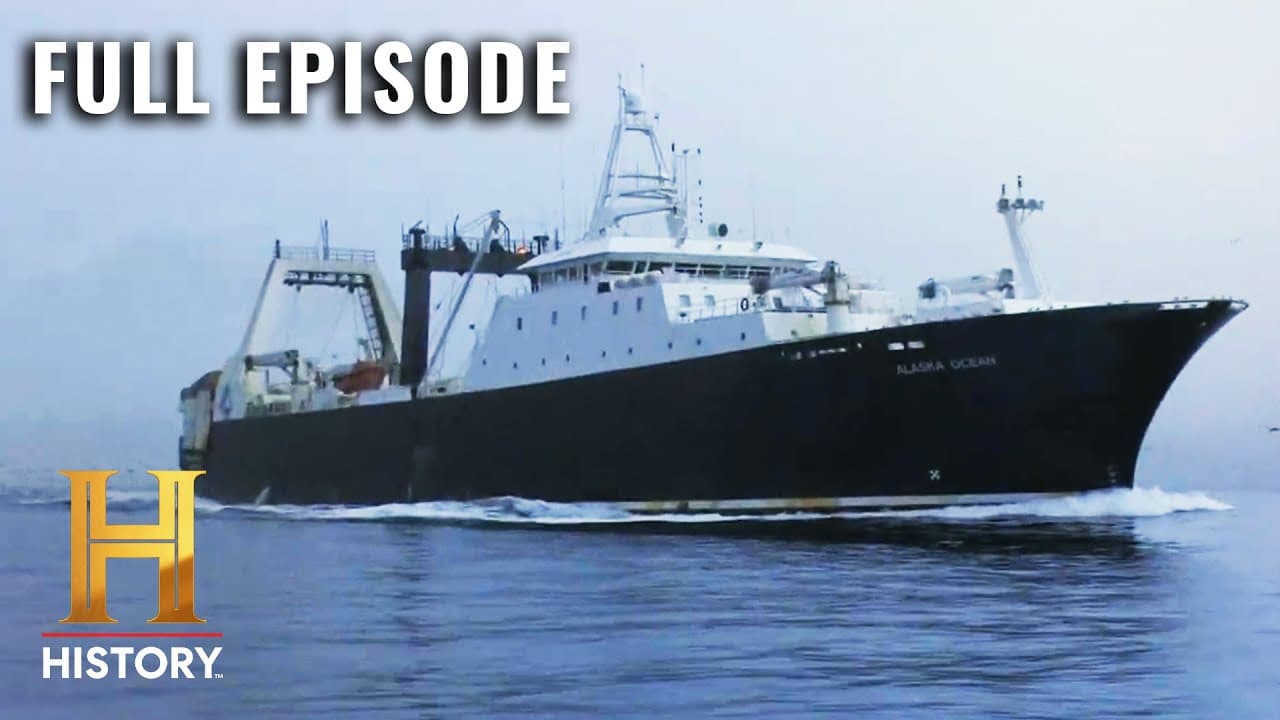
Alaska Ocean uses a half mile long net to pull in pollock while a high tech onboard factory processes fish nonstop. The crew must manage gear, weather, and tight quotas to avoid costly delays, all while navigating dangerous seas and keeping the vessel safe. The process blends science, skill, and timing.
Transcript
[music playing] NARRATOR: Man-- the ocean's greatest predator. He's developed the ships and the science to catch every fish in the sea. Each ship is different. Each fish, a unique challenge. In the Bering Sea, there is a fish that literally feeds the world-- Alaska pollock. And it takes a ship as big as a factory to land it, Alaska Ocean. Its half-... Read More
Key Insights
- Alaska pollock is harvested by a half mile long net to meet a large quota, illustrating the scale of modern factory fishing. The process relies on high tech gear like echosounders, transducers, and GPS plotters to locate fish and guide nets. Weather and sea conditions in the Bering Sea are highly volatile and dangerous, driving the need for reinforced hulls and safety boats.
- The Alaska Ocean operates as a floating factory, capable of processing up to 750 fish per minute and freezing them on the ship, which highlights the integration of harvesting and processing in a single vessel. The voyage is time constrained, with a four month season and millions of pounds to catch.
- Navigational tools on board include bathymetric charts and sonar that reveal fish shoals and underwater canyons like Zhemchug Canyon, which guides where the crew chooses to tow and fish. This reliance on mapping underscores the dependence of modern fishing on technology for efficiency and safety.
- The crew must decide when to haul the net and reset transponders, balancing potential catch against the risk of losing time and fish when signals fail. Real time indicators show catch levels, influencing decisions during the tow.
- Net handling involves deploying doors, weights, and a trunking bag that narrows the mesh toward the cod end, a design that concentrates fish as the current pulls the net open, enabling rapid collection.
- The operation faces historical risk in the Bering Sea, where many ships have sunk, and the crew openly acknowledges the danger of downflooding and impacts from storms, emphasizing a culture of vigilance and risk management.
- A key theme is the balance between livelihoods and danger; the crew’s work sustains communities that depend on pollock while exposing them to unpredictable weather, heavy machinery, and long seasons, illustrating the harsh realities of commercial deep water fishing.
- The episode frames pollock as a globally demanded resource, linking a remote fishing fleet to everyday meals through an industrial supply chain that turns raw fish into consumer products like Filet-O-Fish, highlighting the broader impact of remote harvesting on global food systems.
- More videos from this channel:
- More from this channel: HISTORY
Install to Summarize YouTube Videos and Get Transcripts
Explore YouTube Video Summarizer or Get YouTube Transcript Extractor
Questions & Answers
Q: How does a factory fishing vessel like Alaska Ocean process pollock on board
A factory fishing vessel combines harvesting and processing on a single ship. As fish are caught with a large net, a state of the art onboard factory quickly processes and flash freezes the pollock, allowing thousands of pounds to be prepared for export and distribution while still at sea. This integration helps meet the season quota efficiently and reduces the need for immediate land transfers.
Q: What role do sonar and GPS play in locating pollock
Sonar and GPS are essential for locating pollock and guiding the tow. Echo sounders detect dense fish signals beneath the hull, while a transducer and a device nicknamed the suitcase transmit data that shapes the net’s path. Chart plotters display bathymetric contours, helping the crew choose productive fishing zones like Zhemchug Canyon.
Q: Why is the Bering Sea considered treacherous for fishing
The Bering Sea combines Arctic winds with jet stream air, creating confined seas and five story waves that can swamp large vessels. The region has a long history of shipwrecks due to rough conditions, downflooding from open hatches, and shifting bottom topography. These dangers necessitate reinforced hulls and rigorous safety procedures.
Q: How is the net deployment sequence executed aboard
Net deployment begins with preparing the stern line, then releasing the net as the current pulls it. Doors are set to a fixed depth to hold the net open, weights pull the mouth down, and a top wire supports the net mouth. The transducer provides a live image of the net’s shape and fish flow.
Q: What happens when signals fail or the transponder malfunctions
When the transponder signal is unstable, the crew may suspend video and rely on catch indicators to gauge fish volume inside the net. The operators must decide whether to haul and reset or continue fishing blind, a choice that can cost time and affect the final quota if the net is not opening properly.
Q: How does the crew assess whether they have enough fish in the net
Catch indicators measure the amount of fish inside the net; a color change from yellow to red signals roughly 30 tons, indicating the net is filling. This provides a real time financial and operational cue to continue fishing or adjust strategy, particularly when other sensors are unreliable.
Q: What traditions or risks are associated with deep sea fishing crews
Crew members acknowledge the danger of the sea and the loss of friends across generations, describing the job as dangerous but a core livelihood. Rituals like knocking on wood reflect superstition about equipment and catches, while the emphasis remains on safety, training, and teamwork to endure harsh conditions.
Q: How does pollock fishing connect to global food supply
Pollock on Alaska Ocean supplies a large share of fish that end up in consumer products, such as Filet-O-Fish, illustrating how remote sea harvest translates into widely consumed foods. The operation underscores how a single vessel supports a global supply chain from ocean to marketplace, all within a high intensity seasonal cycle.
Summary & Key Takeaways
-
The Alaska Ocean is a large factory fishing vessel that processes and freezes Alaska pollock as fast as it is caught, making it central to the season's quota. The crew relies on sonar, GPS, and special transducers to track fish and ensure the net opens correctly. Weather and bottom hazards are constant threats.
-
The crew operates under strict time pressure and cost constraints, with daily costs around eighty thousand dollars. They must balance catching fish with equipment reliability, making quick decisions when a transponder signal pauses and when nets require untangling. The narrative highlights risk, technology, and the crew’s camaraderie.
-
The episode emphasizes the perilous environment of the Bering Sea, the scale of the operation, and the importance of pollock in supplying a global supply chain. It also shows how safety, efficiency, and knowledge of ocean topography drive success in commercial fishing.
Read in Other Languages (beta)
Share This Summary 📚
Summarize YouTube Videos and Get Video Transcripts with 1-Click
Try YouTube Summary with ChatGPT & Claude or YouTube Transcript Generator
Explore More Summaries from HISTORY 📚


Summarize YouTube Videos and Get Video Transcripts with 1-Click
Try YouTube Summary with ChatGPT & Claude or YouTube Transcript Generator