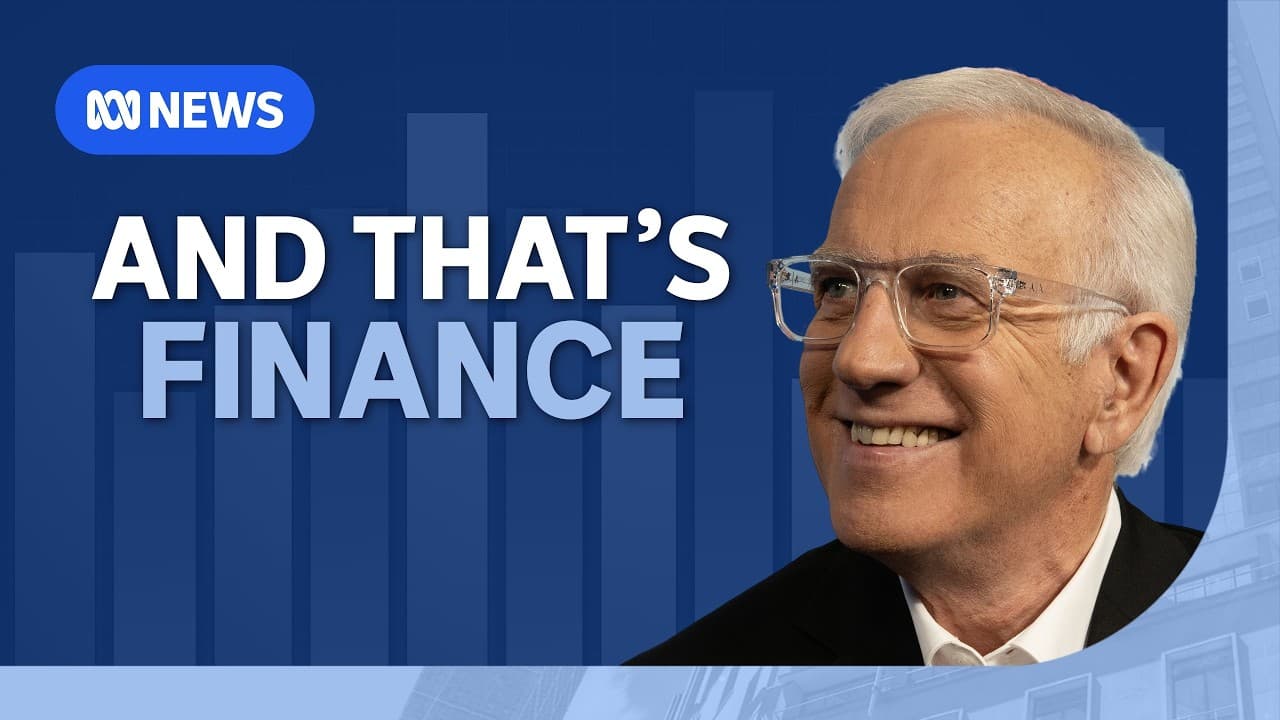
What Alan Kohler thinks after 50 years in finance
TL;DR
Alan Kohler stayed in finance because of his ability to explain complex topics and the higher pay, and he carried that into a long career culminating in retirement from the ABC. He reflects on housing, market history, and enduring lessons, including what has surprised him and what he would do differently if starting again.
Transcript
There are two reasons I I stayed with finance. One is the finance journals tend to get paid more because no one wants to do it. So, it was hard to escape for that reason, but also I found that um I had an interest I had an affinity to it and and I I I found also that I was able to explain stuff to people um you know, reasonably kind of uh interesti... Read More
Key Insights
- Finance journalism pays more because people avoid it, and Kohler had an interest and skill in explaining finance clearly.
- Kohler is retiring from ABC and reflects from the hot seat on a long career watching money, markets and business.
- The aphorism this time is different is true and false; valuations matter but circumstances keep changing.
- The worst economic decision cited is the 1999 capital gains tax discount which affected housing long term.
- The best decisions cited are the floating of the dollar and compulsory superannuation as reforms.
- Paul Keating is described as the biggest brain Kohler has encountered in economics and business.
- Forecasting is challenging; Kohler notes money flows influence rates and that predicting is rarely perfect.
- Kohler traces his career path from copy boy to cadetship and explains why he stayed with finance despite other options.
Install to Summarize YouTube Videos and Get Transcripts
Explore YouTube Video Summarizer or Get YouTube Transcript Extractor
Questions & Answers
Q: What made Kohler stay in the finance beat for so long
Kohler stayed in finance for two main reasons. First, he had an affinity and interest in finance that kept him engaged. Second, he believed he could explain complex financial topics in an understandable way, which made the work feel meaningful and useful to a broad audience. This combination of interest and communication ability sustained his career over many years.
Q: Why is Kohler retiring and what is the setup of the final episode
Kohler explains that after a long career at ABC, he is retiring and wants to step back from the studio routine. In the final episode, he sits in the hot seat with Carrington Clarke asking questions, turning the tables to reflect on his half century covering money, markets and business.
Q: What does Kohler think is the worst economic decision he witnessed
The worst economic decision, in Kohler’s view, was the 1999 change in capital gains tax with a 50 percent discount. He argues this policy altered Australia by helping drive long term housing price growth, shaping the country in ways that he regards as negative, even though the intent was to encourage share ownership.
Q: What does Kohler say about housing as a societal issue
Kohler says housing is a fundamental need, like food and shelter, and governments regulate other necessities but not housing. He notes the postwar public housing era ended and housing regulation has lagged, contributing to affordability and social implications for the country.
Q: Which economic decision does Kohler praise as beneficial
Kohler praises the float of the dollar as a major positive reform that opened up the Australian economy, paired with compulsory superannuation, which he sees as a very good decision that supported long term economic development.
Q: Who does Kohler consider the biggest brain in economics
Kohler names Paul Keating as the biggest brain he has come across in business or economics, noting his ability to see issues in a comprehensive way and connect policies to outcomes that mattered in the 1980s.
Q: How does Kohler view forecasting and what guides it
Kohler says forecasts are not driven by a single factor; economists watch money flows but must also consider money supply and other dynamics. He emphasizes that predicting is hard and acknowledges that past predictions have often been wrong.
Q: What was Kohler’s career path before finance journalism
Kohler began in Darwin at the Northern Territory News as a court reporter. His path into finance journalism started with a cadetship at The Australian after starting as a copy boy, observing the stock exchange in its open outcry era, and ultimately building a long career in finance reporting.
Summary & Key Takeaways
-
Alan Kohler reflects on a 50 year career in finance, explaining his drive to stay and his ability to make finance understandable for others.
-
He discusses major policy decisions like the capital gains tax discount and the floating of the dollar, and judges their long run effects on housing and economy.
-
He shares personal journey from the Northern Territory News to finance, and describes the evolution of journalism and markets over decades.
Read in Other Languages (beta)
Share This Summary 📚
Summarize YouTube Videos and Get Video Transcripts with 1-Click
Try YouTube Summary with ChatGPT & Claude or YouTube Transcript Generator
Explore More Summaries from ABC News (Australia) 📚





Summarize YouTube Videos and Get Video Transcripts with 1-Click
Try YouTube Summary with ChatGPT & Claude or YouTube Transcript Generator