What to do if you find a bird with H5 bird flu
TL;DR
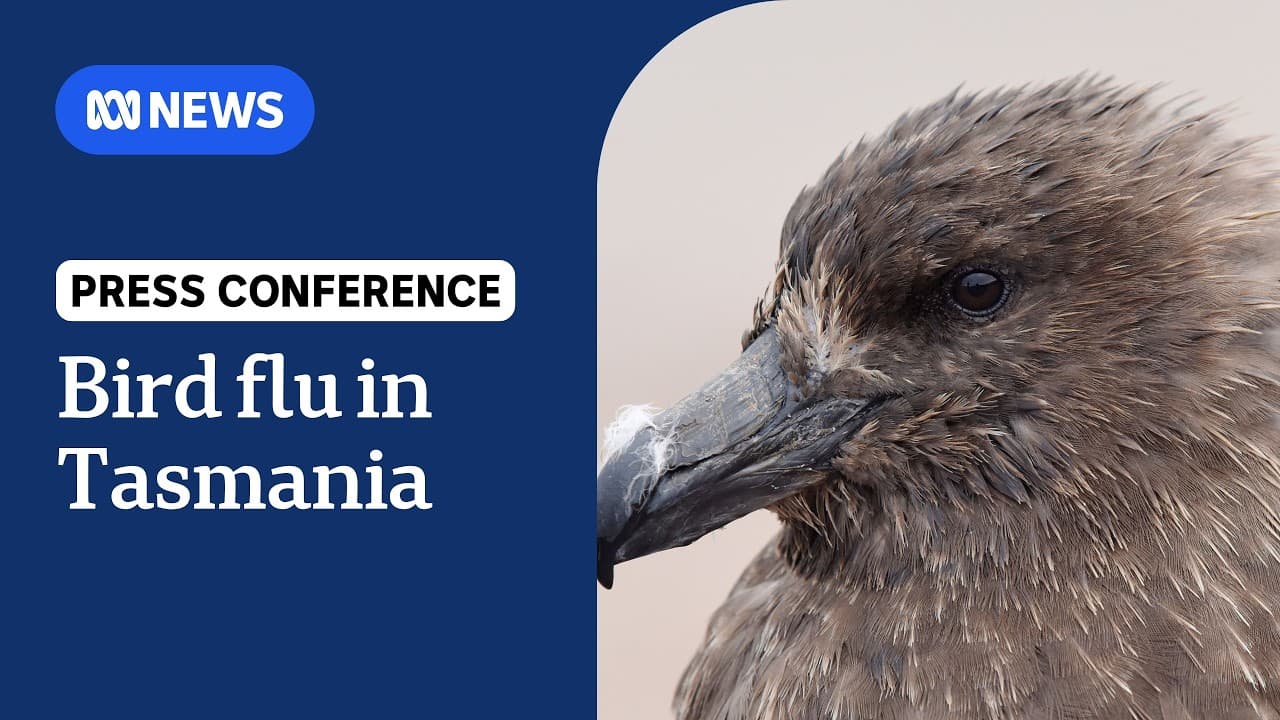
There is a confirmed single case of H5 bird flu in Tasmania. Authorities urge people to avoid contact with sick wildlife, record details like species and location, and report it through the helpline. Current evidence shows no human transmission and no outbreak in commercial poultry yet.
Transcript
The first case of H5 bird flu has been detected in Tasmania. A brown skewer was called in by NRE Parks and Wildlife staff and collected by Bio Security Tasmania from a place called Burgess Cove at Rocky Cape on the northwest coast of Tasmania. Following testing overnight, it has been confirmed that the skewer has the H5 bird flu. While federal gove... Read More
Key Insights
- H5 bird flu has been detected in a Tasmanian seabird, marking the first confirmed case in the region.
- The response plan includes surveillance, education campaigns, and protective measures for vulnerable species.
- Public guidance focuses on avoiding sick wildlife, recording details, and reporting incidents via a dedicated hotline.
- Vaccination plans are being considered for captive vulnerable parrots to reduce outbreak risk.
- Decontamination units and surveillance assets are in place to support rapid response and containment.
- There is no current evidence of an outbreak in commercial poultry or transmission to humans.
- The species at highest risk include orange belled parrots, Tasmanian devils, and several seabirds, guiding targeted protective actions.
- Ongoing monitoring will expand to nearby King Island and Ferno Islands as needed.
- More videos from this channel:
- More from this channel: ABC News (Australia)
Install to Summarize YouTube Videos and Get Transcripts
Explore YouTube Video Summarizer or Get YouTube Transcript Extractor
Questions & Answers
Q: What triggered the H5 bird flu response in Tasmania?
The response was triggered by the confirmed detection of H5 bird flu in a brown skua found at Burgess Cove, Rocky Cape, in the northwest of Tasmania. Government teams activated their surveillance and containment plans, coordinating with federal authorities to monitor spread, protect wildlife, and safeguard the poultry industry while informing the public.
Q: Who found the infected bird and how was it confirmed?
The infected brown skua was identified by staff from the Parks and Wildlife Service during active surveillance. It was transported under biosecurity precautions to animal health laboratories, where testing confirmed the H5 bird flu infection. This rapid confirmation enabled authorities to adjust surveillance and response measures promptly.
Q: Will there be increased monitoring around the Rocky Cape area?
Yes, authorities indicated they will intensify surveillance in the Rocky Cape region over the coming weeks. The plan also mentions extending observation efforts toward King Island and Ferno Islands, using aerial and ground monitoring to detect additional cases and assess potential spread while maintaining biosecurity across regions.
Q: Is the brown skua a migratory species and what is its typical behavior?
The brown skua is a native Tasmanian seabird that does not breed in Tasmania but frequents Tasmanian waters for foraging year round. They typically travel alone but may congregate around food sources. Understanding this behavior helps explain why sick birds may wash ashore and be detected by observers.
Q: What are the signs of bird flu in birds and wildlife?
Signs vary by species but generally include droopiness, reduced alertness, unusual behavior, and general illness. The description notes that veterinary colleagues would provide a comprehensive list, and the public is advised to avoid contact with sick wildlife, record details, and report incidents to aid early detection and response.
Q: What other species are considered in the vaccination planning?
Vaccination planning focuses on species considered most at risk, including the orange belled parrot, the Tasmanian devil, and several seabirds like the shy albatross and others in protected captive or managed populations. Vaccinations are described as a complementary tool to protect vulnerable birds under careful biocurity arrangements.
Q: What should the public do if they see a sick bird or wildlife?
The public should avoid contact with the animal, record the species and its location using a phone or device, and report it through the emergency animal disease hotline or other official channels. Data collection is emphasized as vital for tracking the disease and guiding the response.
Q: Is there any risk to humans or to the broader poultry industry right now?
Current information states there is no evidence of human-to-human transmission and no outbreak in commercial poultry at this time. While human infection is extremely rare, authorities continue monitoring and reinforcing biosecurity to protect people, wildlife, and poultry industries, emphasizing early detection and robust containment strategies.
Summary & Key Takeaways
-
A single positive detection of H5 bird flu was confirmed in Tasmania at a brown skua found in Rocky Cape, indicating the disease has reached the region. The response includes surveillance, vaccination planning for at risk species, and public awareness campaigns to maintain biosecurity and protect wildlife and poultry.
-
Authorities emphasize that human infection is extremely rare and there is no evidence of human-to-human transmission. They outline steps for the public to follow if they encounter sick wildlife: avoid contact, record species and location, and report promptly.
-
Tasmanian agencies are coordinating with the federal government to prepare a response that supports at risk native species and the poultry sector. The plan includes vaccination considerations for captive parrots, enhanced surveillance, and decontamination infrastructure while continuing public messaging and reporting channels.
Read in Other Languages (beta)
Share This Summary 📚
Summarize YouTube Videos and Get Video Transcripts with 1-Click
Try YouTube Summary with ChatGPT & Claude or YouTube Transcript Generator
Explore More Summaries from ABC News (Australia) 📚




Summarize YouTube Videos and Get Video Transcripts with 1-Click
Try YouTube Summary with ChatGPT & Claude or YouTube Transcript Generator