How Do Trump's Policies Affect the U.S. Economy?
TL;DR
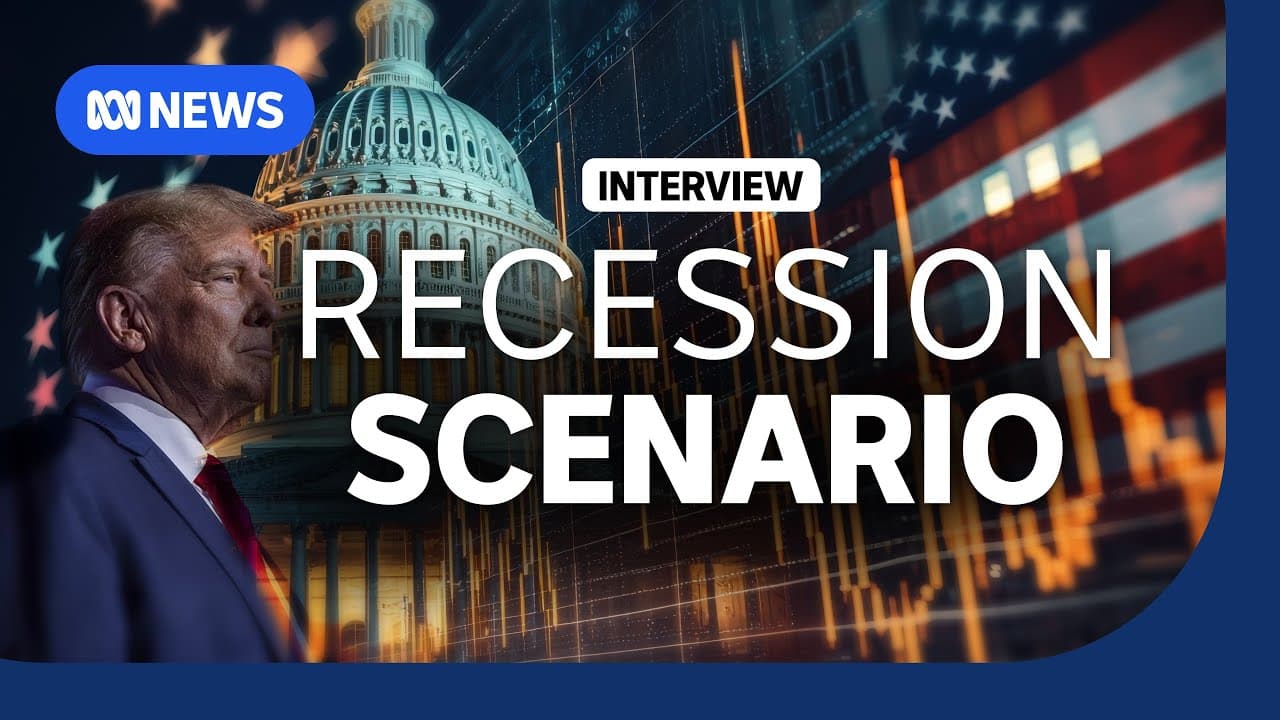
Trump's policies could increase the chance of a U.S. recession to 70% if he continues with current strategies, which include undermining the Federal Reserve's independence. Employment growth has significantly slowed, and stagflation becomes a real risk as inflation and unemployment rise. The Federal Reserve is in a tough position, needing to balance potential rate cuts with combating rising inflation.
Transcript
Read and summarize the transcript of this video on Glasp Reader (beta).
Key Insights
- The US economy faces a potential recession, with a 25% chance if sensible actions are taken and a 70% chance if Trump continues his current policies.
- Employment growth, a key economic indicator, has slowed significantly since April, contradicting claims of a booming economy.
- Economic uncertainty in the US remains high due to various presidential actions, including tariffs and attempts to influence the Federal Reserve.
- Stagflation, a combination of stagnation and inflation, is a realistic threat as unemployment and inflation rates slowly rise.
- The Federal Reserve is in a challenging position, balancing inflation risks against a slowing economy, with potential rate cuts anticipated.
- Trump's attempts to control the Federal Reserve, including efforts to remove Fed Governor Lisa Cook, threaten its independence and could lead to economic crisis.
- Comparisons to Turkey's economic situation under Erdogan highlight the dangers of political influence over monetary policy.
- Official data contradicts Trump's claims of no inflation, with the CPI rising above the Federal Reserve's target, adding pressure on the central bank.
Install to Summarize YouTube Videos and Get Transcripts
Explore YouTube Video Summarizer or Get YouTube Transcript Extractor
Questions & Answers
Q: What are the chances of a US recession according to Justin Wolfers?
Justin Wolfers estimates a 25% chance of a recession if President Trump acts sensibly. However, if Trump continues with his current policies, including undermining the Federal Reserve's independence and engaging in crony capitalism, the likelihood of a recession increases to 70%.
Q: How has employment growth changed recently in the US?
Employment growth, a crucial economic indicator, has slowed significantly in recent months. This decline began around April, contradicting President Trump's claims of a booming economy. The slowdown in job growth contributes to the overall economic uncertainty and potential recession risks facing the US.
Q: What is stagflation, and is it a concern for the US economy?
Stagflation is a combination of economic stagnation and inflation. It is a concern for the US economy as unemployment and inflation rates are slowly rising. The potential for stagflation adds complexity to the Federal Reserve's decision-making process, as it must balance inflation risks against a slowing economy.
Q: What challenges does the Federal Reserve face regarding interest rates?
The Federal Reserve faces the challenge of balancing inflation risks against a slowing economy. With the market expecting rate cuts, the Fed must decide whether to raise rates to counter inflation or cut rates to stimulate the economy. This situation is complicated by political pressures from President Trump.
Q: How is President Trump attempting to influence the Federal Reserve?
President Trump is attempting to influence the Federal Reserve by targeting its independence. He has tried to remove Fed Governor Lisa Cook and aims to stack the Fed with his supporters. Such actions threaten the Fed's independence and could lead to economic instability and crisis.
Q: What are the potential consequences of political influence over monetary policy?
Political influence over monetary policy can lead to economic instability and crisis. The situation in Turkey under Erdogan, where inflation soared due to political control of the central bank, serves as a cautionary example. Similar actions in the US could result in severe economic consequences.
Q: How does official data contradict Trump's claims about inflation?
Official data shows that the US Consumer Price Index (CPI) has risen above the Federal Reserve's target, indicating inflation. This contradicts President Trump's claims of no inflation in America. The rise in CPI adds pressure on the Federal Reserve to address inflation risks while managing economic slowdown concerns.
Q: What is the impact of tariffs on the US economy?
Tariffs contribute to economic uncertainty and potential inflation in the US. While tariffs have not yet significantly impacted prices, American importers are paying higher costs. If tariffs become permanent, these costs will likely be passed on to consumers, exacerbating inflation and economic challenges.
Summary & Key Takeaways
-
The US economy is at risk of a recession, with a 25% chance if President Trump acts sensibly and a 70% chance if he continues his current policies. Employment growth has slowed significantly, and economic uncertainty remains high due to various presidential actions.
-
Stagflation is a realistic threat, with unemployment and inflation rates slowly rising. The Federal Reserve faces a difficult situation, balancing inflation risks against a slowing economy, while Trump attempts to influence its independence by targeting Fed Governor Lisa Cook.
-
Trump's actions mirror those of Erdogan in Turkey, where political influence over monetary policy led to high inflation. Official data shows the US CPI rising above the Federal Reserve's target, contradicting Trump's claims of no inflation and adding pressure on the central bank.
Read in Other Languages (beta)
Share This Summary 📚
Summarize YouTube Videos and Get Video Transcripts with 1-Click
Try YouTube Summary with ChatGPT & Claude or YouTube Transcript Generator
Explore More Summaries from ABC News (Australia) 📚



Summarize YouTube Videos and Get Video Transcripts with 1-Click
Try YouTube Summary with ChatGPT & Claude or YouTube Transcript Generator