What Is Cog and How Does It Simplify AI Deployment?
TL;DR
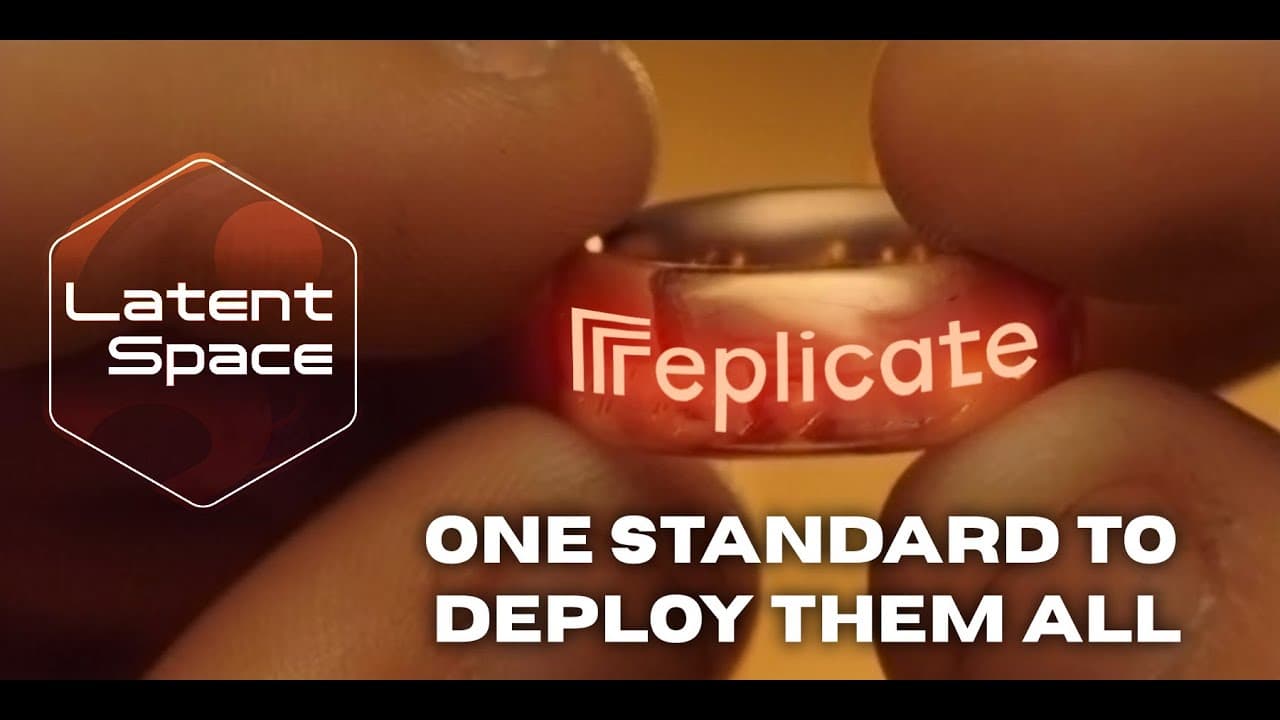
Cog simplifies the deployment of machine learning models by streamlining their packaging into Docker containers and providing an open API interface. This platform allows developers without deep AI or infrastructure expertise to easily deploy and run machine learning models, making them more accessible for various applications in both indie projects and larger companies.
Transcript
hey everyone welcome to the Len space podcast this is alesio partner and CTO residents at desel partners and I'm joined by my co-host swix founder of small AI hey and today we have Ben fresman in the studio welcome Ben hey good to be here uh Ben you're co-founder C COO of replicate uh before that you were most notably uh creator of fig or founder o... Read More
Key Insights
- 🏛️ Cog was built to address the challenges of productionizing machine learning models and make them accessible to developers without extensive infrastructure or AI expertise.
- 🤗 The platform combines Docker containers with an open API specification to create a user-friendly experience for packaging and deploying models.
- 🛟 Cog has gained traction in the generative image and natural language processing communities, serving indie hackers and larger companies alike.
- 📂 The integration of open-source standards, such as Cog and Llama file, allows for interoperability among different tooling solutions in the AI space.
Install to Summarize YouTube Videos and Get Transcripts
Explore YouTube Video Summarizer or Get YouTube Transcript Extractor
Questions & Answers
Q: What is the main purpose of Cog?
Cog aims to simplify the productionization of machine learning models and make them more accessible to developers without specialized AI or infrastructure knowledge.
Q: How does Cog integrate with Docker?
Cog builds upon the Docker container runtime, providing a higher-level abstraction that includes an open API specification for defining the machine learning model interface.
Q: What communities or markets have embraced Cog?
Cog has gained popularity in the generative image model and natural language processing communities. It has been used by both indie hackers and larger companies to deploy and run machine learning models.
Q: How does Cog differentiate itself from other container runtime solutions?
Cog focuses on the specific needs of machine learning models, offering a high-level, user-friendly interface for packaging and deploying models. It aims to simplify the process and reduce the barrier of entry for developers.
Summary & Key Takeaways
-
Cog was created to address the challenges of productionizing machine learning models and making them accessible to developers without extensive knowledge of AI or infrastructure.
-
The platform combines the convenience of Docker containers with an open API specification that defines the interface for the machine learning model, making it easy to package and deploy models.
-
Cog has gained traction in various communities, including the generative image model and natural language processing markets, and has seen adoption by both indie hackers and larger companies.
Read in Other Languages (beta)
Share This Summary 📚
Summarize YouTube Videos and Get Video Transcripts with 1-Click
Try YouTube Summary with ChatGPT & Claude or YouTube Transcript Generator
Explore More Summaries from Latent Space - The AI Engineer Podcast (Video Podcast) 📚





Summarize YouTube Videos and Get Video Transcripts with 1-Click
Try YouTube Summary with ChatGPT & Claude or YouTube Transcript Generator