Why Does Modern Dating Make Love Feel Empty?
TL;DR
Modern love feels empty when dating becomes depersonalized and partners are treated as sources of validation, admiration, or gratification rather than autonomous people. Authentic love requires humility, vulnerability, curiosity, boundaries, and deliberate actions that nurture mutual growth. Loving without attachment means accepting uncertainty while allowing both people to change freely.
Transcript
To be affected by something or someone is terrifying. Deloo even likens it to madness, is it not? We risk destabilizing ourselves and becoming something else. But this existential project of being alive, this urge towards self-expansion and growth is one that inevitably entails this risk of falling in love. We must venture outwards if we wish to fo... Read More
Key Insights
- • Love is an existential risk because allowing another person to affect us can destabilize our identity and change how we see ourselves. Heartbreak, death, betrayal, or separation remain possible, yet accepting these dangers can enable self-expansion, intimacy, and meaningful personal growth.
- • Romantic obsession is not necessarily true love because erotic fixation, infatuation, and dependence can reduce the beloved to a source of personal completion. Severe attachment may obstruct the transformative potential that appears when two autonomous people recognize and nurture each other's freedom.
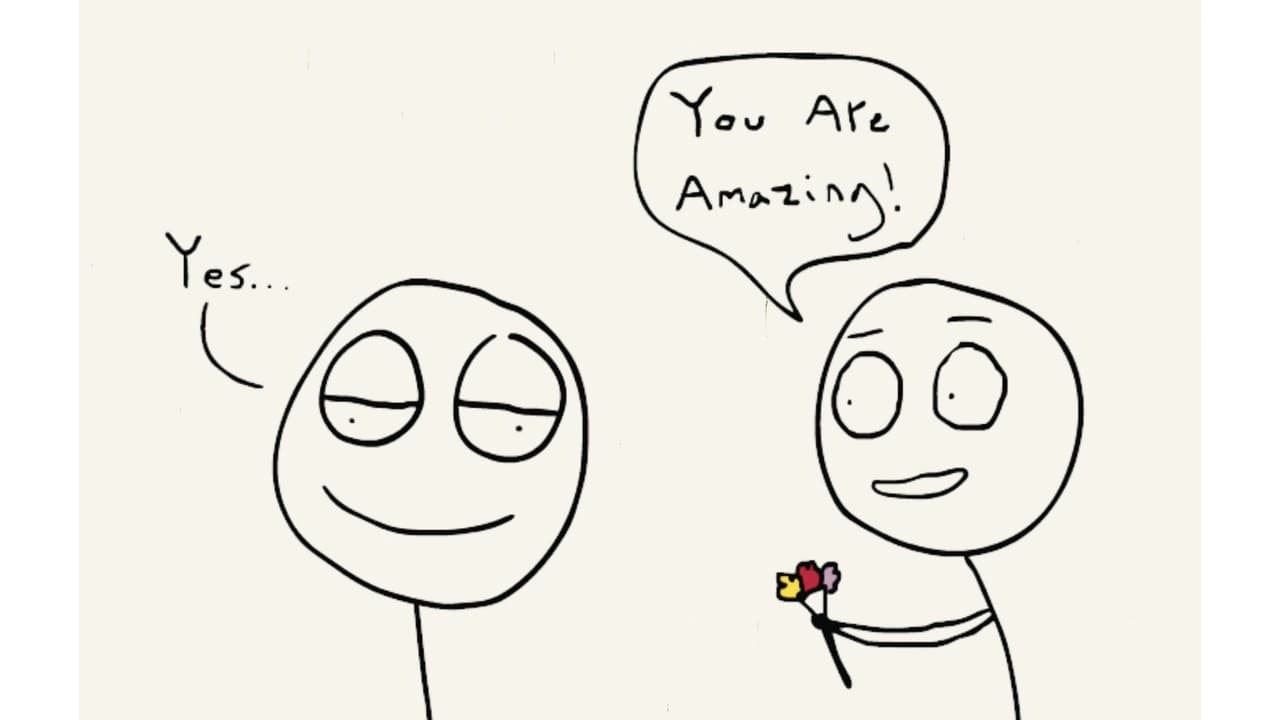
- • Narcissistic love is organized around receiving affection and preserving self-importance. A narcissistic partner seeks someone who confirms a preferred self-image, but may eventually lose respect for the person providing that admiration because the relationship never fully recognizes the other's independent subjectivity.
- • Devotional love is organized around idealizing a supposedly exceptional partner and seeking entry into that person's special world. Disillusionment follows when the idealized figure is revealed as an ordinary, flawed human being rather than the perfect object created by the devotee's imagination.
- • Authentic love is a relationship in which each partner respects the other's autonomy, desires, potential, and capacity to change. Its benefit is mutual expansion, since both people can become more complex through reciprocal exposure, recognition, trust, nurturance, and learning.
- • Love is rooted in intention and action, not merely a passive emotional experience. Bell hooks defines it through the will to extend oneself for personal and mutual nurturance, making constructive struggle, behavioral commitment, and change essential to its continued flourishing.
- • Modern dating is often depersonalizing because dating apps, hookup culture, ghosting, repetitive conversations, and therapy speak can weaken expected intimacy and vulnerability. Repeated disappointment may shrink the desire to connect until first dates, flirting, and renewed hope begin to feel threatening.
- • Love without attachment is an exercise in humility because it rejects possession, manipulation, fantasy, and control. It requires seeing people more objectively, communicating boundaries as education, listening without judgment, accepting incompatibility, and remaining vulnerable to changing feelings, separation, or death.
Install to Summarize YouTube Videos and Get Transcripts
Explore YouTube Video Summarizer or Get YouTube Transcript Extractor
Questions & Answers
Q: Why does modern dating make romantic love feel empty?
Modern dating can feel empty when apps, hookup culture, ghosting, repetitive dates, and therapy speak depersonalize encounters that are expected to involve intimacy and vulnerability. Repeated disappointment can make people feel defective, anxious, or unwilling to hope. Relationships also remain difficult after they form, since boredom, conflict, self-doubt, breakups, and divorce can replace the anticipated sense of completion.
Q: What is authentic love according to Simone de Beauvoir?
Authentic love respects a partner as an autonomous human subject with independent desires, drives, possibilities, and freedom. A person is loved for who they are and for who they could become, not merely for the validation or prestige they provide. Such love lets both partners expand through one another while avoiding the possessive fantasies associated with narcissism and devotion.
Q: What is the difference between narcissistic and devotional love?
Narcissistic love seeks a partner who supplies affection and sustains the lover's sense of importance. Devotional love idealizes a partner and hopes for acceptance into that admired person's special world. Both dynamics treat the other as an instrument within a personal fantasy. Resentment follows when admiration loses value or the supposedly perfect beloved displays ordinary human flaws.
Q: How does Bell hooks define love through action?
Bell hooks presents love as the will to extend oneself for the nurturance of both oneself and another person. Love is therefore not only a feeling that happens passively. It must appear through intentions, behaviors, commitment, constructive struggle, and change. These actions support reciprocal growth, allowing each person to develop while helping the other do the same.
Q: What does it mean to love someone without attachment?
Loving without attachment means caring for another person without trying to possess, control, manipulate, or confine them within a preferred fantasy. It requires humility, clear perception, curiosity, and acceptance of uncertainty. Feelings may change, partners may become incompatible, people may separate, and death remains possible. The relationship's reciprocal learning can still make love worthwhile despite its impermanence.
Q: How can boundaries support authentic love?
Boundaries support authentic love when they are communicated as information rather than imposed through manipulation or control. Explaining a boundary helps a partner understand a person's needs while inviting reciprocal knowledge about their own limits and desires. This process may reveal incompatibility, but recognizing that incompatibility respects both partners as autonomous subjects instead of forcing either person into an imagined role.
Q: Why are vulnerability and humility necessary for love?
Vulnerability is necessary because love offers no guarantee against rejection, betrayal, changing feelings, separation, heartbreak, or death. Humility helps a person accept that another human being cannot be fully controlled or used to secure a fixed self-image. Together, vulnerability and humility make room for trust, learning, mutual recognition, and transformation without denying the relationship's genuine risks.
Q: Can love exist outside romantic relationships?
Love can exist between the self, other people, and the wider world rather than only within romance. The transcript describes this openness as resonance: a person engages the world with curiosity, presence, and flow, accepts being changed by it, and may alter it through participation. Loving life in this way can create enjoyment through the activity of living itself.
Summary & Key Takeaways
-
Love is portrayed as a risky but life-sustaining commitment that exposes people to heartbreak, death, disappointment, and personal transformation. Its value lies partly in this vulnerability. By incorporating another person's perspective and presence, lovers can expand their identities, alter how they understand the world, and create something neither could produce alone.
-
Simone de Beauvoir's distinction between narcissism, devotion, and authentic love clarifies why many relationships become resentful. Narcissistic and devotional dynamics reduce a partner to a role within a personal fantasy. Authentic love instead recognizes both people as autonomous subjects and supports their freedom, potential, reciprocal learning, and continuing development.
-
Modern dating can weaken the will to love through repetitive dates, ghosting, hookup culture, dating apps, and depersonalized therapeutic language. The proposed response is not control but detached love: seeing another person clearly, communicating boundaries, listening without judgment, accepting incompatibility, and remaining open to transformation, uncertainty, loss, and change.
Read in Other Languages (beta)
Share This Summary 📚
Summarize YouTube Videos and Get Video Transcripts with 1-Click
Try YouTube Summary with ChatGPT & Claude or YouTube Transcript Generator
Explore More Summaries from Sisyphus 55 📚


Summarize YouTube Videos and Get Video Transcripts with 1-Click
Try YouTube Summary with ChatGPT & Claude or YouTube Transcript Generator