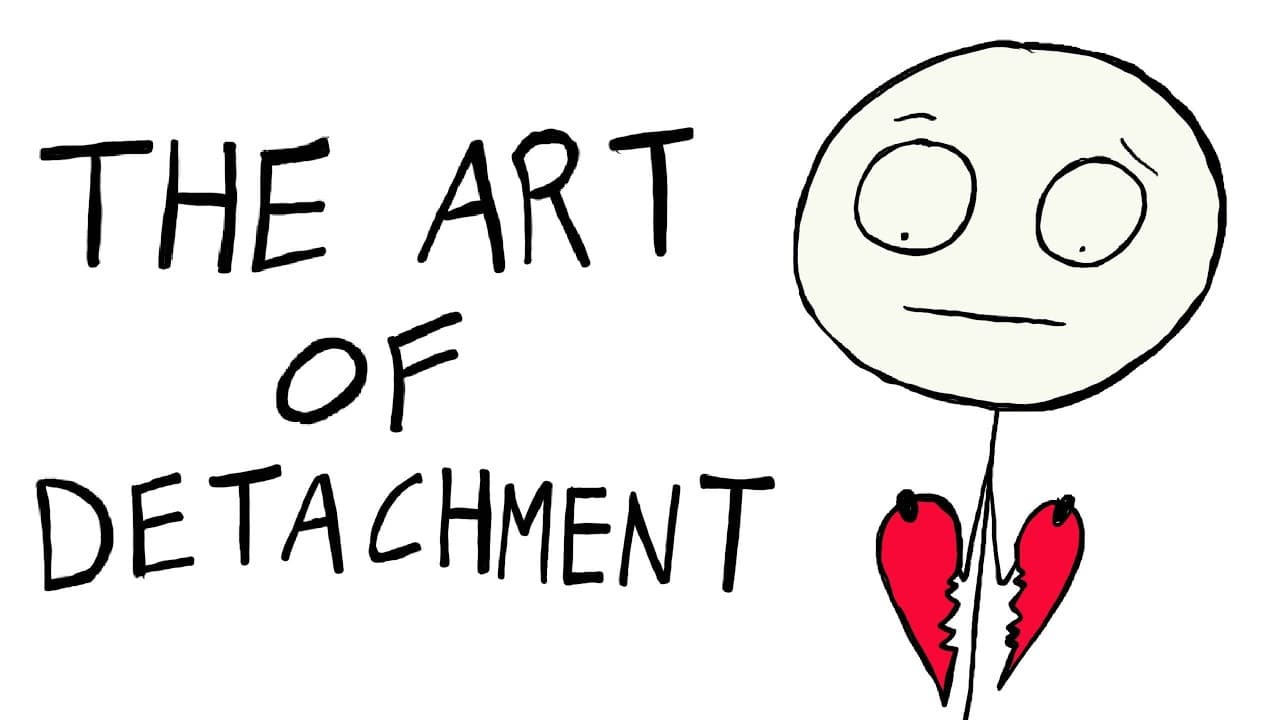
How to move on after heartbreak with detachment
TL;DR
Detachment helps reduce the grip of memories by observing thoughts without judgment and embracing impermanence. Use mindfulness to observe feelings, practice self care, and seek support to rebuild peace. The approach emphasizes inner freedom over clinging to any person or memory.
Transcript
everything reminds you of them every song every memory the whole world seems to be conspiring to keep this person forever in your heart and mind how cruel how will you ever get past them and to be frank a part of you doesn't really want to get over them you've grown accustomed to the pain the final semblance of attachment you feel towards your form... Read More
Key Insights
- Attachment creates fear of uncertainty and demands control, which leads to suffering. The key to healing is cultivating non attachment that allows for inner freedom regardless of external changes.
- Memories are described as constructs with no substance, so letting go involves observing them without clinging to their continuity or personal meaning.
- Krishna Murty argues that awareness is not self analysis but a general sense of how the self relates to the world, enabling non judgmental observation of reality.
- Real love is described as a state of being that is unconditional and not dependent on a specific person or outcome, reducing the need for possession.
- Letting go involves practical steps: mindfulness, self care, gratitude, seeking support, and embracing impermanence as a normal life feature.
- The process is framed as a path to peace within oneself rather than forcing a return to a past relationship or constant rumination.
- The video emphasizes change as a constant reality and encourages accepting each moment as it comes to navigate heartbreak.
- The sponsor portion connects learning as a habit to growth in resilience, suggesting a parallel between intellectual and emotional development.
- More videos from this channel:
- More from this channel: Sisyphus 55
Install to Summarize YouTube Videos and Get Transcripts
Explore YouTube Video Summarizer or Get YouTube Transcript Extractor
Questions & Answers
Q: How to move on from heartbreak using detachment
Detachment is shown as a practical approach to healing after a breakup. Begin by observing your thoughts and emotions without judgment and gradually reduce their grip by staying present. Develop emotional resilience through self care, such as exercise or nature, and seek support from friends or professionals as needed. Embracing impermanence helps you accept that relationships change and may end, which can lessen the fear of loss and create space for new possibilities.
Q: What does Krishna Murty say about attachment and fear
Krishna Murty explains that attachment arises from fearing uncertainty and relying on imagined continuity of relationships. He argues that most of our attachment is built on mental images rather than reality. By cultivating awareness and observing without judgment, you begin to loosen the grip of fear and experience inner freedom regardless of external outcomes.
Q: How can mindfulness help in getting over someone
Mindfulness helps by keeping you present with thoughts and emotions rather than being carried away by past memories. This practice creates a gap between stimulus and response, reducing automatic reactions. Over time, mindful awareness reveals patterns of dependency and helps you respond with greater clarity and less suffering in the face of change.
Q: What role does impermanence play in recovery
Impermanence is presented as a natural law of life. Recognizing that situations, possessions, and even identities change reduces the fear of loss. Accepting impermanence allows you to appreciate past love without clinging to it, creating space for growth and healthier future connections.
Q: What practical steps are recommended for healing
Recommended steps include mindfulness to observe thoughts, self care activities like exercise or nature, gratitude to shift focus from loss to opportunities, and seeking support from friends, family, or professionals. These practices cultivate resilience and help reframe heartbreak as a temporary phase rather than a permanent state.
Q: How is love defined in the Krishna Murty framework
Love is described as a state of being rather than a fixed feeling toward a person. It is unconditional, inclusive, and free from ego and expectation. This form of love exists beyond possessiveness and can continue in a broader sense even after a specific relationship ends, reducing personal attachment to a single individual.
Q: Why is self reflection important according to the video
Self reflection helps uncover underlying patterns of dependency and insecurity that fuel attachment. By examining these patterns non judgmentally, you gain insight into how your fears influence behavior and relationships. This awareness supports non attachment and leads to greater peace regardless of external changes.
Q: What is emphasized about the role of context in healing
The video emphasizes that healing occurs within a broader context of life and learning. It highlights that personal growth is supported by community, learning platforms, and ongoing curiosity. This framing suggests healing is a process that can be complemented by education, practice, and supportive relationships.
Q: How does the sponsorship segment relate to the main message
The sponsorship segment promotes lifelong learning as a parallel to emotional growth. It suggests that developing new skills and interests can build resilience and provide a sense of progress and purpose, reinforcing the idea that growth continues beyond heartbreak and supports healthier coping strategies.
Summary & Key Takeaways
-
Detachment is presented as a practical path to healing from heartbreak, grounded in Krishna Murty’s reflections on fear, attachment, and impermanence. The viewer is guided to observe thoughts and emotions without judgment while recognizing the transience of relationships. Practical steps include mindfulness, self care, and gratitude.
-
The video contrasts attachment driven by fear with a form of love that is free from possessiveness, arguing that love can persist as a state of being rather than a fixation on a person. It frames heartbreak as a normal part of life that can lead to personal growth.
-
A mix of philosophical context and practical tips is provided, including the idea that awareness means seeing things as they are, not through rigid beliefs. The sponsorship segment introduces an educational platform that encourages lifelong learning as a parallel to emotional growth.
Read in Other Languages (beta)
Share This Summary 📚
Summarize YouTube Videos and Get Video Transcripts with 1-Click
Try YouTube Summary with ChatGPT & Claude or YouTube Transcript Generator
Explore More Summaries from Sisyphus 55 📚






Summarize YouTube Videos and Get Video Transcripts with 1-Click
Try YouTube Summary with ChatGPT & Claude or YouTube Transcript Generator