How Did OneCoin Become a Multibillion-Dollar Scam?
TL;DR
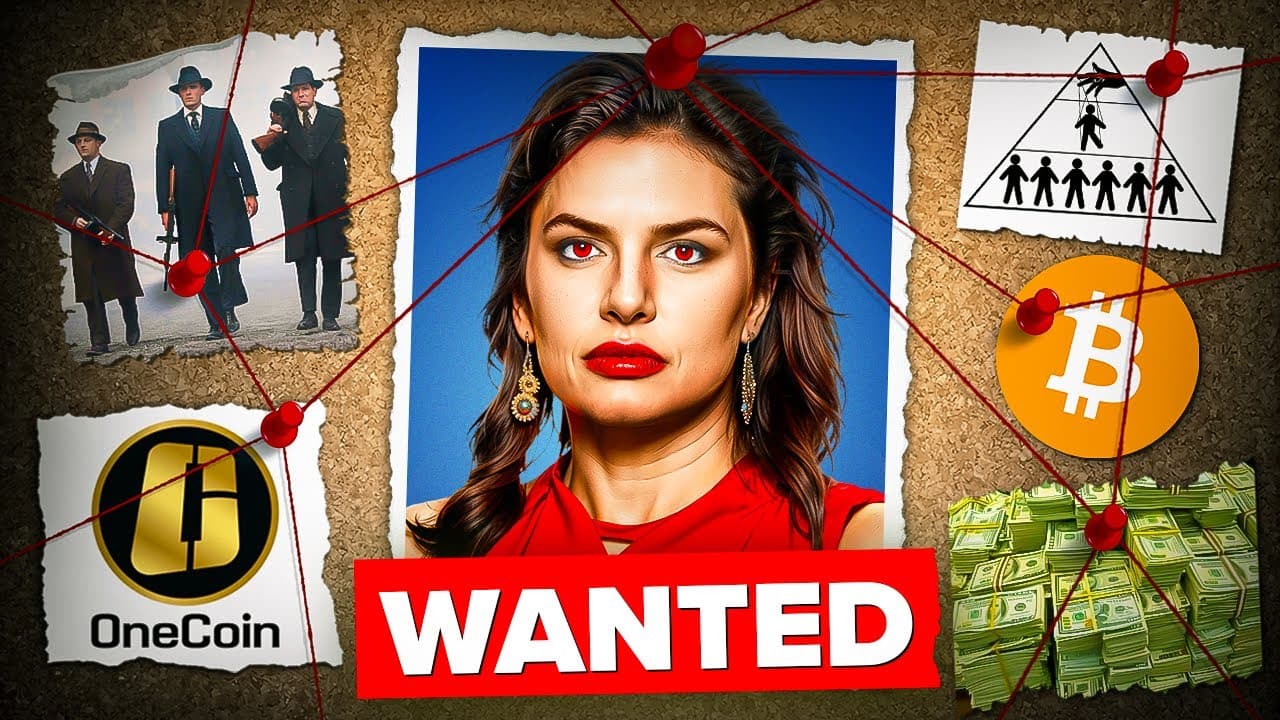
OneCoin became a multibillion-dollar fraud by combining a fake cryptocurrency with multi-level marketing, fabricated coin prices, and education packages that disguised token sales. Ruja Ignatova used her credentials, polished image, and claims that OneCoin would surpass Bitcoin to win trust, exploit fear of missing out, and persuade people to recruit friends and relatives before she disappeared.
Transcript
“A notorious cryptocurrency scammer,” “Dr Ruja Ignatovia made billions of pounds selling a fake cryptocurrency called OneCoin” This is the only woman on the FBI’s Most Wanted List. And she is responsible for one of the biggest scams in history. She led millions of believers in her cult-like company to trust her with their life savings, befor... Read More
Key Insights
- OneCoin was not supported by the blockchain technology its founders claimed to have. Ruja Ignatova and Sebastian Greenwood instead used an SQL database to record purchases, allowing them to control the coin’s displayed price without an independent market or decentralized network.
- OneCoin combined cryptocurrency promotion with multi-level marketing. Sellers earned commissions from packages they sold and from sales made by people they recruited, creating a network in which financial incentives encouraged participants to bring friends, relatives, and additional sellers into the operation.
- Education packages were used to present OneCoin as a company selling a product. Customers received basic financial and investing material that was described as poor quality, error-filled, and partly plagiarized, while the real attraction was the accompanying tokens that could be exchanged for OneCoin.
- OneCoin’s commission structure rewarded both direct sales and recruitment. A seller received a 10 percent commission on a package sale and could also receive 10 percent from sales made by recruited participants, with 60 percent paid in real money and 40 percent paid in OneCoin.
- Ruja Ignatova built credibility through education, professional experience, and personal branding. She emphasized her PhD, Oxford education, McKinsey experience, banking connections, designer clothing, and displayed credentials, presenting herself as a knowledgeable and trustworthy alternative to Bitcoin’s unknown founder.
- OneCoin’s marketing exploited fear of missing out created by stories of early Bitcoin buyers becoming wealthy. Ignatova described OneCoin as the next major cryptocurrency and promised it would eventually exceed Bitcoin, giving ordinary buyers the impression that they had another chance to enter early.
- OneCoin was promoted as simpler, safer, and more practical than Bitcoin. Ignatova claimed users did not need private keys or separate wallets, described central monitoring as protection from crime, and said the coin was designed for everyday use rather than speculation.
- Ruja Ignatova’s disappearance remains unresolved in the supplied account. One theory places her in Dubai under a new identity and with a changed appearance, while another claims she was killed and dismembered, leaving uncertainty about whether she escaped with immense wealth or died.
Install to Summarize YouTube Videos and Get Transcripts
Explore YouTube Video Summarizer or Get YouTube Transcript Extractor
Questions & Answers
Q: How did the OneCoin scam work?
OneCoin combined a purported cryptocurrency with multi-level marketing and disguised token sales as purchases of education packages. Buyers received tokens that could be exchanged for OneCoin, while sellers earned commissions for making sales and recruiting others. The operation did not have the blockchain its founders claimed. Purchases were tracked in an SQL database, which allowed the company to set the coin’s apparent price.
Q: Why was OneCoin not a genuine cryptocurrency?
OneCoin lacked the blockchain that Ruja Ignatova and Sebastian Greenwood said supported it. Neither founder knew how to build the required technology, so the company kept records of purchases in an SQL database, described as essentially a glorified spreadsheet. Without an independent blockchain or open market, the operators could determine the stated value of OneCoin rather than letting genuine trading establish its price.
Q: How did multi-level marketing help OneCoin grow?
Multi-level marketing gave OneCoin a large network of independent sellers motivated by commissions. Participants could earn money from packages they sold and from sales made by people they recruited. This structure encouraged sellers to approach friends, relatives, and social contacts through parties, lunches, and Facebook messages, allowing trust within personal relationships to drive participation and recruitment.
Q: Why did OneCoin sell education packages?
OneCoin used education packages to create the appearance that it sold a legitimate product rather than direct access to a questionable cryptocurrency. The packages contained basic financial and investing material, but buyers primarily wanted the included tokens that could be exchanged for OneCoin. More expensive packages provided more tokens, making the educational content a formal justification for what functioned as token sales.
Q: How did Ruja Ignatova make OneCoin appear trustworthy?
Ruja Ignatova emphasized her PhD, Oxford education, work at McKinsey, financial experience, and relationships with prominent businesspeople. She called herself Dr. Ruja, displayed degrees behind her during videos, and adopted a highly visible public image featuring designer dresses and bright-red lipstick. Live appearances, webinars, interviews, and confident comparisons with Bitcoin reinforced her carefully constructed image as a credible financial expert.
Q: How did OneCoin use Bitcoin’s popularity in its marketing?
OneCoin capitalized on reports that early Bitcoin buyers had made life-changing fortunes. Ignatova encouraged fear of missing out by presenting OneCoin as another opportunity to enter a cryptocurrency before its value rose dramatically. She called it the people’s coin, promised it would become larger than Bitcoin, and claimed it corrected Bitcoin’s problems while remaining easier for nontechnical customers to use.
Q: What commissions did OneCoin sellers receive?
A OneCoin seller could receive a 10 percent commission after selling an education package. The seller could also earn a 10 percent commission from sales completed by recruited participants, with this pattern continuing as additional people joined the network. According to the transcript, 60 percent of commissions were paid in real money, while the remaining 40 percent were paid in OneCoin.
Q: Where is Ruja Ignatova now?
Ruja Ignatova’s whereabouts remain unknown in the supplied account, and the competing explanations are presented as theories rather than established facts. One theory claims she lives in Dubai under a new name and with a new face. Another alleges that she was killed, dismembered, and left at the bottom of the Mediterranean. A $5 million reward is offered for information leading to her discovery.
Summary & Key Takeaways
-
Ruja Ignatova pursued wealth after building an impressive academic and professional background that included a PhD in law, a degree from Oxford University, work at McKinsey, and employment at Bulgaria’s largest investment company. Her financial knowledge, influential connections, and polished public image later helped her present OneCoin as a credible cryptocurrency business.
-
Ignatova and Sebastian Greenwood combined cryptocurrency excitement with multi-level marketing. Because they lacked the required blockchain expertise, they recorded purchases in an SQL database and controlled OneCoin’s stated price themselves. Customers officially bought low-quality education packages, which included tokens that could be exchanged for OneCoin as a supposedly free bonus.
-
OneCoin expanded through commissions, recruitment networks, personal relationships, live events, webinars, and promises that its coin would eventually trade for real money. Ignatova marketed herself as Dr. Ruja, contrasted OneCoin with Bitcoin, and exploited stories of early cryptocurrency fortunes. She later disappeared, leaving her whereabouts unknown and multiple competing theories about her fate.
Read in Other Languages (beta)
Share This Summary 📚
Summarize YouTube Videos and Get Video Transcripts with 1-Click
Try YouTube Summary with ChatGPT & Claude or YouTube Transcript Generator
Explore More Summaries from MagnatesMedia 📚


Summarize YouTube Videos and Get Video Transcripts with 1-Click
Try YouTube Summary with ChatGPT & Claude or YouTube Transcript Generator