The Evil Crimes of Volkswagen
TL;DR
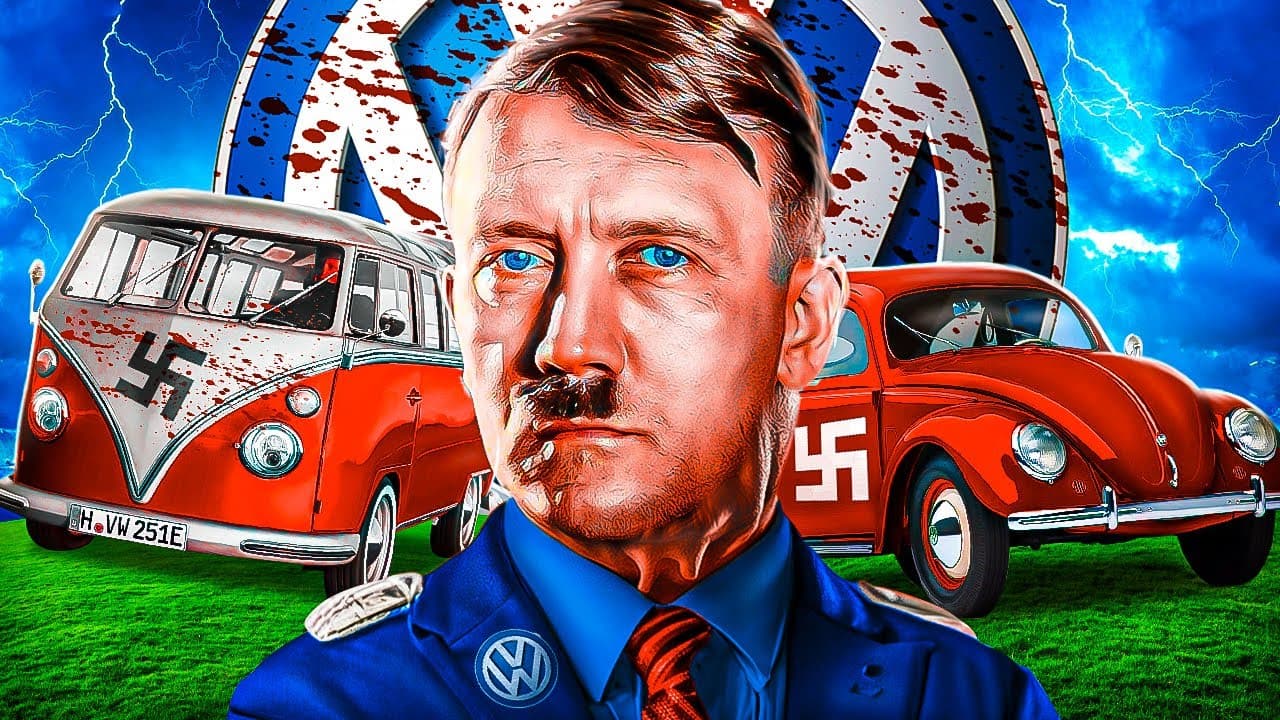
Volkswagen's history is marred by Nazi ties and scandals.
Transcript
deception slavery and unimaginable cruelty there are many companies with dark origin stories but the story of Volkswagen may be the most horrifying today the Volkswagen group is one of the largest Auto conglomerates in the world holding ownership over Brands like Audi Bentley Lamborghini and Porsche you might associate Volkswagen with some of the m... Read More
Key Insights
- Volkswagen was founded under Nazi Germany, with Adolf Hitler personally involved in the concept of the 'people's car' to boost the German economy.
- The initial Volkswagen factory was repurposed for the Nazi war effort, using forced labor from concentration camps, including Soviet and Polish prisoners.
- Volkswagen's Kinderheim was a site of unimaginable cruelty where babies of forced laborers suffered neglect, malnutrition, and high mortality rates.
- After World War II, the British took over the ruined Volkswagen factory, reviving it under the leadership of Major Ivan Hirst, who played a crucial role in its recovery.
- Volkswagen became a global icon in the 1950s and 60s, with the Beetle and VW Bus becoming symbols of peace and counterculture.
- In the 2000s, Volkswagen faced a hostile takeover attempt by Porsche, which ultimately failed, leading to Volkswagen acquiring Porsche instead.
- Volkswagen was involved in the 'Dieselgate' scandal, where they cheated emissions tests, resulting in significant fines and reputational damage.
- Despite its controversial past, Volkswagen remains a leading auto conglomerate, owning brands like Audi, Bentley, and Lamborghini.
Install to Summarize YouTube Videos and Get Transcripts
Explore YouTube Video Summarizer or Get YouTube Transcript Extractor
Questions & Answers
Q: What role did Adolf Hitler play in the founding of Volkswagen?
Adolf Hitler was instrumental in the founding of Volkswagen, as he envisioned the creation of an affordable 'people's car' to boost the German economy. He personally requested the design and production of this vehicle, which led to the establishment of the Volkswagen factory under Nazi Germany.
Q: How did Volkswagen contribute to the Nazi war effort during World War II?
During World War II, Volkswagen's factory was repurposed to support the Nazi war effort by producing military vehicles instead of civilian cars. The factory utilized forced labor from concentration camps, including Soviet and Polish prisoners, under harsh and inhumane conditions.
Q: What was the Kinderheim, and what happened there?
The Kinderheim was a facility near the Volkswagen factory where babies of forced laborers were housed. It was a site of unimaginable cruelty, with infants suffering from neglect, malnutrition, and high mortality rates due to poor living conditions and lack of care, leading to nearly 100% infant mortality.
Q: How did the British revive Volkswagen after World War II?
After World War II, the British took control of the bombed Volkswagen factory, with Major Ivan Hirst leading the revival. He repaired the factory, organized production lines, and secured materials, eventually transforming Volkswagen into a successful business that produced vehicles for the British Army and later the general public.
Q: What was the significance of the Volkswagen Beetle and VW Bus?
The Volkswagen Beetle and VW Bus became cultural icons in the 1950s and 60s. The Beetle was celebrated as an affordable and reliable car, while the VW Bus became associated with the counterculture movement, symbolizing peace and love, helping to distance Volkswagen from its Nazi origins.
Q: How did the attempted takeover by Porsche unfold?
In the 2000s, Porsche attempted a hostile takeover of Volkswagen by gradually increasing its stake. However, the financial crisis and regulatory challenges thwarted Porsche's plans, leading to Volkswagen turning the tables and acquiring Porsche instead, solidifying Volkswagen's position as a dominant auto conglomerate.
Q: What was the 'Dieselgate' scandal, and how did it impact Volkswagen?
The 'Dieselgate' scandal involved Volkswagen cheating emissions tests by installing software in their cars to manipulate results. This was discovered in 2014, leading to significant fines and a loss of reputation. Volkswagen had to pay billions in settlements and faced criminal charges, although it quickly recovered its market position.
Q: How has Volkswagen managed to remain a leading auto conglomerate despite its controversial past?
Despite its controversial past, Volkswagen remains a leading auto conglomerate by owning multiple luxury brands like Audi, Bentley, and Lamborghini. Its ability to adapt, innovate, and expand its market reach, coupled with strategic acquisitions and effective crisis management, has allowed it to maintain its position in the industry.
Summary & Key Takeaways
-
Volkswagen was founded with support from Adolf Hitler, aiming to create an affordable 'people's car' for Germany. During World War II, the company exploited forced labor, contributing to the Nazi war effort. Post-war, the British revived Volkswagen, leading to its global success.
-
Volkswagen's post-war revival was led by Major Ivan Hirst, who transformed the bombed factory into a thriving business. The Beetle and VW Bus became cultural icons, symbolizing peace and counterculture, distancing the company from its Nazi origins.
-
In the 2000s, Volkswagen faced a failed takeover by Porsche and was embroiled in the 'Dieselgate' scandal, where they cheated emissions tests. Despite these challenges, Volkswagen remains a dominant force in the automotive industry, owning multiple luxury brands.
Read in Other Languages (beta)
Share This Summary 📚
Summarize YouTube Videos and Get Video Transcripts with 1-Click
Try YouTube Summary with ChatGPT & Claude or YouTube Transcript Generator
Explore More Summaries from MagnatesMedia 📚




Summarize YouTube Videos and Get Video Transcripts with 1-Click
Try YouTube Summary with ChatGPT & Claude or YouTube Transcript Generator