What Happens When You Free Handle a Giant Desert Centipede?
TL;DR
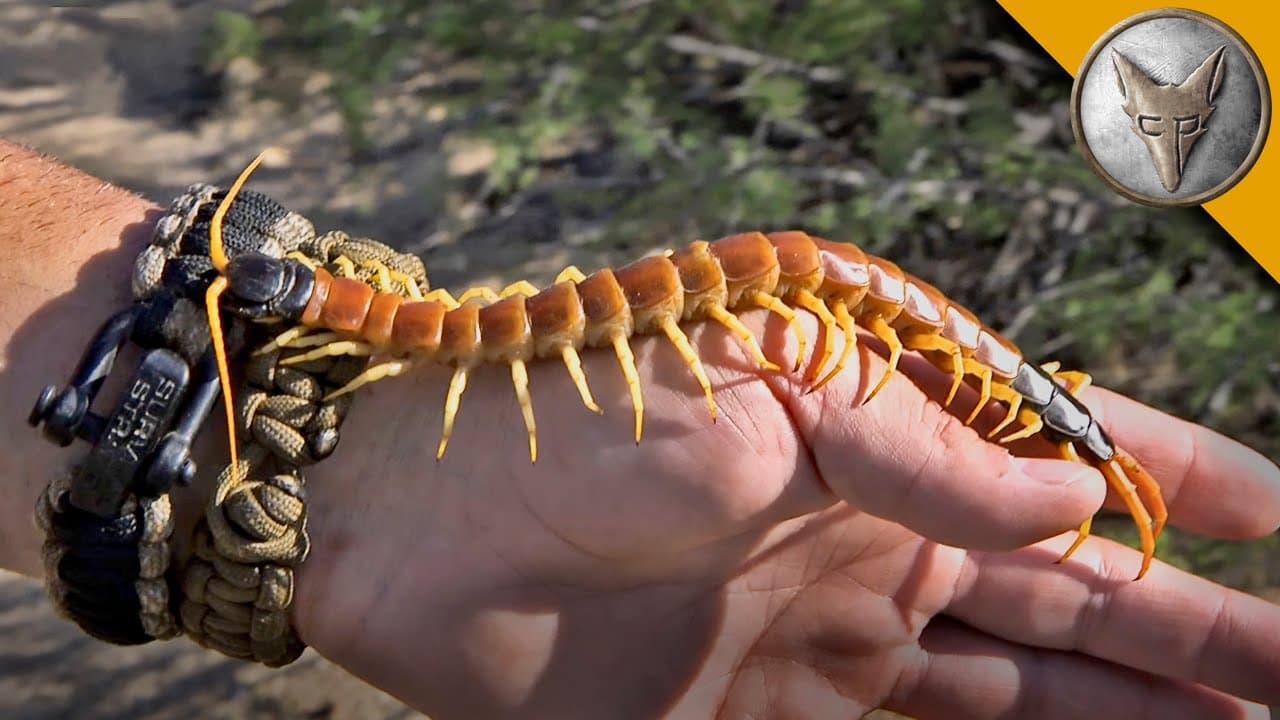
Free handling a giant desert centipede reveals its impressive strength and unique defense mechanisms. Coyote Peterson discovers that this venomous predator can deliver an extremely painful bite, but the experience enhances his appreciation for its resilience and adaptability in the harsh desert environment.
Transcript
- I'm Coyote Petersen and I'm about to free handle a giant desert centipede. (wild music) Exploring the desert under the cover of night is often the best way to come across animals. And we have had a lot of luck filming the majority of our Sonoran Desert episodes in this fashion including an episode in Breaking Trails season on... Read More
Key Insights
- 🐪 Exploring the Sonoran Desert at night offers opportunities to encounter unique creatures such as the giant desert centipede.
- 🐎 The giant desert centipede is known for its speed, strength, and venomous bite, making it an elusive and fearsome predator.
- 👊 Despite its creepy appearance, the centipede's armor-like segments protect it during potential attacks.
- 🥶 Coyote's experience with free handling the centipede increases his appreciation for its resilience and unique adaptations.
- 🧡 The centipede's ability to catch and consume a wide range of prey showcases its prowess as a predator.
- 🦶 The centipede's rear segments and modified feet serve as an effective defense mechanism against attackers.
- 🐪 Coyote emphasizes the importance of staying brave and wild while encountering and learning about fascinating creatures like the giant desert centipede.
Install to Summarize YouTube Videos and Get Transcripts
Explore YouTube Video Summarizer or Get YouTube Transcript Extractor
Questions & Answers
Q: Is the giant desert centipede venomous?
Yes, the giant desert centipede has a venomous bite that is said to be extremely painful. Coyote mentions meeting someone who was bitten and described it as the worst pain they had ever felt.
Q: What is the purpose of the centipede's armor-like segments on its back?
The centipede's back segments act as armor plating, providing protection during potential attacks. Coyote assures viewers that he is not harming the centipede while handling it.
Q: What are the centipede's feeding habits?
The giant desert centipede is a voracious predator and will eat a variety of prey in the desert, including lizards, small snakes, baby birds, and even rodents. It is known for its ability to take down larger prey.
Q: How does the centipede defend itself?
The centipede has a pseudo-head at its rear, with dark segments and modified feet that resemble antennae. If attacked from behind, it can grip with its modified feet and deliver a powerful bite.
Summary & Key Takeaways
-
In this video, Coyote Peterson explores the Sonoran Desert at night and comes across a giant desert centipede, known for its speed and venomous bite.
-
Despite his fear, Coyote's wildlife biologist captures the centipede and allows Coyote to face his fear by free handling it.
-
Coyote shares interesting facts about the centipede's strength, feeding habits, and defense mechanisms.
Read in Other Languages (beta)
Share This Summary 📚
Summarize YouTube Videos and Get Video Transcripts with 1-Click
Try YouTube Summary with ChatGPT & Claude or YouTube Transcript Generator
Explore More Summaries from Brave Wilderness 📚

Summarize YouTube Videos and Get Video Transcripts with 1-Click
Try YouTube Summary with ChatGPT & Claude or YouTube Transcript Generator